Why Ethereum Layer-2 Fees Keep Falling
By David Turner
Senior Crypto Markets Reporter at CryptoGrows. · June 20, 2026
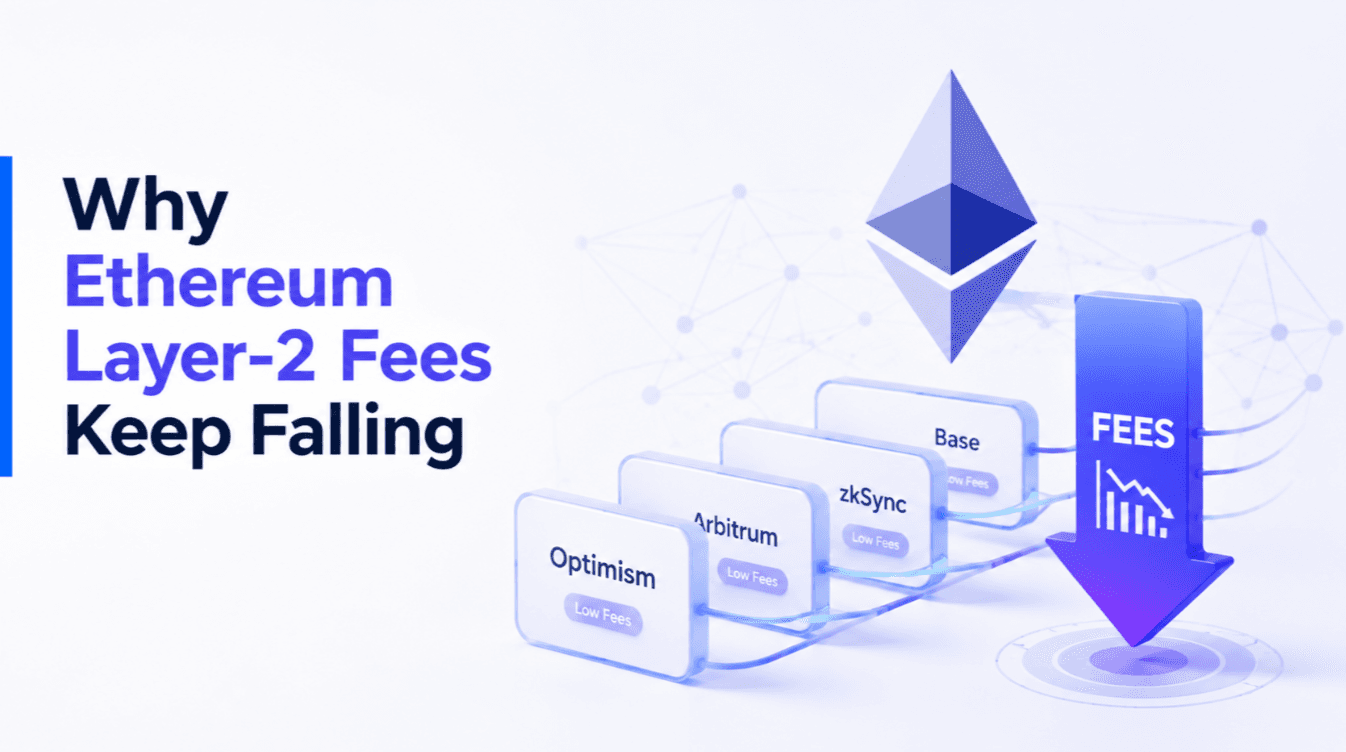
Ethereum layer-2 fees keep falling mainly because rollups bundle many transactions into a single batch and have gained cheaper ways to record their data on Ethereum. As more activity moves off the base layer and data-posting costs shrink, the per-transaction price users pay tends to drop with it.
What a layer-2 actually pays for
A rollup runs transactions on its own chain, then posts a compressed record back to Ethereum so the results can be verified and secured. The cost a user sees is roughly the rollup’s own operating overhead plus its share of what it spends to publish data to the base layer. When either piece gets cheaper, fees fall.
For a long stretch, the data-posting portion dominated. Rollups competed for the same limited space on Ethereum, and during busy periods that competition pushed their costs — and user fees — sharply higher.
Why the cost curve bends downward
Two forces work together. First, batching spreads a fixed publishing cost across more users, so the more a rollup is used, the less each transaction contributes. Second, protocol changes have given rollups a dedicated, lower-cost channel for the data they post, separating their needs from ordinary base-layer demand.
- Batching: hundreds of transactions share one settlement footprint on Ethereum.
- Compression: rollups strip and encode data so each transaction carries fewer bytes.
- Dedicated data space: cheaper posting channels reduce competition with base-layer activity.
- Competition: multiple rollups vying for users creates downward pressure on margins.
The cheaper it becomes to publish a rollup’s data, the more the savings flow through to the person clicking confirm. — CryptoCoinBeat analysis
Why the decline is not guaranteed every day
Fees are a trend, not a fixed price. A sudden surge of trading, a popular mint, or a backlog can briefly lift costs on any chain, including layer-2s. The structural direction points lower, but short bursts of demand still register, and different rollups pass through their savings at different speeds.
Design choices matter too. A rollup that prioritizes maximum security may post more data than one optimizing for cheapness, and that tradeoff shows up in the fee. Users comparing networks are really comparing these underlying decisions, even when the interface only shows a number.
What it means for users and builders
For everyday users, cheaper layer-2 fees lower the cost of routine activity that once felt prohibitive during congestion. For builders, falling costs widen the range of applications that make economic sense, including those that need many small transactions. The broad picture is an ecosystem steadily pushing the price of using Ethereum down while leaning on the base layer for security.
This article is for general information only and is not financial advice. Fees, network conditions, and protocol designs change, so confirm current details before acting.
CryptoCoinBeat Newsroom · Published June 20, 2026 · Informational, not financial advice.
More from the wire
- RegulationUS Crypto Regulation and Market Structure Advance: CFTC Rulemaking Meets Coinbase's Stock-Perps Push
- RegulationUS Regulators Advance Tokenized Stocks Pathway and Bitcoin Reserve Bill in Landmark Week
- RegulationBitcoin and Ether Hold Steady as Fed Delivers First Rate Hike in Three Years, US Lawmakers Advance Crypto Bills
- MarketsUS Crypto Markets Face Double Test as CLARITY Act Stalls and Fed Decision Looms
- MarketsUS Crypto Crackdown Deepens as Senate Nears Clarity Act Vote and DOJ Targets Iran-Linked Binance Funds