Crypto Volatility and Risk Management: A Practical Framework
DeFi Protocols & RWA On-Chain AnalystDeFi Protocols & RWA On-Chain Analyst · April 25, 2026 · 11 min read
Published April 25, 2026 · Reviewed to our editorial standards. This article is informational and not financial advice.
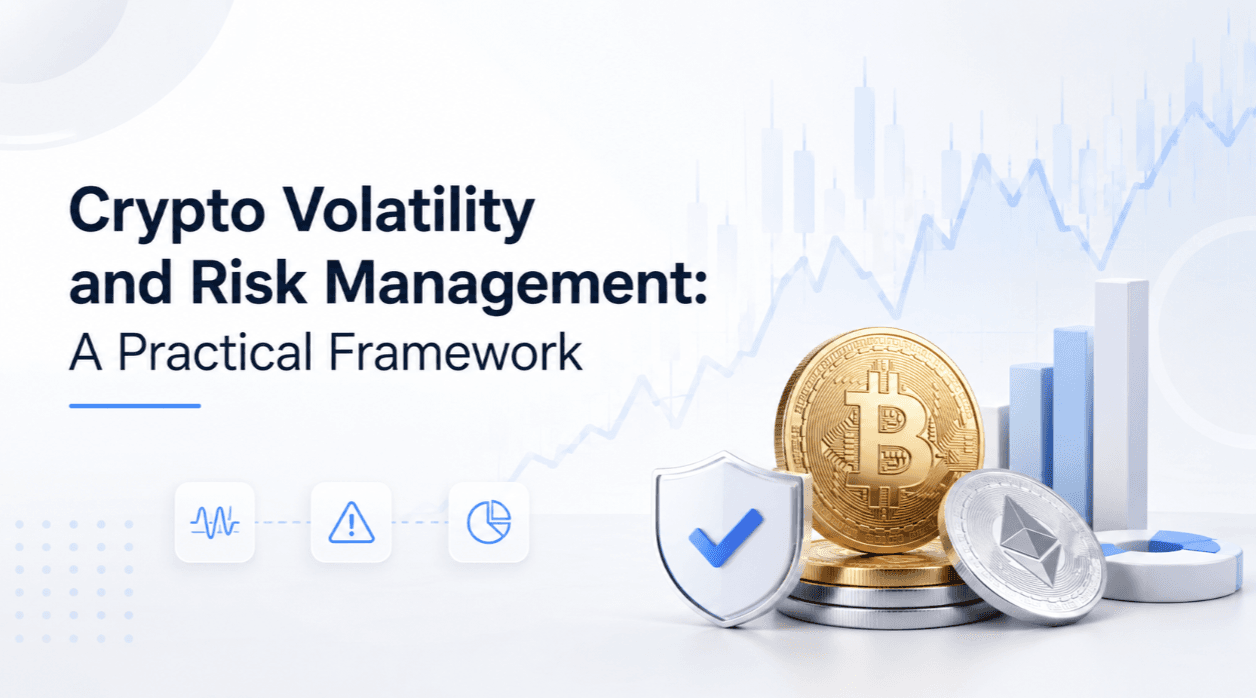
Volatility is the degree to which an asset’s price swings over time, and crypto is among the most volatile asset classes traded. Risk management is the set of rules you use to survive that volatility — chiefly position sizing, avoiding catastrophic loss and diversification. The goal is not to eliminate risk, which is impossible, but to ensure no single outcome can take you out of the game.
Key takeaways
- Volatility measures how sharply prices move, up or down.
- The first job of risk management is avoiding ruin, not maximizing gains.
- Position sizing is the most powerful lever most people ignore.
- Large drawdowns require disproportionately large recoveries.
- Leverage multiplies volatility and shortens the path to a wipeout.
Why crypto is so volatile
Several features compound to make crypto move sharply. Markets trade around the clock with no closing bell to cool sentiment. Many assets have thin liquidity, so individual trades move price more. The class is young, valuations are uncertain, and a large share of activity is sentiment-driven. Leverage layered across the system can force rapid liquidations that accelerate moves in both directions.
- Round-the-clock trading with no pause to reset sentiment.
- Thin liquidity in many assets amplifies price moves.
- Young market with uncertain valuation anchors.
- Widespread leverage that can cascade into forced selling.
The mathematics of drawdowns
A drawdown is a fall from a peak. What makes drawdowns dangerous is that losses and gains are not symmetric. A 50 percent loss requires a 100 percent gain just to break even. An 80 percent loss requires a 400 percent gain. This asymmetry is why protecting against deep losses matters more than chasing the last increment of upside.
- A 25% loss needs a 33% gain to recover.
- A 50% loss needs a 100% gain to recover.
- An 80% loss needs a 400% gain to recover.
In a volatile market, the player who avoids ruin outlasts the player who maximizes returns. — CryptoCoinBeat analysis
Position sizing: the core discipline
Position sizing decides how much of your capital any single bet can affect. It is the most underrated tool in risk management because it directly caps the damage of being wrong. A common framing is to risk only a small, fixed percentage of your portfolio on any one position, so that even a string of losses leaves you able to continue.
The practical question to ask before any position is not “how much could I make” but “how much can I lose if I am completely wrong, and can I survive that.” If the honest answer threatens your ability to keep operating, the position is too large regardless of how attractive it looks.
Diversification and correlation
Spreading capital across different assets reduces the impact of any one failing. The catch in crypto is correlation: during sharp sell-offs, many assets fall together, so a portfolio of twenty coins can behave like one position when it matters most. Real diversification accounts for how holdings move relative to each other, and often reaches beyond crypto entirely.
Concentration is not automatically reckless, and diversification is not automatically safe. Each is a deliberate choice about how much exposure to a single outcome you are willing to carry.
The danger of leverage
Leverage means trading with borrowed funds to amplify exposure. It multiplies gains and losses alike, but the asymmetry is brutal: a relatively small adverse move can trigger liquidation, wiping out the position entirely. In an asset class that routinely moves double digits in a day, leverage turns ordinary volatility into a survival threat. Many experienced participants avoid it or use it sparingly for this reason.
Managing the emotional side
Volatility is as much a psychological test as a financial one. Sharp drops trigger panic selling at the worst moments; sharp rallies trigger overconfidence and oversizing. Written rules — decided when you are calm — are the antidote. A plan you set in advance and follow mechanically removes the in-the-moment decisions that volatility is designed to exploit.
- Decide your maximum acceptable loss before entering, not after.
- Write down the conditions under which you would exit.
- Avoid checking prices so often that noise drives your decisions.
- Assume any position can go to zero and size accordingly.
A simple risk checklist
- Am I risking only an amount I can afford to lose entirely?
- Would a single bad outcome end my ability to continue?
- Do I understand how this position behaves under stress?
- Am I using leverage I do not actually need?
- Is this decision following my plan or my emotions?
This article is educational and is not financial advice. Risk management reduces but never removes the possibility of loss, and no framework can make a volatile asset safe. Crypto markets can move violently and you may lose your entire investment. Do your own research and consider consulting a licensed financial professional before making decisions involving capital at risk.
Frequently asked questions
Why is crypto more volatile than stocks?+
Crypto trades continuously with no closing bell, often has thinner liquidity, and is a young asset class without settled valuation anchors. A large share of activity is sentiment-driven, and widespread leverage can trigger cascading liquidations. These factors combine to produce price swings that are typically far larger than those of established equity markets.
What is position sizing and why does it matter?+
Position sizing is how much capital you commit to a single bet. It directly caps the damage of being wrong, which makes it the most powerful risk tool available. By risking only a small fixed share of your portfolio per position, you ensure that even a run of losses leaves you able to continue.
Why are drawdowns so dangerous?+
Losses and recoveries are asymmetric. A 50 percent loss requires a 100 percent gain to break even, and an 80 percent loss needs a 400 percent gain. Because deep drawdowns demand disproportionately large recoveries, protecting against catastrophic loss matters more than squeezing out the final increment of potential upside.
Should beginners use leverage in crypto?+
Generally no. Leverage amplifies both gains and losses, and in an asset that can move double digits in a day, a small adverse move can liquidate an entire position. The asymmetric downside makes leverage especially hazardous for newcomers. Many experienced participants avoid it or use it only sparingly and deliberately.
Written by
Maria FernandezDeFi Protocols, Real-World Assets, On-Chain Analytics, Stablecoins, Spanish-Language Coverage
Maria Fernandez is an On-Chain Research Analyst at **CRYPTO·COINBEAT**, specializing in real-world asset (RWA) tokenization, decentralized finance, and stablecoin ecosystems. Originally from Mexico City and now based in Miami, Maria brings a unique Latin American perspective to blockchain research, combining deep technical analysis with insights into emerging digital asset markets across the Americas. Before joining **CRYPTO·COINBEAT**, Maria spent several years researching decentralized finance protocols, producing in-depth analysis on lending platforms, governance systems, and the growing adoption of tokenized real-world assets. Her early research into institutional RWA integration and decentralized collateral models helped explain one of the fastest-growing sectors within the blockchain industry. Maria's analytical approach combines on-chain transaction analysis, protocol revenue metrics, liquidity monitoring, and governance activity to evaluate the long-term health of DeFi ecosystems. She works extensively with blockchain analytics platforms, including Dune Analytics, Nansen, and Flipside Crypto, and has created numerous public dashboards that simplify complex blockchain data for investors and researchers alike. Her coverage of stablecoin market events and liquidity shifts has helped readers better understand risk during periods of heightened market volatility. She holds a B.Sc. in Industrial Engineering from ITAM (Instituto Tecnológico Autónomo de México) and a Graduate Certificate in FinTech from MIT Sloan. Passionate about blockchain education, Maria regularly contributes both English- and Spanish-language research, helping make advanced on-chain analysis more accessible to a global audience while supporting the continued growth of crypto adoption throughout Latin America.
Keep Reading
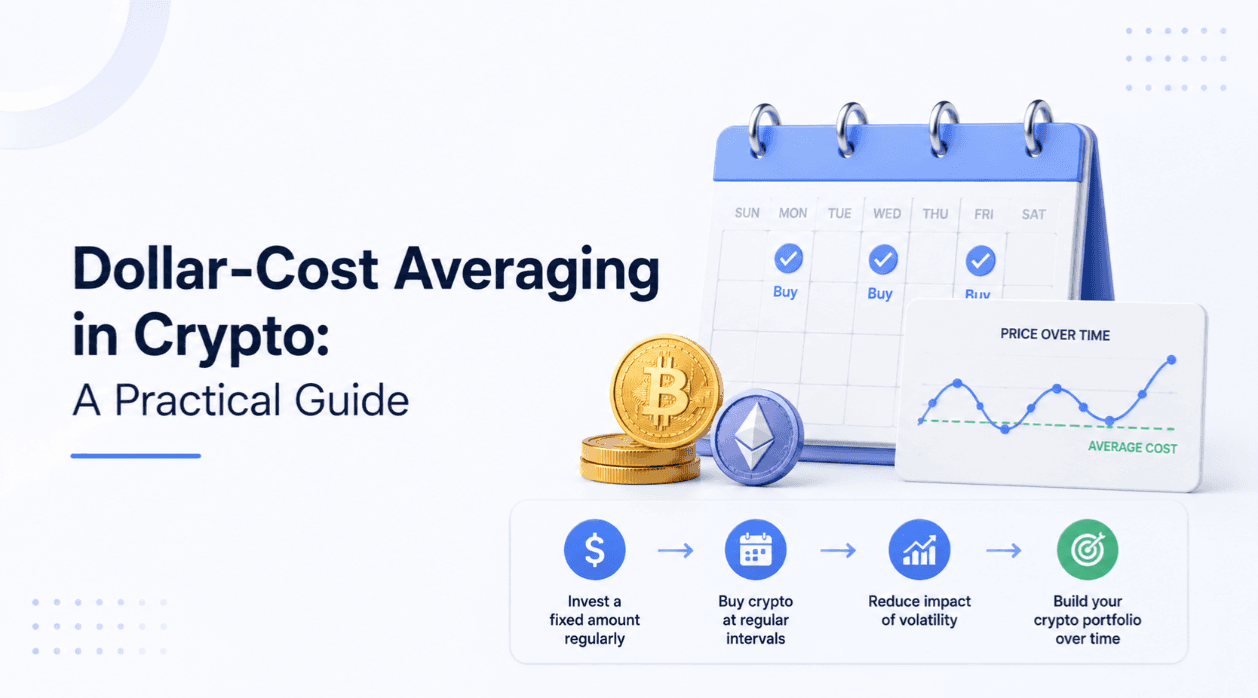
Dollar-Cost Averaging in Crypto: A Practical Guide
Buying fixed amounts on a fixed schedule removes the pressure of timing the market. Here is how DCA works in crypto.
David Turner · May 5, 2026→
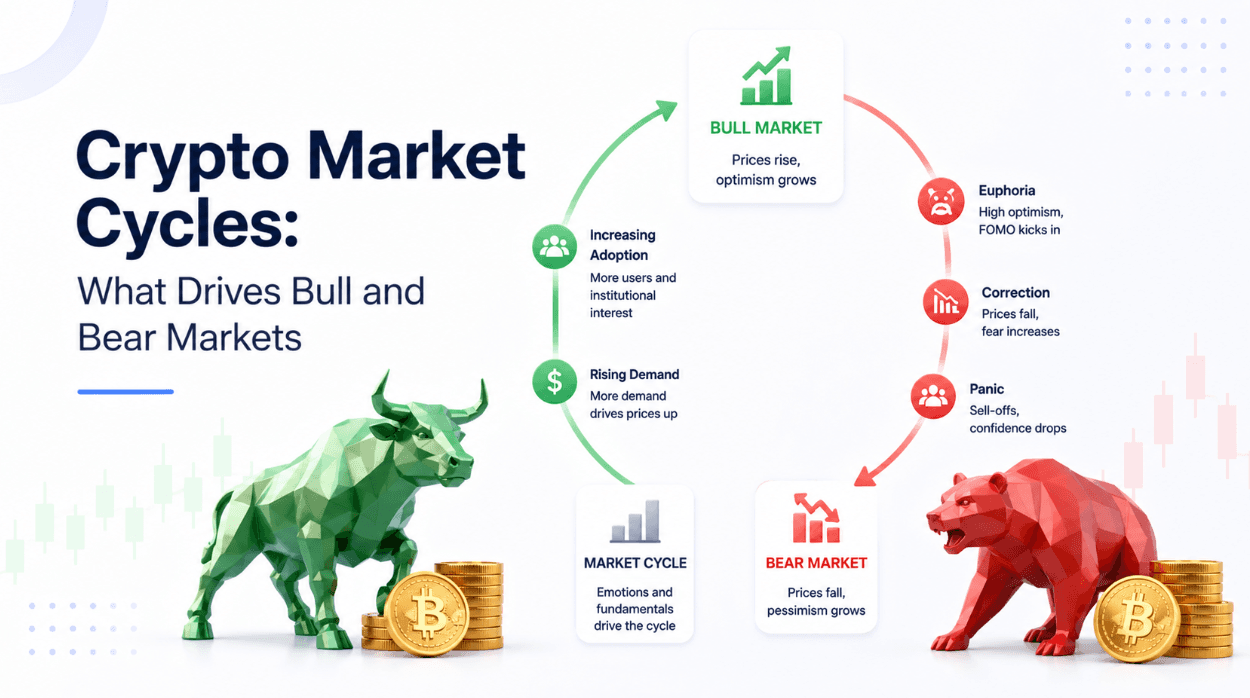
Crypto Market Cycles: What Drives Bull and Bear Markets
Crypto moves in cycles of expansion and contraction. Understanding the forces behind them beats trying to time them.
Maria Fernandez · May 23, 2026→
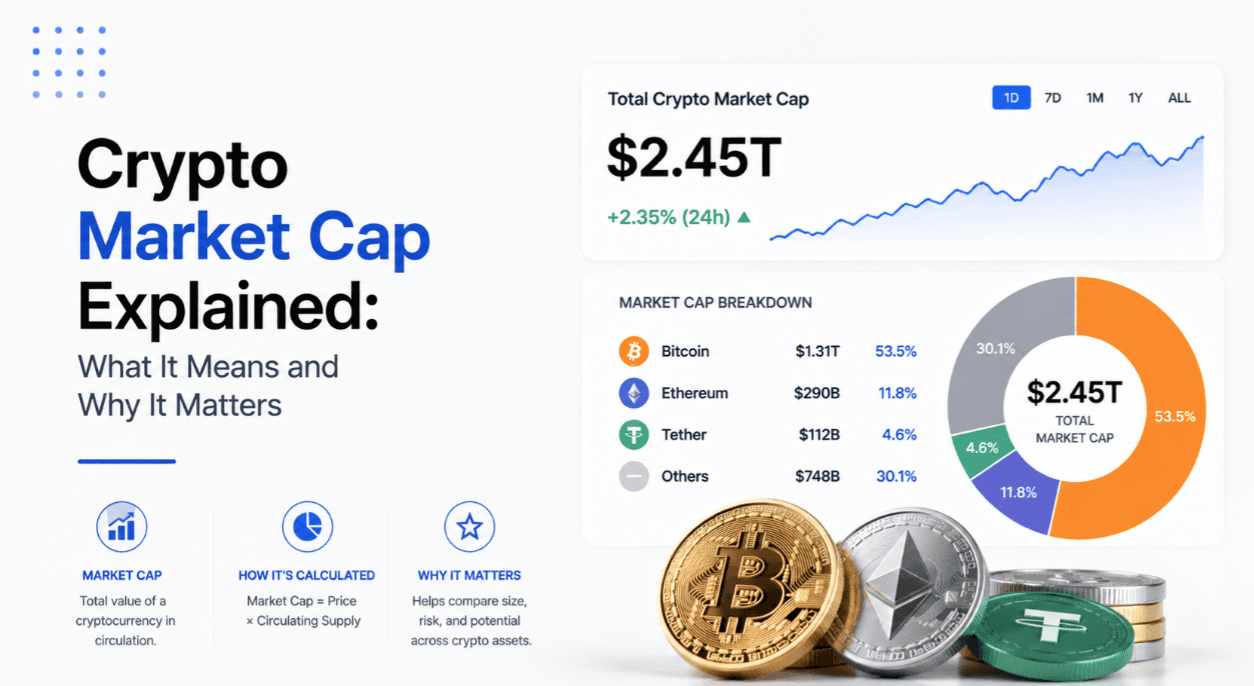
Crypto Market Cap Explained: What It Means and Why It Matters
Market cap is the most quoted and most misunderstood number in crypto. Here is what it actually measures.
Maria Fernandez · May 31, 2026→