What Is Bitcoin and How Does It Actually Work?
DeFi Protocols & RWA On-Chain AnalystDeFi Protocols & RWA On-Chain Analyst · June 21, 2026 · 9 min read
Published June 21, 2026 · Reviewed to our editorial standards. This article is informational and not financial advice.
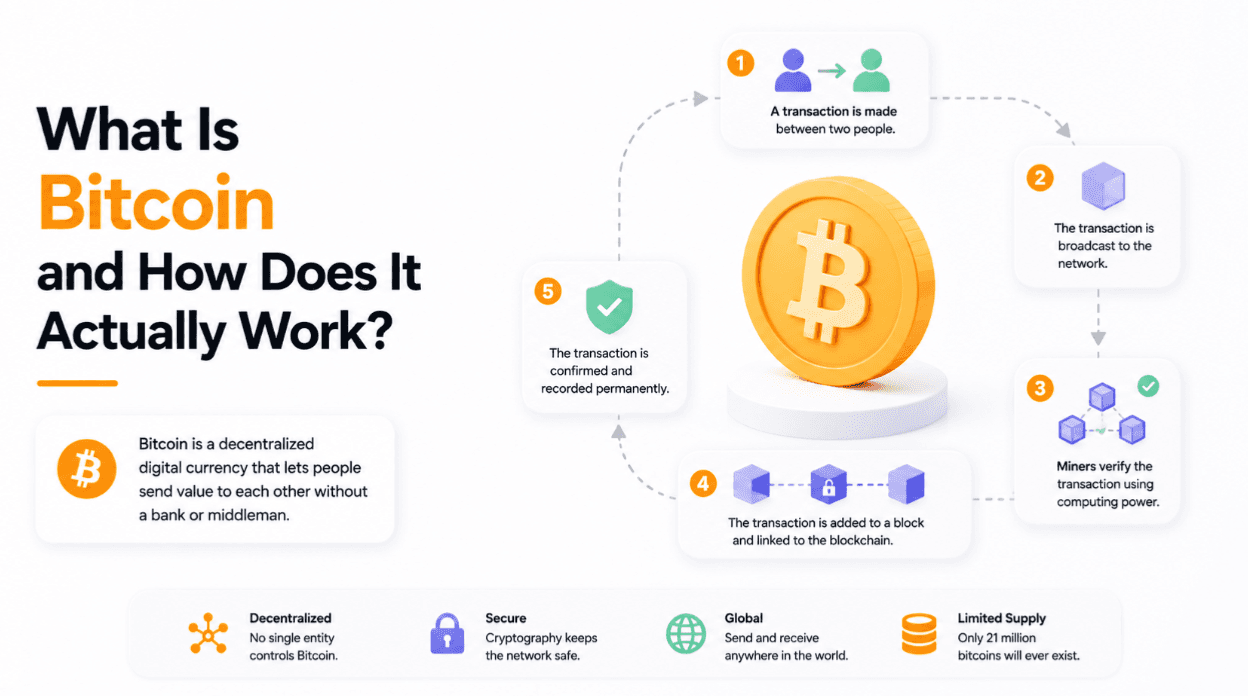
Bitcoin is a decentralized digital currency that lets people send value over the internet without a bank or payment company in the middle. Every transaction is recorded on a shared public ledger called the blockchain, and a global network of computers — not a single owner — verifies and secures it. Its supply is capped at 21 million coins, which is the feature most people point to when they call it “digital gold.”
Key takeaways
- Bitcoin is money governed by software and cryptography rather than by any company or government.
- Transactions settle on a public blockchain that thousands of independent nodes hold copies of.
- Miners group transactions into blocks roughly every ten minutes and are paid in new bitcoin plus fees.
- The total supply is hard-capped at 21 million BTC, and roughly 19.7 million were in circulation by 2026.
- You control bitcoin through private keys; lose the keys and the coins are unrecoverable.
Where Bitcoin came from
Bitcoin was introduced in a 2008 white paper published under the name Satoshi Nakamoto, whose real identity remains unknown. The first block, the genesis block, was mined in January 2009. The timing mattered: it arrived during the global financial crisis, and the white paper framed Bitcoin as a way to move money peer-to-peer without trusting banks to stay solvent.
The design solved a problem that had stumped earlier digital cash projects — how to stop someone from spending the same coin twice without a central referee. Bitcoin’s answer was to let the whole network agree on one shared history of who owns what, updated in fixed intervals and protected by computing power.
How the blockchain records ownership
The blockchain is a chain of data blocks, each containing a batch of transactions and a cryptographic reference to the block before it. Because every block is linked to its predecessor, rewriting an old transaction would mean redoing every block that followed it — across the majority of the network at once. That is what makes confirmed Bitcoin transactions extremely hard to reverse.
Crucially, the ledger does not track names. It tracks addresses — strings of characters that act like account numbers. Anyone can see that an address holds a certain balance, but the blockchain itself does not reveal who stands behind it.
What a transaction actually moves
When you send bitcoin, you are not transferring a file. You are signing a message that reassigns ownership of specific amounts on the ledger from your address to someone else’s. Your wallet signs that message with a private key, and the network checks the signature before accepting it.
Mining and the role of proof of work
New blocks are added through mining. Specialized machines compete to solve a hard mathematical puzzle, and the first to find a valid answer broadcasts the next block. This process, called proof of work, makes attacking the network expensive: an attacker would need to out-compute everyone else combined. In return for securing the chain, the winning miner receives newly created bitcoin and the transaction fees in that block.
Bitcoin’s security does not come from a vault or a regulator. It comes from making fraud cost more than it could ever earn. — CryptoCoinBeat analysis
The 21 million supply cap and halvings
Bitcoin’s issuance is scheduled, not discretionary. The reward miners receive for each block is cut in half roughly every four years, an event known as the halving. It started at 50 BTC per block in 2009 and fell to 3.125 BTC after the April 2024 halving. This shrinking issuance is why the supply will approach but never exceed 21 million, with the last fraction of a coin expected around the year 2140.
How you own and hold bitcoin
Ownership comes down to keys. A public key (or address) is what you share to receive funds; a private key is the secret that authorizes spending. Wallets manage these keys for you. Some run on your phone or computer, some live on dedicated hardware devices, and some are custodial — held on your behalf by an exchange.
- Self-custody wallets give you full control and full responsibility for your keys.
- Hardware wallets keep keys offline, away from internet-based attacks.
- Custodial accounts on exchanges are convenient but mean a third party holds the keys.
Why Bitcoin is divisible and scarce at once
People sometimes worry that a 21-million cap is too small for a global currency. It is not, because bitcoin is highly divisible. Each coin splits into 100 million units called satoshis, named after the founder, so the smallest spendable amount is one hundred-millionth of a bitcoin. That granularity means the network can represent enormous and tiny values alike, even as the fixed supply keeps total issuance scarce.
Scarcity is enforced by every participant, not promised by an issuer. Because the rules live in software that each node checks independently, no actor can quietly mint extra coins. Any attempt to do so produces blocks the rest of the network simply rejects.
How Bitcoin differs from traditional money
Government-issued money is a liability of a central bank, and its supply can be expanded by policy. Bitcoin has no issuer and no discretionary supply. It also settles differently: a bank transfer relies on institutions updating their own private ledgers, while a Bitcoin payment is recorded on one shared public ledger that anyone can audit. That openness is a feature for verification and a trade-off for privacy.
- Supply: capped and predetermined, versus elastic and policy-driven.
- Control: distributed across a global network, versus centralized in institutions.
- Settlement: a single public ledger, versus many private, permissioned ones.
- Access: open to anyone with an internet connection, versus gated by accounts and approval.
What Bitcoin is used for in 2026
In practice, most people treat bitcoin as a long-term savings asset rather than everyday cash, partly because its price moves sharply and partly because base-layer fees and confirmation times suit larger or less frequent transfers. Faster, cheaper payments increasingly run on top of Bitcoin through the Lightning Network, a second layer that settles small payments off-chain and records the net result back to the main blockchain. Spot Bitcoin ETFs, approved in the United States in early 2024, have also made it possible to hold exposure through a brokerage account.
Beyond saving and payments, bitcoin serves people in places where the local currency is unstable or banking access is limited. Because it needs no permission to receive and no branch to visit, it can act as a savings tool and a way to move value across borders when conventional channels are slow, costly, or closed. These use cases are smaller than the investment story in headline terms, but they are a large part of why the network attracts users worldwide.
This article is for general information only and is not financial, investment, or tax advice. Bitcoin is volatile and you can lose money; do your own research and consider a licensed professional before making decisions.
Frequently asked questions
Is Bitcoin anonymous?+
Not fully. Bitcoin is pseudonymous: the blockchain shows addresses and amounts, not names. But addresses can often be linked to real identities through exchanges, analytics firms, or spending patterns, so transactions are traceable rather than truly private.
Who controls Bitcoin?+
No single person or company controls Bitcoin. The rules are enforced by open-source software that thousands of independent nodes run voluntarily. Changes require broad agreement across users, developers, and miners, which makes the system slow but resistant to capture.
Can Bitcoin be hacked?+
The core network has never been successfully altered, thanks to its proof-of-work security. Most thefts happen at the edges: compromised exchanges, phishing, or stolen private keys. Protecting your keys, ideally with a hardware wallet, addresses the realistic risk for most holders.
What gives Bitcoin value?+
Bitcoin has value because people are willing to hold and trade it, backed by a fixed supply, a secure network, and growing acceptance. Like gold or fiat currency, it is not backed by a physical commodity; its worth comes from demand, scarcity, and trust in the system.
Written by
Maria FernandezDeFi Protocols, Real-World Assets, On-Chain Analytics, Stablecoins, Spanish-Language Coverage
Maria Fernandez is an On-Chain Research Analyst at **CRYPTO·COINBEAT**, specializing in real-world asset (RWA) tokenization, decentralized finance, and stablecoin ecosystems. Originally from Mexico City and now based in Miami, Maria brings a unique Latin American perspective to blockchain research, combining deep technical analysis with insights into emerging digital asset markets across the Americas. Before joining **CRYPTO·COINBEAT**, Maria spent several years researching decentralized finance protocols, producing in-depth analysis on lending platforms, governance systems, and the growing adoption of tokenized real-world assets. Her early research into institutional RWA integration and decentralized collateral models helped explain one of the fastest-growing sectors within the blockchain industry. Maria's analytical approach combines on-chain transaction analysis, protocol revenue metrics, liquidity monitoring, and governance activity to evaluate the long-term health of DeFi ecosystems. She works extensively with blockchain analytics platforms, including Dune Analytics, Nansen, and Flipside Crypto, and has created numerous public dashboards that simplify complex blockchain data for investors and researchers alike. Her coverage of stablecoin market events and liquidity shifts has helped readers better understand risk during periods of heightened market volatility. She holds a B.Sc. in Industrial Engineering from ITAM (Instituto Tecnológico Autónomo de México) and a Graduate Certificate in FinTech from MIT Sloan. Passionate about blockchain education, Maria regularly contributes both English- and Spanish-language research, helping make advanced on-chain analysis more accessible to a global audience while supporting the continued growth of crypto adoption throughout Latin America.
Keep Reading
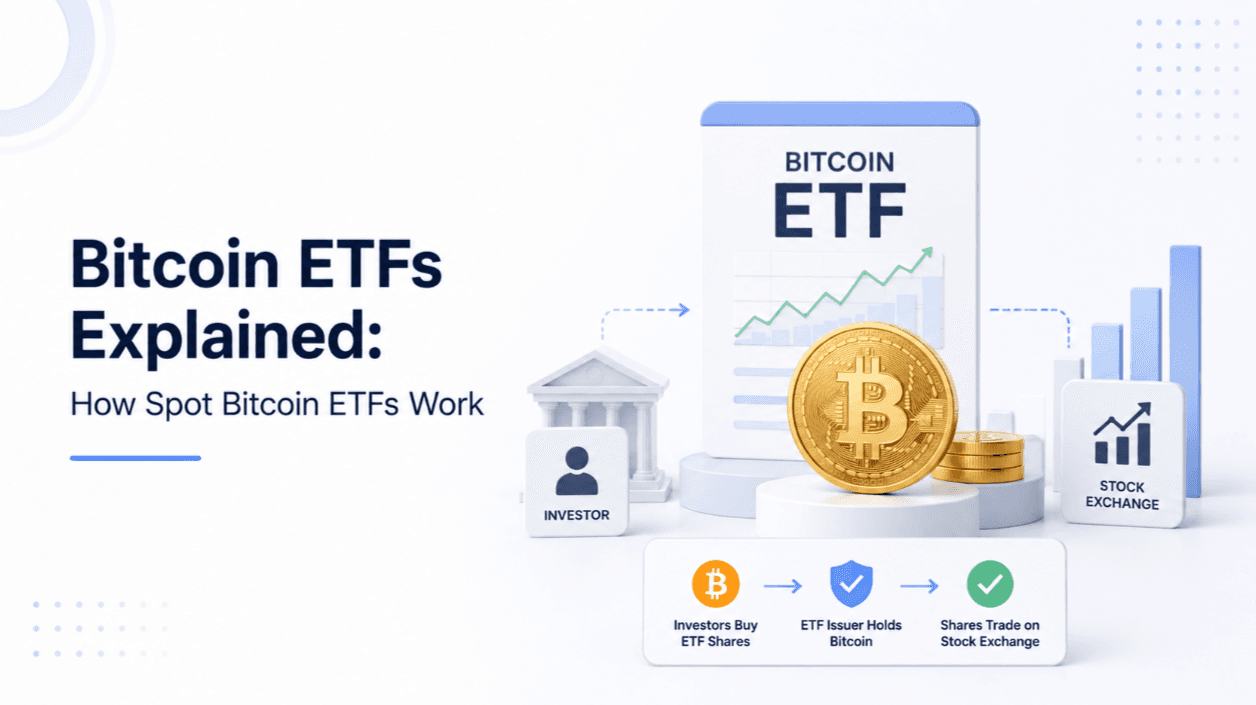
Bitcoin ETFs Explained: How Spot Bitcoin ETFs Work
Spot Bitcoin ETFs let investors hold bitcoin exposure in a brokerage account. Here is how they work and how they differ from owning coins.
Maria Fernandez · May 3, 2026→
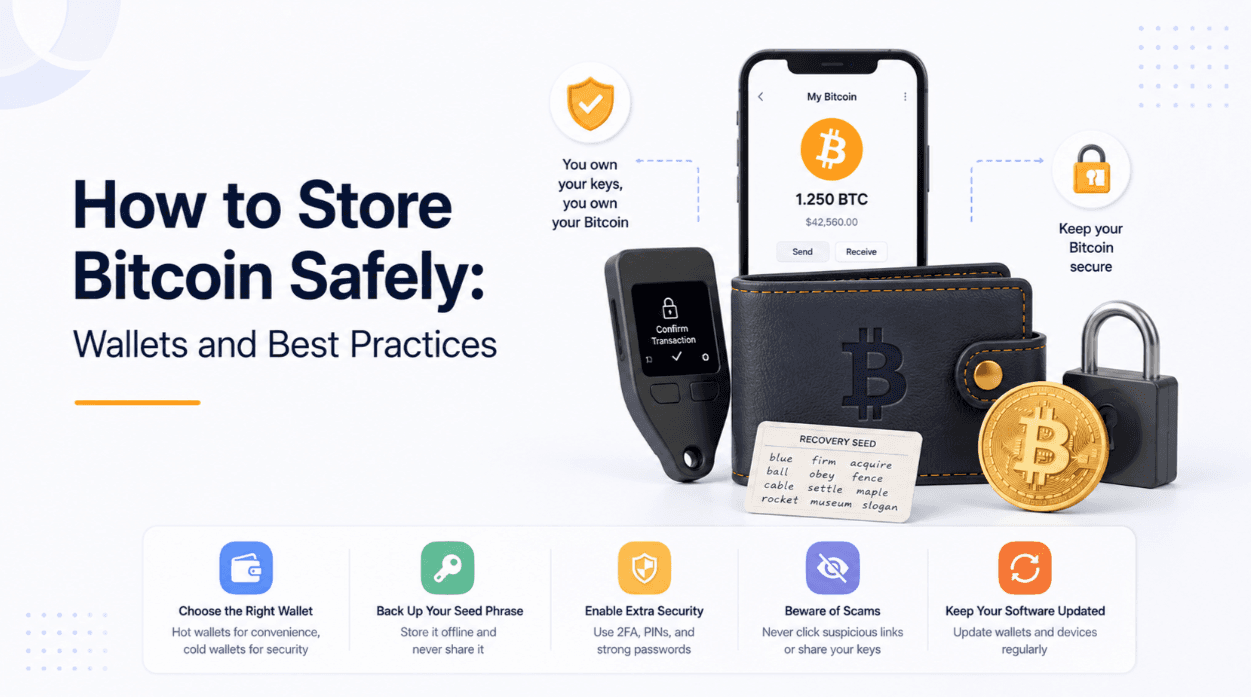
How to Store Bitcoin Safely: Wallets and Best Practices
Storing bitcoin safely comes down to protecting your private keys. Here is how wallet types compare and the habits that keep funds secure.
David Turner · May 17, 2026→

Bitcoin Halving Explained: What It Is and Why It Matters
Every four years Bitcoin cuts its issuance rate in half. Here is how the halving works, what history shows, and why it shapes supply.
Maria Fernandez · May 28, 2026→