Crypto Lending and Borrowing in DeFi Explained
By David Turner
Senior Crypto Markets Reporter at CryptoCoinBeat. · May 2, 2026 · 10 min read
Published May 2, 2026 · Reviewed to our editorial standards. This article is informational and not financial advice.
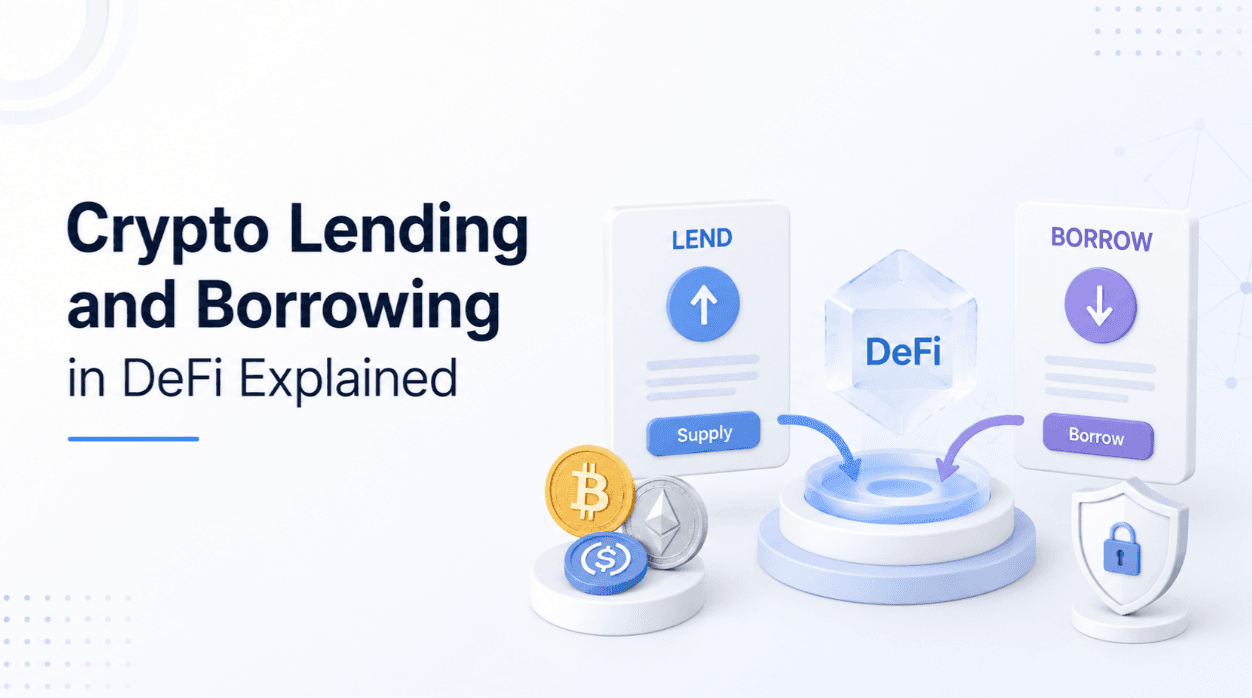
DeFi lending and borrowing let you earn interest by supplying crypto to a pool, or take out a loan by posting crypto as collateral, all without a bank deciding who qualifies. Smart contracts hold the deposits, set interest rates automatically based on supply and demand, and liquidate borrowers whose collateral falls too low. The model is open to anyone with a wallet, and it is unforgiving of mistakes.
Key takeaways
- Lenders deposit assets into a pooled smart contract and earn variable interest from borrowers.
- Borrowers must over-collateralize, posting more value than they borrow, because loans are not credit-checked.
- Interest rates adjust algorithmically with how much of the pool is borrowed at any moment.
- If collateral value drops below a threshold, the position is liquidated automatically, often at a penalty.
- Oracle failures, smart-contract bugs, and sharp price moves are the main ways users lose funds.
How DeFi lending pools work
Most DeFi lending runs through pooled markets rather than matching individual lenders to borrowers. Suppliers deposit a token into a shared pool and receive an interest-bearing receipt token that grows in value or balance over time. Borrowers draw from the same pool, paying interest that flows back to suppliers. There is no loan officer; the contract enforces every rule.
Because the protocol cannot run a credit check or chase a defaulter, it protects lenders with collateral instead. Every loan is backed by assets the borrower locks up in advance, and the contract constantly checks that the collateral remains worth enough to cover the debt. This is the foundation of the entire system.
Why borrowing requires over-collateralization
In DeFi you generally borrow less than you deposit. To take out a loan worth a given amount, you might need to lock collateral worth considerably more, set by a loan-to-value limit. If a protocol allows borrowing up to 75% of your collateral’s value, depositing 1,000 dollars in assets lets you borrow up to 750 dollars.
This seems backwards until you ask why anyone borrows against assets they already hold. Common reasons include accessing liquidity without selling and triggering a taxable event, accessing stablecoins to spend while keeping exposure to an asset, or borrowing to amplify a position. The over-collateralization is what lets the protocol stay solvent without trusting the borrower at all.
How interest rates are set
Rates in these markets are usually algorithmic, driven by utilization, the share of the pool currently borrowed. When most of the pool is lent out, rates rise to attract new suppliers and discourage further borrowing. When little is borrowed, rates fall. Both the rate lenders earn and the rate borrowers pay move continuously, so a position that looks cheap today can grow more expensive as conditions shift.
Liquidations and the role of oracles
The riskiest moment for a borrower is liquidation. If your collateral’s value falls, or your debt grows with interest, until your loan crosses the protocol’s threshold, the contract lets third parties repay part of your debt in exchange for seizing your collateral at a discount. You keep what remains, but you have effectively been forced to sell at a bad time, plus a penalty.
To know when to liquidate, the protocol relies on oracles, services that feed market prices into the contract. If an oracle reports a wrong or manipulated price, it can trigger unfair liquidations or let someone borrow more than their collateral truly supports. Oracle manipulation has been behind some of DeFi’s largest exploits, which is why the quality of a protocol’s price feeds matters as much as its code.
In DeFi lending there is no grace period and no phone call. When your collateral crosses the line, liquidation is automatic, public, and final. — CryptoCoinBeat analysis
The main risks for both sides
Borrowers face liquidation risk above all. A sudden drop in collateral value, especially in a volatile market, can wipe out a position in minutes, and network congestion may stop you from adding collateral in time. The closer you borrow to the limit, the smaller the price move needed to liquidate you.
Lenders are not risk-free either. Smart-contract exploits can drain a pool entirely. If a market lists a volatile or thinly traded collateral asset that crashes faster than liquidators can act, the pool can be left with bad debt that suppliers ultimately absorb. And because most DeFi lending is unregulated, there is no deposit insurance behind any of it.
Using lending markets more safely
- Borrow well below the maximum limit to leave a buffer against price swings.
- Track your health factor or equivalent metric, and add collateral before you approach liquidation.
- Prefer established protocols with strong oracle setups and a long audit history.
- Understand that interest rates are variable and can rise sharply when utilization spikes.
- Treat newer markets with exotic collateral as higher risk, both as a lender and a borrower.
This article is educational and not financial advice. DeFi lending and borrowing are high-risk and can lead to liquidation, loss of collateral, or total loss through exploits and oracle failures. Nothing here recommends any protocol or asset. Research independently and consider qualified professional advice before participating.
Frequently asked questions
Why do I have to deposit more than I borrow in DeFi?+
Because the protocol cannot run a credit check or pursue you if you default. Over-collateralization protects lenders: by locking up more value than you borrow, the contract can sell your collateral to repay the loan if its value falls, keeping the pool solvent without trusting you.
What happens if my collateral gets liquidated?+
When your loan crosses the protocol’s threshold, liquidators repay part of your debt and seize collateral at a discount, usually with a penalty. You keep whatever remains, but you have effectively been forced to sell at a poor price. The process is automatic, immediate, and cannot be reversed.
Is supplying assets to a DeFi lending pool safe?+
It carries real risk. Smart-contract exploits can drain a pool, and a crashing collateral asset can leave bad debt that suppliers absorb. There is typically no deposit insurance. Established protocols with strong audits and reliable oracles reduce, but do not remove, the chance of loss.
How are DeFi interest rates determined?+
Most protocols set rates algorithmically based on utilization, the share of the pool currently borrowed. High utilization pushes rates up to attract suppliers and slow borrowing; low utilization pushes them down. Both the supply and borrow rates change continuously, so your cost or yield is not fixed.
Written by
David TurnerCryptocurrency Markets, Blockchain Technology, Tokenomics Analysis, Digital Asset Regulation, DeFi, Web3 Industry Cover
David Turner is a U.S.-based Markets Reporter at CRYPTO·COINBEAT, covering cryptocurrency markets, blockchain innovation, and the rapidly evolving digital asset ecosystem across North America. Raised in California and educated in economics and digital media, David combines strong analytical skills with years of experience reporting on financial markets and emerging technologies. He began his journalism career covering equity markets, Federal Reserve policy, and fintech developments for several financial news outlets before specializing in cryptocurrency. As blockchain technology gained mainstream adoption, David shifted his focus to Bitcoin, Ethereum, decentralized finance, and digital asset regulation. Prior to joining CRYPTO·COINBEAT, he reported extensively on crypto exchanges, institutional investment, stablecoins, and the expanding Web3 economy. At **CRYPTO·COINBEAT**, David delivers data-driven reporting designed to help readers understand the fast-moving digital asset industry. His coverage frequently explores U.S. crypto legislation, tokenomics, blockchain adoption, market sentiment, and the impact of macroeconomic events on cryptocurrency markets. He is particularly recognized for his in-depth analysis of token supply models, vesting schedules, liquidity trends, and the long-term sustainability of blockchain projects. David earned a B.A. in Economics from the University of California, Los Angeles (UCLA), and completed additional coursework in data journalism and financial analysis. He also authors the daily market briefing, **"Opening Bell Crypto,"** providing traders and investors with concise analysis of overnight market activity, key industry developments, and emerging investment trends.
Keep Reading
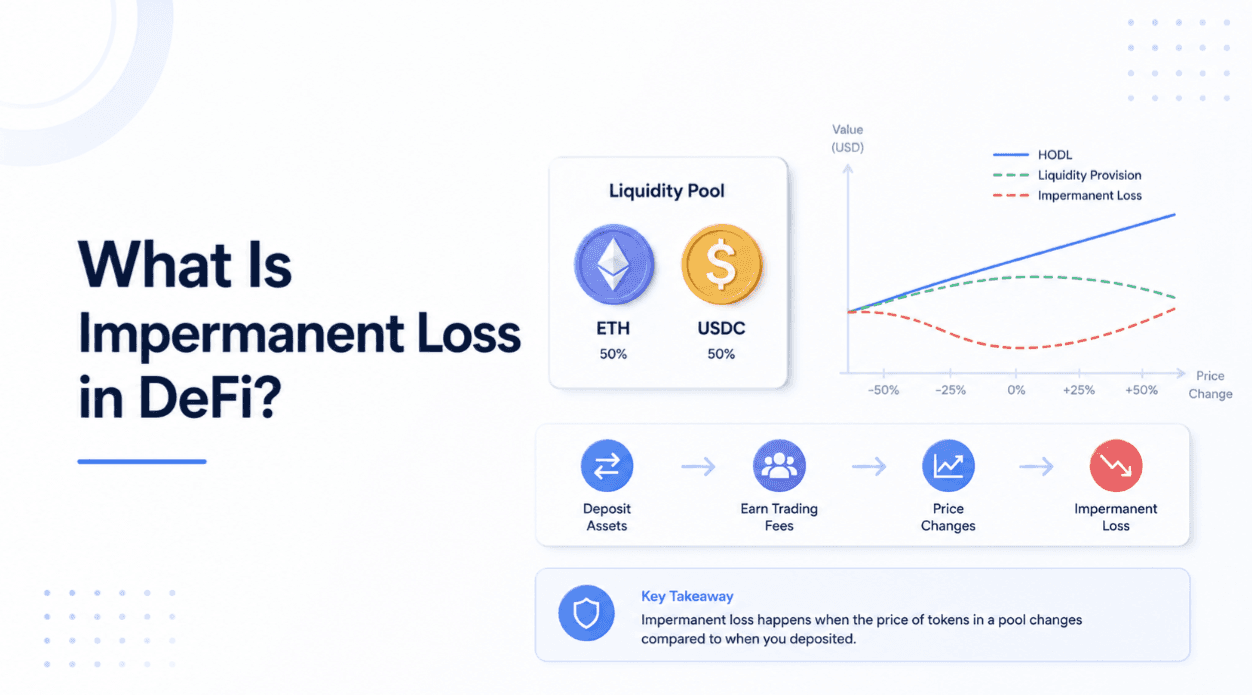
What Is Impermanent Loss in DeFi?
Impermanent loss quietly erodes the value of liquidity positions when token prices move. Here is why it happens, how big it gets, and when fees offset it.
Maria Fernandez · May 9, 2026→
Yield Farming and Liquidity Mining Explained
Yield farming chases returns by moving crypto between DeFi protocols. We break down where the yield comes from, how APY can mislead, and the risks behind big numbers.
David Turner · May 23, 2026→
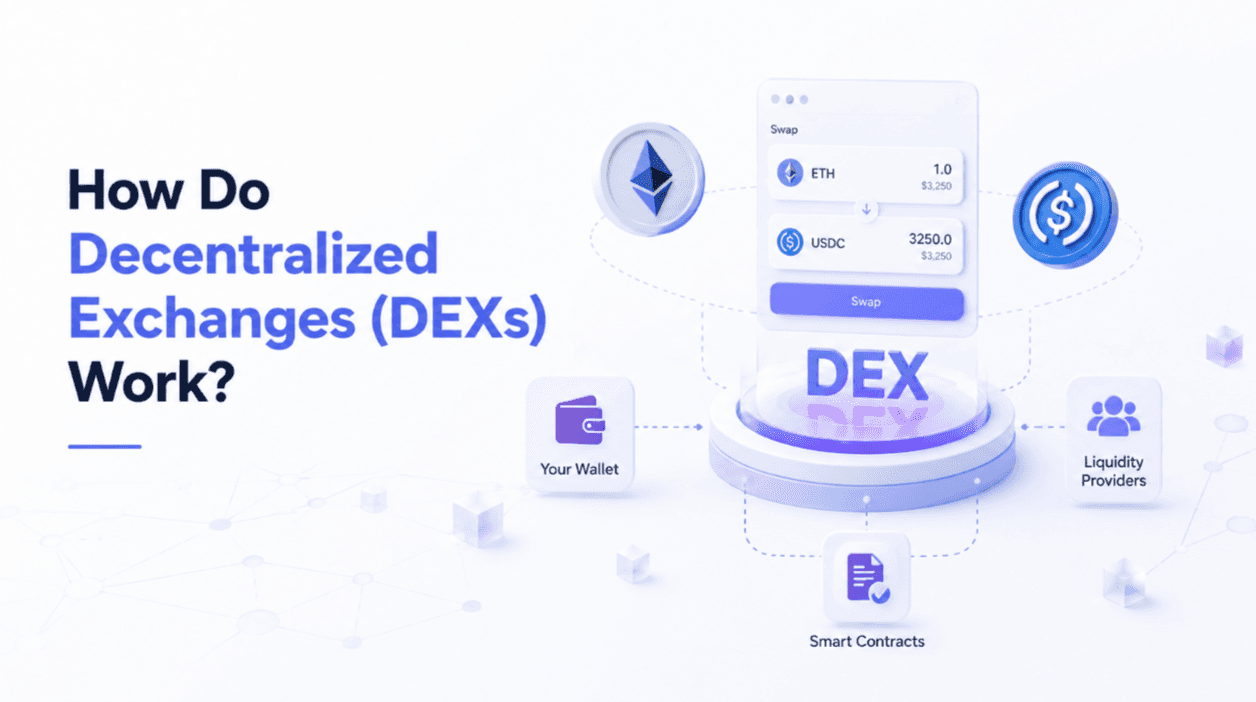
How Do Decentralized Exchanges (DEXs) Work?
Decentralized exchanges let you trade tokens straight from your wallet, with no broker holding your funds. Here is how AMMs and liquidity pools price every swap.
Maria Fernandez · June 3, 2026→