Ethereum Gas Fees Explained: Why Transactions Cost What They Do
By David Turner
Senior Crypto Markets Reporter at CryptoGrows. · May 25, 2026 · 9 min read
Published May 25, 2026 · Reviewed to our editorial standards. This article is informational and not financial advice.
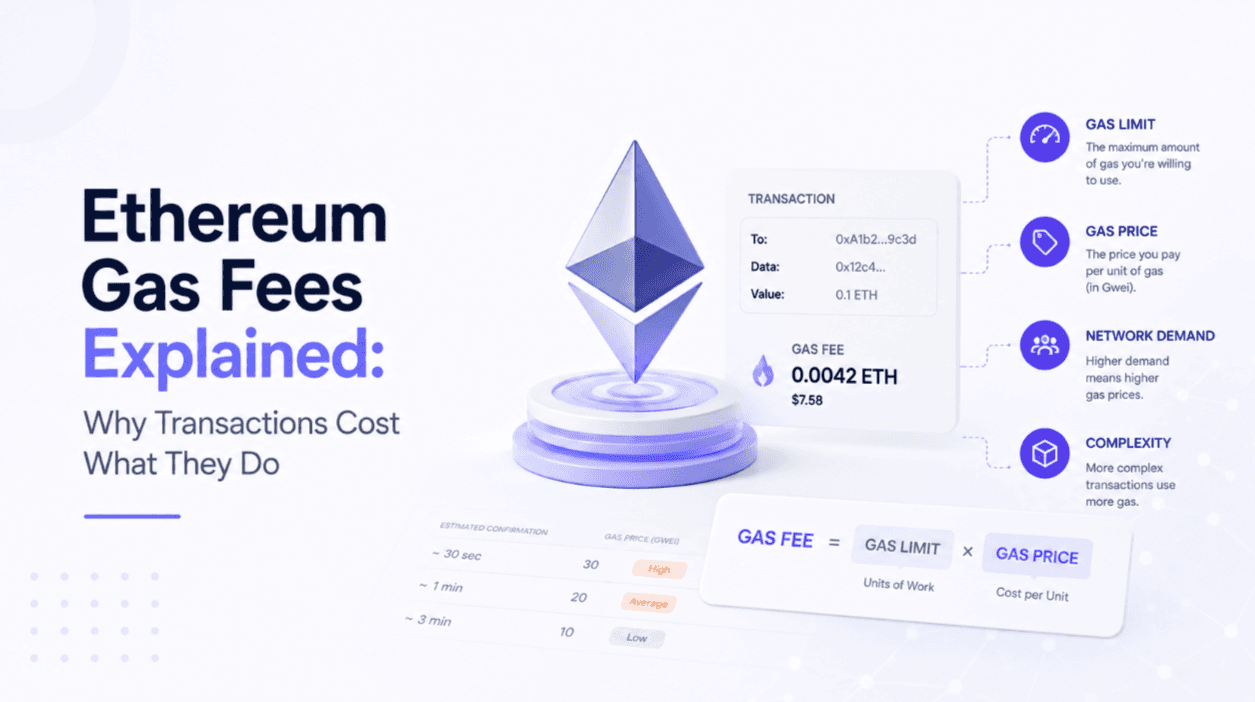
Gas is the unit Ethereum uses to measure how much computational work a transaction requires, and gas fees are what you pay in ETH for that work. The total cost is the gas used multiplied by the price per unit, which rises and falls with network demand. Simple transfers are cheap; contract-heavy actions cost more.
Key takeaways
- Gas measures computational effort; you pay for it in ETH.
- Each fee splits into a base fee that is burned and a priority tip to the validator.
- Fees rise when blocks fill up and fall when the network is quiet.
- Layer-2 rollups cut typical fees dramatically versus the base layer.
- Timing, transaction type and the right network are the main levers for paying less.
Why Ethereum charges gas at all
Block space is scarce. Every transaction must be executed and stored by thousands of nodes, so resources are limited and valuable. Charging gas does two jobs: it compensates validators for the work, and it prices out spam by making wasteful computation expensive. Without it, anyone could flood the network with cheap, useless operations.
How a fee is built
Since the 2021 fee-market upgrade, every transaction carries two components. The base fee is set automatically by the protocol based on how full recent blocks were, and it is burned, removing that ETH from supply. On top sits a priority fee, or tip, that you offer validators to include your transaction sooner. You also set a gas limit, the maximum units you will allow the transaction to consume.
Worked example
A standard ETH transfer uses 21,000 units of gas. If the base fee plus tip totals 20 gwei, the cost is 21,000 multiplied by 20 gwei, which equals 0.00042 ETH. Swapping tokens through a decentralized exchange might use ten times more gas because it triggers far more contract logic, so the same gas price produces a much larger bill.
Why fees spike
When demand for block space outpaces supply, the base fee climbs automatically until the market clears. Popular token launches, market volatility and bursts of trading all push fees up. During calm periods the same transaction can cost a fraction as much. This is why the question is never simply what does a transaction cost, but when and where you send it.
You are not paying Ethereum a flat price. You are bidding in a live auction for a slice of the next block. — CryptoCoinBeat analysis
How to pay less
- Use a layer-2 rollup, where fees are often cents rather than dollars.
- Transact during quieter hours when the base fee is lower.
- Batch actions where a protocol supports it, rather than many separate calls.
- Set a sensible priority tip; overpaying does not make a confirmed transaction safer.
- Check current fees in your wallet before confirming, not after.
The role of layer-2 networks
Rollups such as Arbitrum, Optimism and Base process transactions off the main chain and post compressed data back to it. Because hundreds of transactions share the cost of one settlement, per-user fees fall sharply. Ethereum upgrades since 2024 added cheaper data space specifically for rollups, which is why everyday activity has migrated to layer-2 and base-layer fees now matter most for large settlements.
This article is educational and not financial advice. Fees and network conditions change constantly; always confirm current costs in your own wallet before transacting.
Frequently asked questions
What is gwei?+
Gwei is a small denomination of ether used to express gas prices, because full ETH amounts would be unwieldy. One gwei equals one billionth of an ETH. When a wallet shows a gas price of 25 gwei, it means each unit of gas costs 25 billionths of an ETH.
Why did my transaction fail but still cost gas?+
Gas pays for the computation attempted, not just successful results. If a transaction runs out of gas or reverts because a condition was not met, validators still did the work, so the gas consumed is not refunded. Setting an adequate gas limit reduces the chance of a failed, wasteful attempt.
Do all blockchains have gas fees?+
Most charge some form of transaction fee to compensate validators and deter spam, though the names and mechanics differ. Ethereum’s gas model is the best known. Layer-2 networks built on Ethereum charge much smaller fees because they spread the cost of settling on the main chain across many users.
Can gas fees ever be zero?+
On Ethereum’s base layer, no, because every transaction consumes real resources. Some applications sponsor fees for users so the cost is hidden, and certain layer-2 setups make fees negligible, but the underlying computation is always paid for by someone.
Written by
David TurnerCryptocurrency Markets, Blockchain Technology, Tokenomics Analysis, Digital Asset Regulation, DeFi, Web3 Industry Cover
David Turner is a U.S.-based Markets Reporter at CRYPTO·COINBEAT, covering cryptocurrency markets, blockchain innovation, and the rapidly evolving digital asset ecosystem across North America. Raised in California and educated in economics and digital media, David combines strong analytical skills with years of experience reporting on financial markets and emerging technologies. He began his journalism career covering equity markets, Federal Reserve policy, and fintech developments for several financial news outlets before specializing in cryptocurrency. As blockchain technology gained mainstream adoption, David shifted his focus to Bitcoin, Ethereum, decentralized finance, and digital asset regulation. Prior to joining CRYPTO·COINBEAT, he reported extensively on crypto exchanges, institutional investment, stablecoins, and the expanding Web3 economy. At **CRYPTO·COINBEAT**, David delivers data-driven reporting designed to help readers understand the fast-moving digital asset industry. His coverage frequently explores U.S. crypto legislation, tokenomics, blockchain adoption, market sentiment, and the impact of macroeconomic events on cryptocurrency markets. He is particularly recognized for his in-depth analysis of token supply models, vesting schedules, liquidity trends, and the long-term sustainability of blockchain projects. David earned a B.A. in Economics from the University of California, Los Angeles (UCLA), and completed additional coursework in data journalism and financial analysis. He also authors the daily market briefing, **"Opening Bell Crypto,"** providing traders and investors with concise analysis of overnight market activity, key industry developments, and emerging investment trends.
Keep Reading
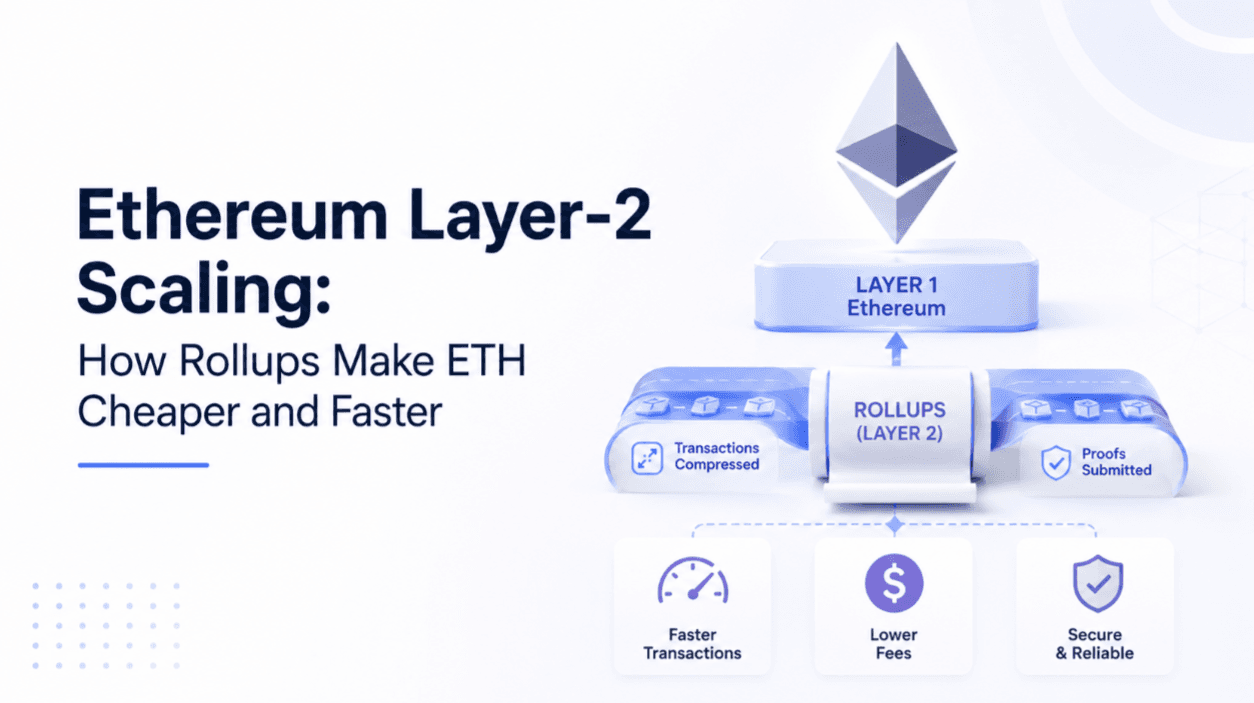
Ethereum Layer-2 Scaling: How Rollups Make ETH Cheaper and Faster
Rollups move execution off Ethereum’s base layer while keeping its security. Here is how optimistic and zk-rollups work and where they differ.
Maria Fernandez · May 3, 2026→
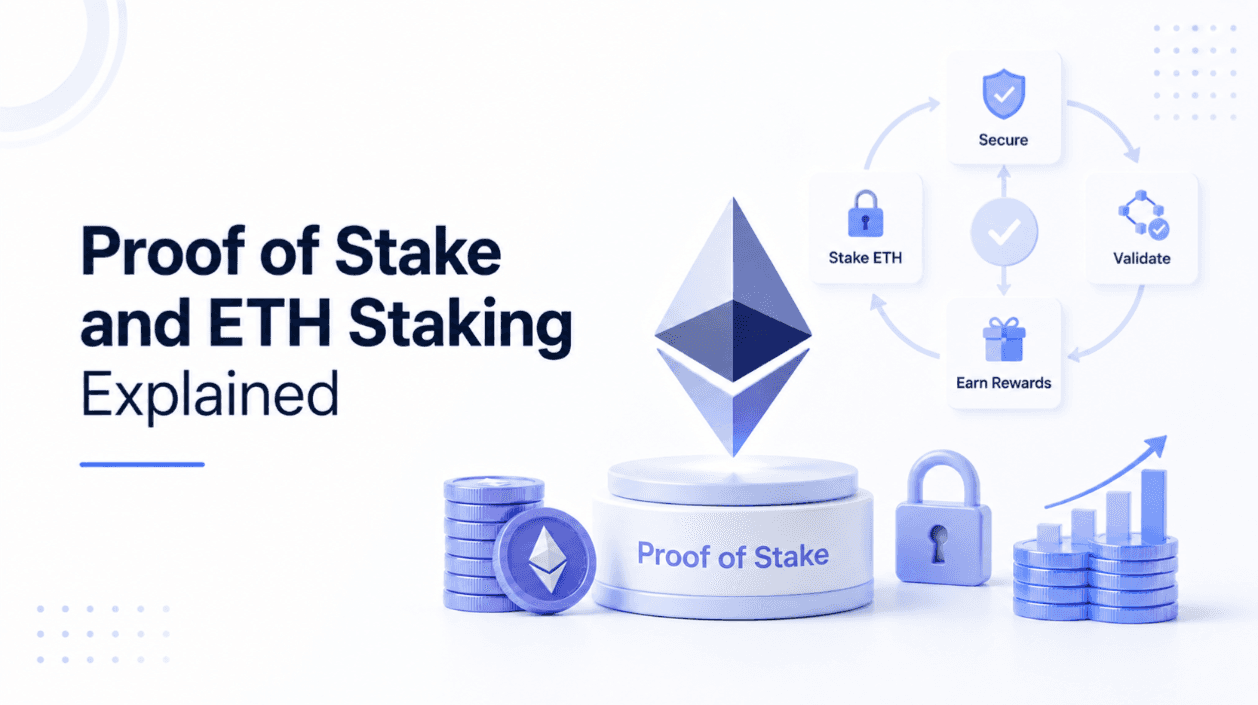
Proof of Stake and ETH Staking Explained
Ethereum secures itself with staked ETH instead of mining. Here is how validators, rewards and slashing work, and what staking really involves.
David Turner · May 16, 2026→
Smart Contracts Explained: How Ethereum Code Runs Itself
Smart contracts let agreements enforce themselves on a blockchain. Here is how they work, where they shine, and why audits still matter.
David Turner · June 4, 2026→