Proof of Stake and ETH Staking Explained
By David Turner
Senior Crypto Markets Reporter at CryptoGrows. · May 16, 2026 · 10 min read
Published May 16, 2026 · Reviewed to our editorial standards. This article is informational and not financial advice.
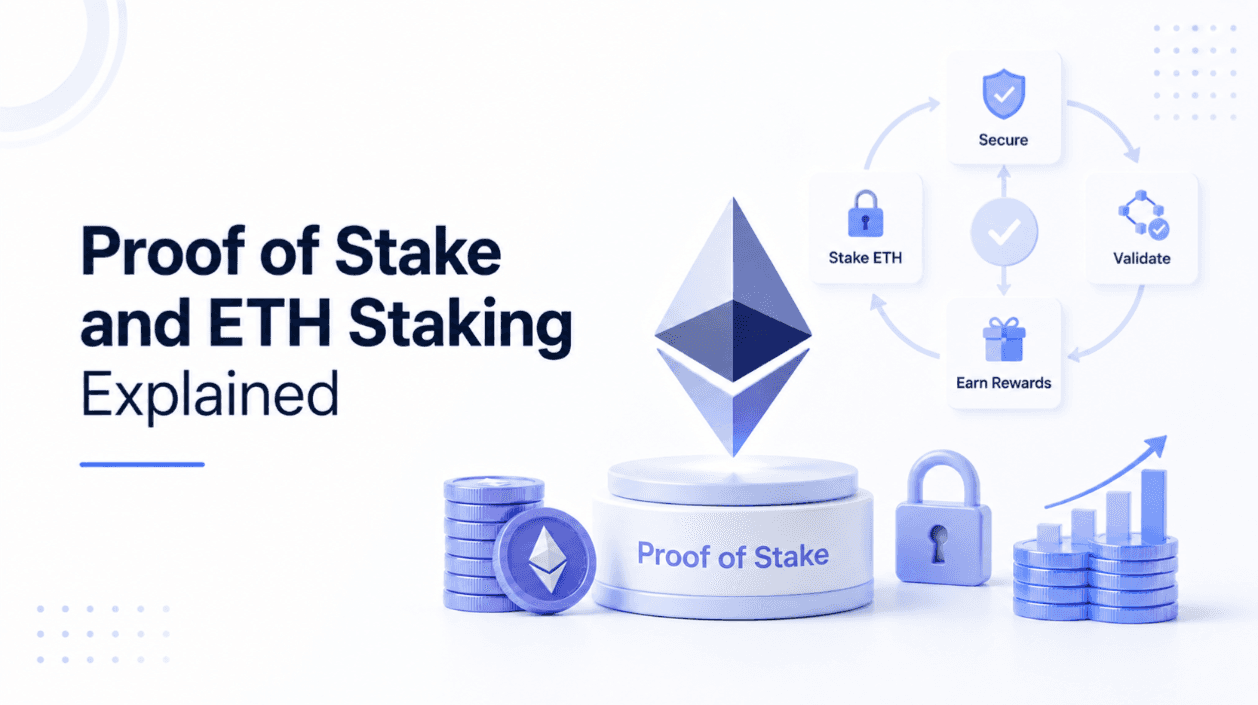
Proof of stake is Ethereum’s method for securing the network: instead of miners spending electricity, validators lock up ETH as collateral and are chosen to propose and verify blocks. Honest work earns rewards; provable misbehavior is punished by slashing part of that stake. Staking is the act of committing ETH to perform or back this role.
Key takeaways
- Proof of stake replaced proof-of-work mining in 2022, cutting energy use by over 99 percent.
- Running a validator requires 32 ETH; smaller holders can stake through pools or liquid staking.
- Rewards come from issuance, transaction tips and other on-chain activity.
- Slashing penalizes validators that attack the network or go badly offline.
- Staking carries lock-up, technical and counterparty risks despite its rewards.
From mining to staking
Under proof of work, security came from computing power: whoever burned the most electricity solving puzzles earned the right to add blocks. Ethereum’s Merge in September 2022 swapped that for proof of stake, where security comes from economic stake. An attacker no longer needs warehouses of hardware; they would need to control a vast amount of ETH and risk losing it, which is both expensive and self-defeating.
How validators work
Each validator deposits 32 ETH and runs software that stays online. The protocol randomly selects validators to propose new blocks, while others attest that the proposed blocks are valid. Do the job correctly and you earn rewards. Go offline and you lose small amounts through missed duties. Attempt to cheat, for instance by signing conflicting blocks, and the protocol slashes a chunk of your stake and ejects you.
Finality and security
Validators vote in epochs to finalize blocks, after which reversing them becomes economically irrational. Because finalizing a dishonest chain would require a supermajority of validators to be slashed simultaneously, the cost of a successful attack runs into the tens of billions of dollars. This economic finality is the heart of proof-of-stake security.
Ways to stake ETH
- Solo staking: run your own validator with 32 ETH for full control and full responsibility.
- Staking pools: combine ETH with others to run validators without the full 32.
- Liquid staking: deposit ETH and receive a token that represents your stake and stays usable.
- Centralized exchange staking: simplest to start but you trust a third party with custody.
Proof of stake turns security into an economic question: attacking the chain means setting fire to your own capital. — CryptoCoinBeat analysis
Where rewards come from
Stakers earn from new ETH issued by the protocol, from priority tips paid by users, and from value captured during block proposal. The headline yield is not fixed: it falls as more total ETH is staked and rises when fewer validators are active. Net returns also depend on uptime, fees charged by a pool or service, and how much of each fee the protocol burns.
Liquid staking and centralization concerns
Liquid staking lets users stake ETH and receive a tradable token they can use elsewhere while still earning rewards. It is convenient and popular, but it concentrates influence in whichever providers dominate. A single provider controlling too large a share of all staked ETH is a recognized risk to network neutrality, which is why distribution across many operators matters.
The risks of staking
Staking is not a guaranteed savings account. Solo validators face slashing if they misconfigure software or run conflicting setups. Pooled and liquid options add counterparty and smart-contract risk. The liquid staking token can trade below the value of the underlying ETH during stress. And ETH itself is volatile, so a healthy yield means little if the price falls further.
This article is educational and not financial advice. Staking involves real risk of loss, including slashing and price volatility. Research providers carefully and consult a licensed professional before staking.
Liquid staking, and what it changed
Solo staking requires 32 ETH and a machine that stays online. Liquid staking removed both constraints: you deposit any amount, receive a token representing the staked position, and that token keeps trading while the underlying stake is locked. It is the reason most staked ETH today sits behind a protocol rather than a home validator.
The trade is a new set of risks. The token is a claim on staked capital, so its price depends on redemption working — and when people want out faster than the exit queue allows, they sell instead, which produces the discounts this category is known for. Our liquid staking table scores each protocol on exactly that: whether withdrawals are live, how the queue behaves, and what the token actually traded at during past stress.
Restaking: more yield, more slashing conditions
Restaking reuses staked ETH to secure additional services, which earn extra fees and impose their own penalty rules. The extra yield is compensation for extra ways to lose the principal — and in 2026 the category learned that lesson through the infrastructure around it rather than the staking contracts themselves, when a cross-chain adapter was exploited for roughly $292m.
If you are considering it, the questions are which services your stake secures, whether slashing on them is live yet, and how much of the advertised return is fees rather than points. Our liquid restaking table records those per protocol.
Frequently asked questions
How much ETH do I need to stake?+
To run your own validator you need 32 ETH. If you have less, staking pools, liquid staking services and exchanges let you stake any amount by combining funds with other users. Each route trades some control or custody for a lower barrier to entry.
Can I lose my ETH by staking?+
Yes, though outright loss is uncommon for careful users. Solo validators risk slashing for serious misbehavior or misconfiguration. Pooled and liquid services add smart-contract and counterparty risk. On top of that, ETH’s market price can fall, reducing the value of both your stake and rewards.
Can I unstake whenever I want?+
Withdrawals are enabled, but they are not instant. Exiting the validator queue and reclaiming staked ETH can take from hours to days depending on how many others are leaving at once. Liquid staking tokens offer faster exit by letting you sell the token, usually at a small discount.
Is staking the same as mining?+
No. Mining used energy-hungry hardware to compete for blocks under proof of work. Staking commits ETH as collateral under proof of stake and selects validators by stake and chance, not raw computing power. Ethereum abandoned mining entirely in 2022, slashing its energy footprint.
Written by
David TurnerCryptocurrency Markets, Blockchain Technology, Tokenomics Analysis, Digital Asset Regulation, DeFi, Web3 Industry Cover
David Turner is a U.S.-based Markets Reporter at CRYPTO·COINBEAT, covering cryptocurrency markets, blockchain innovation, and the rapidly evolving digital asset ecosystem across North America. Raised in California and educated in economics and digital media, David combines strong analytical skills with years of experience reporting on financial markets and emerging technologies. He began his journalism career covering equity markets, Federal Reserve policy, and fintech developments for several financial news outlets before specializing in cryptocurrency. As blockchain technology gained mainstream adoption, David shifted his focus to Bitcoin, Ethereum, decentralized finance, and digital asset regulation. Prior to joining CRYPTO·COINBEAT, he reported extensively on crypto exchanges, institutional investment, stablecoins, and the expanding Web3 economy. At **CRYPTO·COINBEAT**, David delivers data-driven reporting designed to help readers understand the fast-moving digital asset industry. His coverage frequently explores U.S. crypto legislation, tokenomics, blockchain adoption, market sentiment, and the impact of macroeconomic events on cryptocurrency markets. He is particularly recognized for his in-depth analysis of token supply models, vesting schedules, liquidity trends, and the long-term sustainability of blockchain projects. David earned a B.A. in Economics from the University of California, Los Angeles (UCLA), and completed additional coursework in data journalism and financial analysis. He also authors the daily market briefing, **"Opening Bell Crypto,"** providing traders and investors with concise analysis of overnight market activity, key industry developments, and emerging investment trends.
Keep Reading
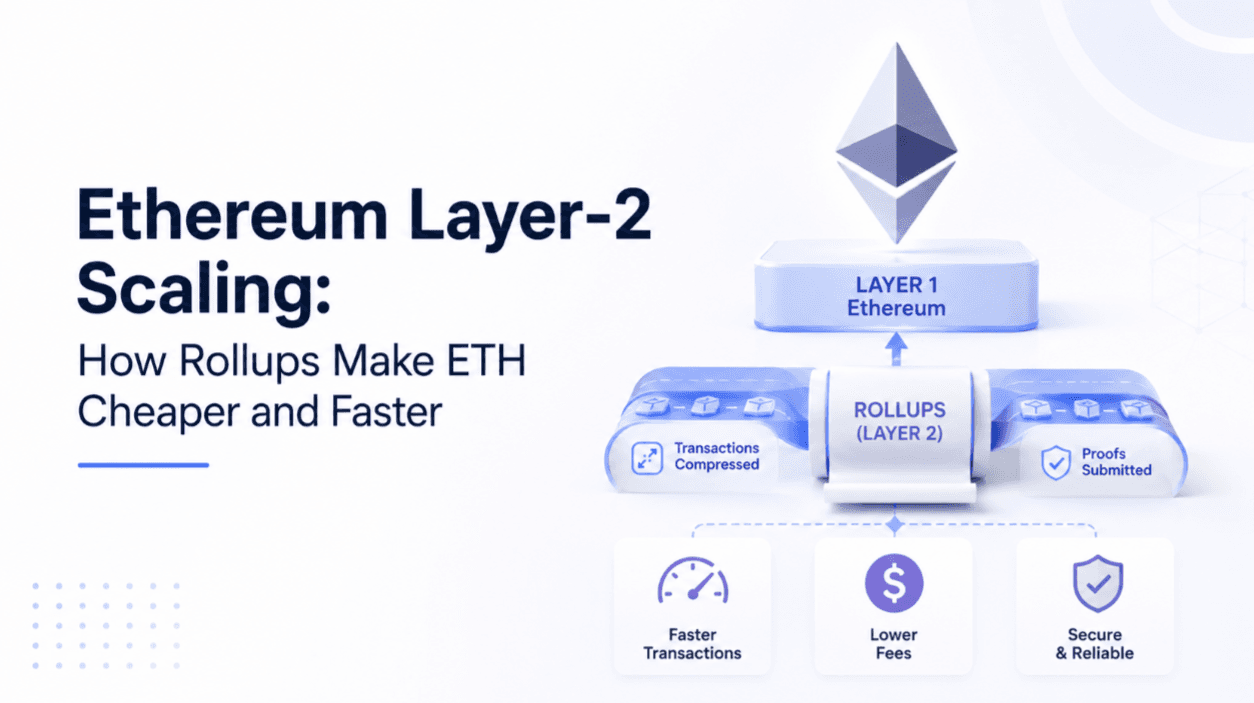
Ethereum Layer-2 Scaling: How Rollups Make ETH Cheaper and Faster
Rollups move execution off Ethereum’s base layer while keeping its security. Here is how optimistic and zk-rollups work and where they differ.
Maria Fernandez · May 3, 2026→
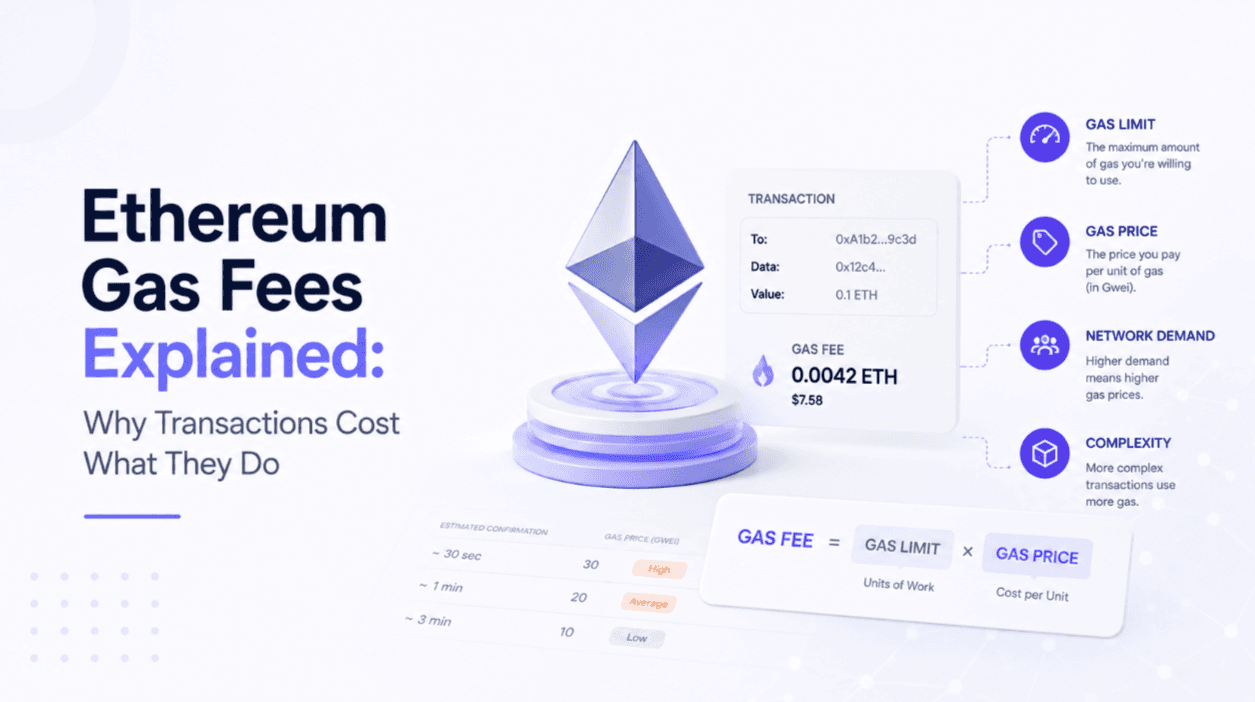
Ethereum Gas Fees Explained: Why Transactions Cost What They Do
Gas is how Ethereum prices computation. Here is what you are really paying for, why fees swing so hard, and how to keep them down.
David Turner · May 25, 2026→
Smart Contracts Explained: How Ethereum Code Runs Itself
Smart contracts let agreements enforce themselves on a blockchain. Here is how they work, where they shine, and why audits still matter.
David Turner · June 4, 2026→