Smart Contracts Explained: How Ethereum Code Runs Itself
By David Turner
Senior Crypto Markets Reporter at CryptoGrows. · June 4, 2026 · 9 min read
Published June 4, 2026 · Reviewed to our editorial standards. This article is informational and not financial advice.
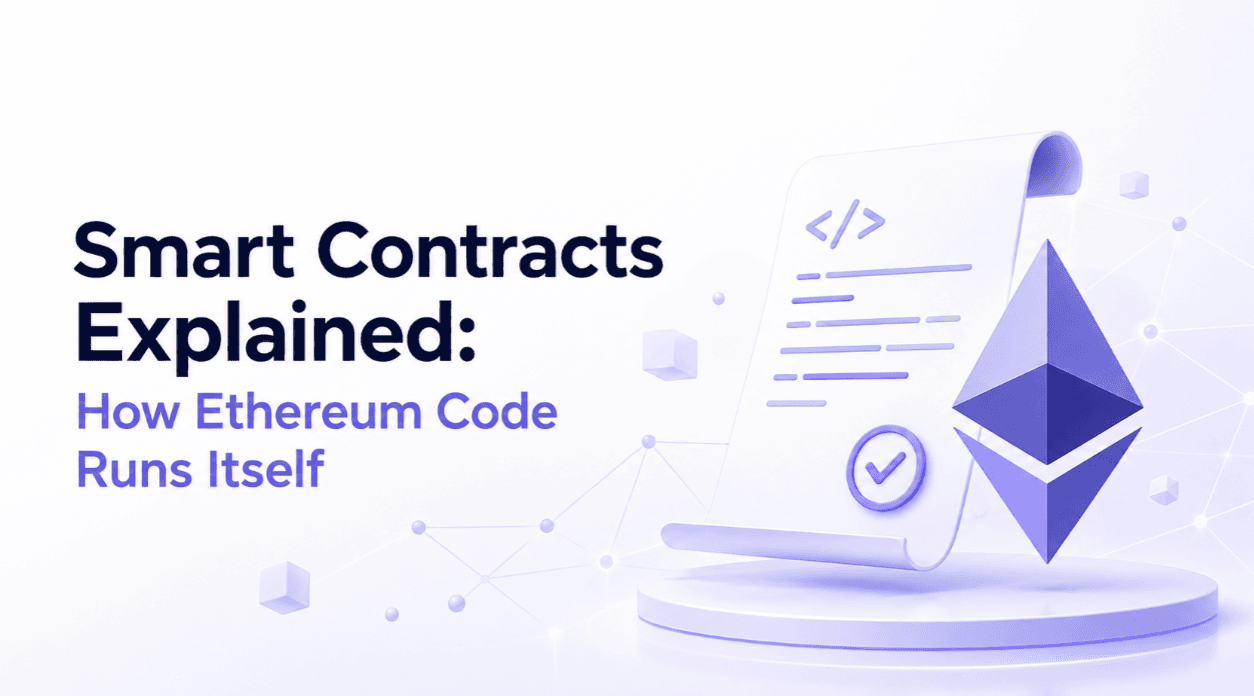
A smart contract is a program stored on a blockchain that runs automatically when its conditions are met. On Ethereum, it lives at an address, holds its own funds, and executes exactly as coded with no one able to pause or alter it once deployed. That predictability is the point: the rules apply to everyone equally, every time.
Key takeaways
- A smart contract is self-executing code that lives on-chain and runs deterministically.
- Anyone can call its functions, and its logic and balance are publicly visible.
- They remove the need to trust an intermediary to enforce an agreement.
- Bugs are permanent and exploitable, so audits and testing are essential.
- Most decentralized finance, NFTs and DAOs are built from smart contracts.
What makes a contract “smart”
The term predates Ethereum; computer scientist Nick Szabo described smart contracts in the 1990s as agreements expressed in code. Ethereum made the idea practical by giving that code a place to live and a way to run. A vending machine is the classic analogy: insert the right input and it releases the output automatically, with no clerk required. A smart contract generalizes that to any logic you can express.
How execution actually happens
Developers write contracts in a language such as Solidity or Vyper, then compile them to bytecode that the Ethereum Virtual Machine understands. Deploying the contract is itself a transaction that records the bytecode at a fresh address. After that, users send transactions that call specific functions. Every validator runs the same code against the same inputs, so the result is identical everywhere and recorded permanently.
Gas and limits
Because contracts consume computation, each call costs gas paid in ETH. Complex logic costs more. This pricing keeps the network from being clogged by infinite loops or wasteful code, and it forces developers to write efficient contracts rather than bloated ones.
What smart contracts are good for
- Token issuance, where rules for supply and transfers are fixed in code.
- Lending and trading protocols that hold and release funds without a broker.
- Escrow that pays out only when agreed conditions are verified.
- Governance, where token holders vote and outcomes execute automatically.
Code that cannot be quietly changed is both the greatest strength of a smart contract and its most unforgiving weakness. — CryptoCoinBeat analysis
The risks are real
Immutability cuts both ways. If a contract ships with a flaw, attackers can drain it before anyone reacts, and the code cannot simply be patched. The history of decentralized finance is littered with eight-figure losses traced to a single overlooked line. Reputable projects respond with independent audits, bug bounties, formal verification and time-locked upgrade mechanisms, but no process removes risk entirely.
Oracles and outside data
Contracts cannot reach the internet on their own. To react to a price, a sports result or a shipment, they rely on oracles, services that feed external data on-chain. A manipulated or faulty oracle can break an otherwise sound contract, which is why oracle design is a recurring source of exploits.
Are they legally binding?
A smart contract reliably enforces what its code says, but that is not the same as a legal contract. Courts may or may not recognize the arrangement, and disputes over intent cannot be settled by the code itself. In practice, many serious applications pair on-chain logic with off-chain legal agreements rather than relying on one alone.
This article is educational and not financial or legal advice. Smart contracts carry technical and financial risk; research thoroughly and consult a qualified professional before committing funds.
Frequently asked questions
Can a smart contract be changed after deployment?+
Not directly. The deployed bytecode is permanent. Developers can build upgrade patterns using proxy contracts, but these add complexity and their own risks. A contract advertised as fully immutable cannot be altered at all, which is reassuring for users but unforgiving if a bug ships.
Do smart contracts only exist on Ethereum?+
No. Ethereum popularized them, but many chains support smart contracts, including those that copied the Ethereum Virtual Machine and others with their own designs. Ethereum and EVM-compatible networks still host the largest share of smart-contract activity and developer tooling.
Are smart contracts safe to use?+
The technology is sound, but individual contracts vary widely in quality. Safety depends on careful coding, independent audits and battle-testing over time. Stick to well-established, audited protocols, avoid unaudited code holding large sums, and remember that even audited contracts have occasionally been exploited.
What happens if I send funds to a buggy contract?+
If a contract has a flaw or you interact with it incorrectly, your funds can be locked or lost with no way to reverse the transaction. There is no support line or chargeback. This is why verifying the contract address and using trusted applications is critical.
Written by
David TurnerCryptocurrency Markets, Blockchain Technology, Tokenomics Analysis, Digital Asset Regulation, DeFi, Web3 Industry Cover
David Turner is a U.S.-based Markets Reporter at CRYPTO·COINBEAT, covering cryptocurrency markets, blockchain innovation, and the rapidly evolving digital asset ecosystem across North America. Raised in California and educated in economics and digital media, David combines strong analytical skills with years of experience reporting on financial markets and emerging technologies. He began his journalism career covering equity markets, Federal Reserve policy, and fintech developments for several financial news outlets before specializing in cryptocurrency. As blockchain technology gained mainstream adoption, David shifted his focus to Bitcoin, Ethereum, decentralized finance, and digital asset regulation. Prior to joining CRYPTO·COINBEAT, he reported extensively on crypto exchanges, institutional investment, stablecoins, and the expanding Web3 economy. At **CRYPTO·COINBEAT**, David delivers data-driven reporting designed to help readers understand the fast-moving digital asset industry. His coverage frequently explores U.S. crypto legislation, tokenomics, blockchain adoption, market sentiment, and the impact of macroeconomic events on cryptocurrency markets. He is particularly recognized for his in-depth analysis of token supply models, vesting schedules, liquidity trends, and the long-term sustainability of blockchain projects. David earned a B.A. in Economics from the University of California, Los Angeles (UCLA), and completed additional coursework in data journalism and financial analysis. He also authors the daily market briefing, **"Opening Bell Crypto,"** providing traders and investors with concise analysis of overnight market activity, key industry developments, and emerging investment trends.
Keep Reading
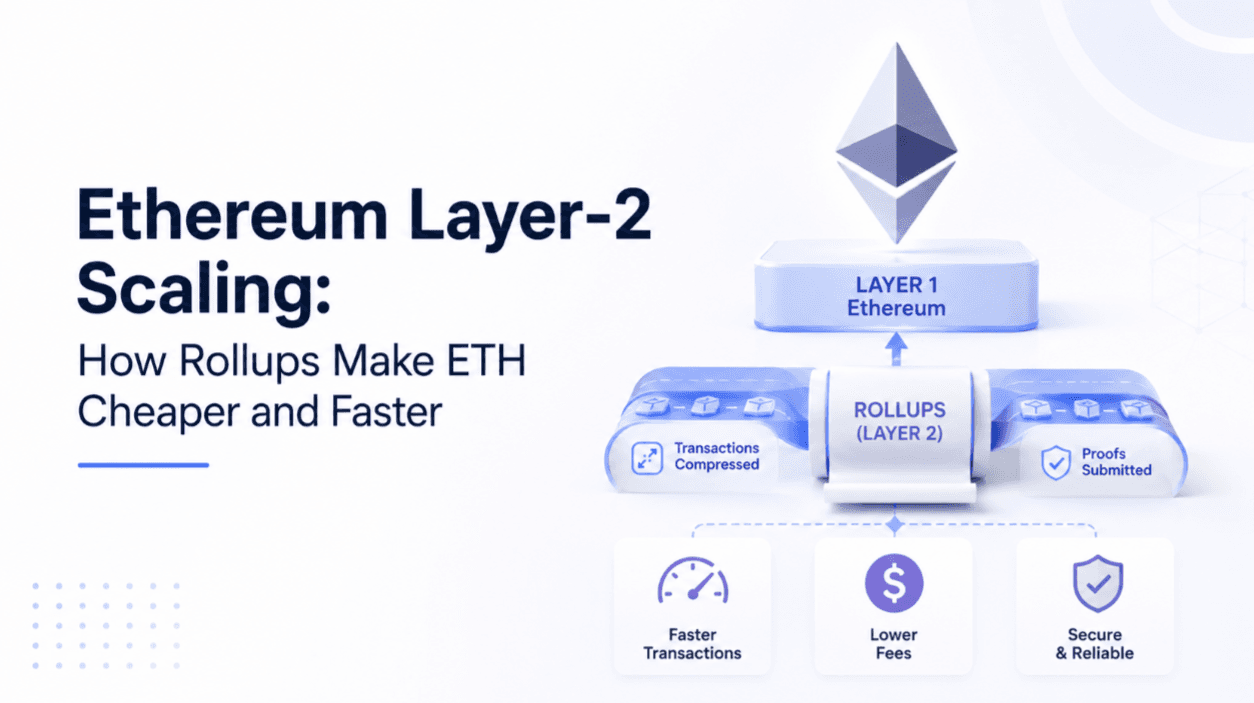
Ethereum Layer-2 Scaling: How Rollups Make ETH Cheaper and Faster
Rollups move execution off Ethereum’s base layer while keeping its security. Here is how optimistic and zk-rollups work and where they differ.
Maria Fernandez · May 3, 2026→
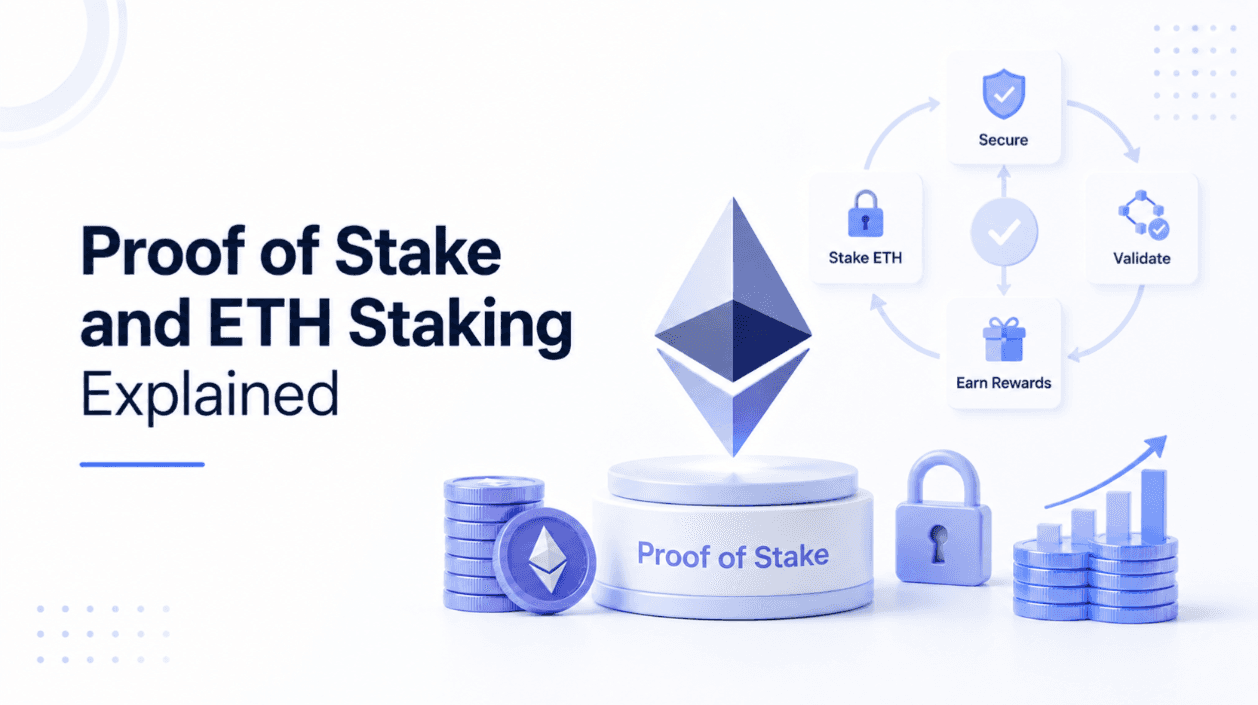
Proof of Stake and ETH Staking Explained
Ethereum secures itself with staked ETH instead of mining. Here is how validators, rewards and slashing work, and what staking really involves.
David Turner · May 16, 2026→
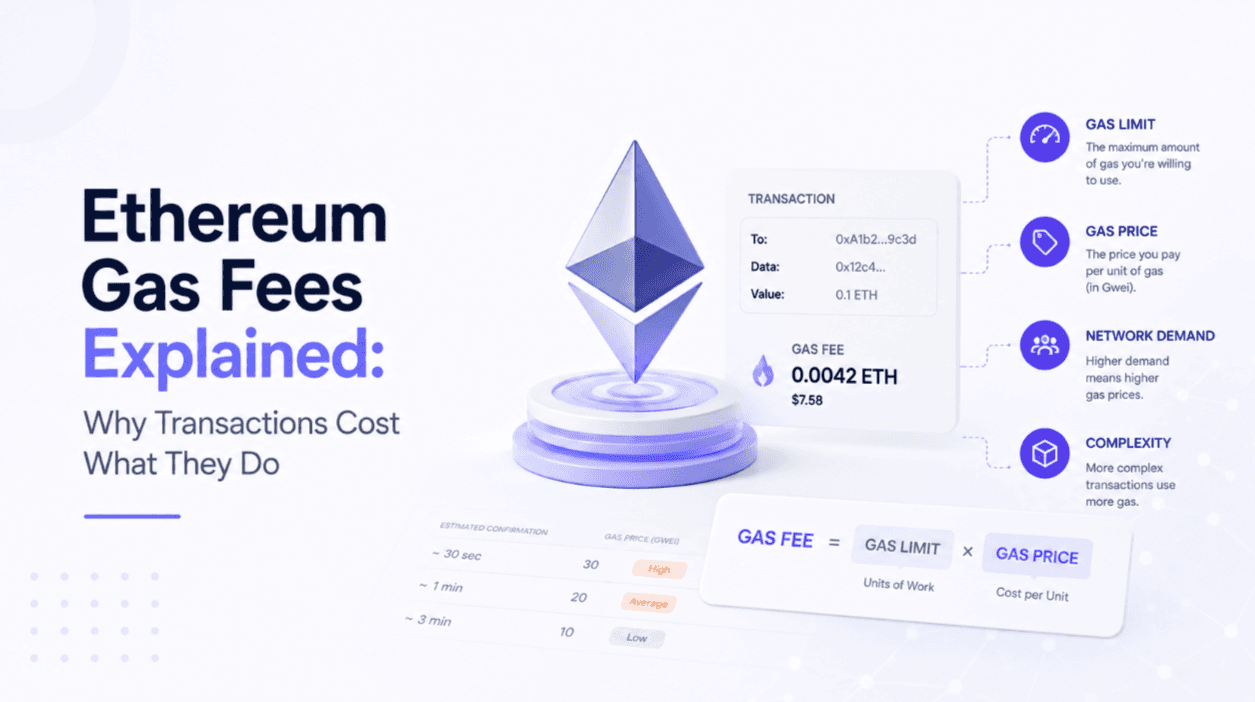
Ethereum Gas Fees Explained: Why Transactions Cost What They Do
Gas is how Ethereum prices computation. Here is what you are really paying for, why fees swing so hard, and how to keep them down.
David Turner · May 25, 2026→