Two-Factor Authentication for Crypto: What Actually Works
DeFi Protocols & RWA On-Chain AnalystDeFi Protocols & RWA On-Chain Analyst · September 13, 2026 · 8 min read
Published September 13, 2026 · Reviewed to our editorial standards. This article is informational and not financial advice.
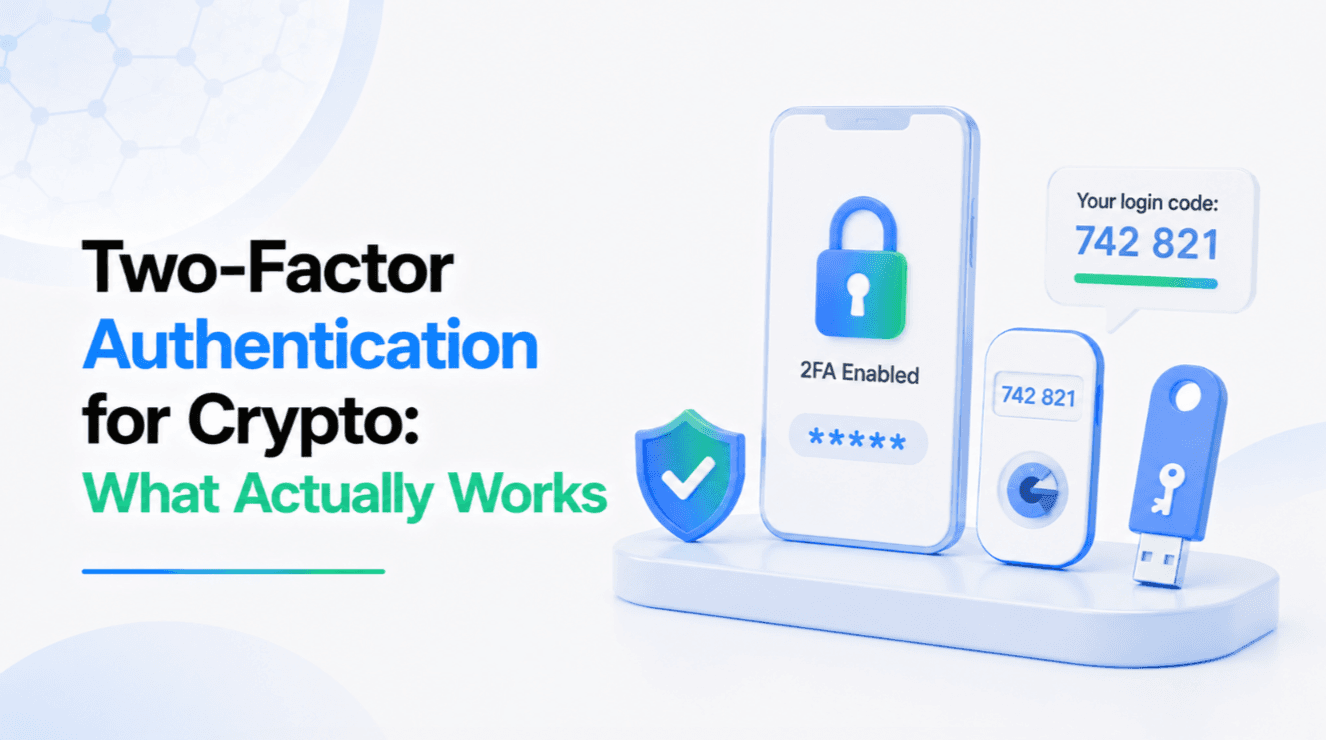
Self-custody removes the exchange from your threat model. Most people, though, keep an exchange account for buying, selling and fiat rails — and that account is protected by a password and whatever second factor you chose during signup, probably in a hurry.
The choice matters more than the setup screen suggests, because the options differ by orders of magnitude in what they resist.
SMS: the weakest option that is still the default
A code by text message defeats a stolen password and fails completely against a SIM swap, where an attacker persuades or bribes a carrier to move your number to their device. Crypto holders are specifically targeted for this, because the payoff is immediate and irreversible.
If SMS is all a platform offers, use it — it is better than nothing. But treat it as a reason to keep balances there small, and never as protection for meaningful funds.
Authenticator apps: the reasonable minimum
A time-based code generated on your device removes the carrier from the equation entirely. It resists SIM swaps and remote password theft, and it is available on every serious platform.
Its weakness is phishing: a convincing fake login page can ask for the code and use it within its window. It is a large improvement over SMS and not a complete defence, which brings us to the option that is.
Hardware security keys and passkeys
A hardware security key, or a passkey bound to your device, cryptographically ties the login to the real domain. Enter your credentials on a lookalike site and the key simply will not respond, because the domain does not match — which defeats the entire phishing category rather than making it harder.
That is the meaningful difference: other factors ask you to notice the fake, while this one refuses to work on it. For any exchange account holding real money, this is the correct choice, and support for it is one of the operational details worth checking in our best crypto exchanges table before you commit to a venue.
Recovery codes are the back door you set up yourself
Every 2FA setup issues backup codes, and their whole purpose is to bypass the second factor. A screenshot of them in a photo library, or a copy in an email folder, quietly turns your hardware key into a formality.
- Print them or write them by hand, and store them with your other physical valuables.
- Never keep them in the same place as the password, since together they are the account.
- Do not photograph them, because the photo syncs and the sync is the exposure.
- Register a second hardware key and store it separately, which removes most of the reason to rely on codes at all.
The email account is part of your crypto security
Most exchange recovery flows run through email, which makes that inbox as sensitive as the exchange account itself. Protect it with a hardware key too, and use an address you do not publish or reuse for newsletters and sign-ups.
An attacker who owns your email can usually reset the exchange password and work through the recovery options at leisure. Securing the exchange while leaving the inbox on a password from 2014 is a common and expensive asymmetry.
Withdrawal allowlists: the control people skip
Several exchanges let you lock withdrawals to a list of approved addresses, with a delay before a new one becomes usable. It is the single most effective account control after a hardware key, because it means a fully compromised session still cannot send funds anywhere you have not already authorised.
The delay is the point. An attacker who gets in must wait, and the waiting period is when the alerts arrive and you still have time to act. If your venue offers it, enable it before you next deposit.
What 2FA does not do
It protects the account, not the assets. If the venue itself fails, is hacked at the treasury level, or halts withdrawals, no amount of authentication on your side changes the outcome — that is a question about the platform's custody and reserves rather than your login.
Keep the two questions separate when you assess where money sits. Strong authentication on a weak custodian protects you from the wrong threat, which is why our exchange scoring weights custody and reserve disclosure above every convenience feature.
A configuration that holds
- Hardware security key or passkey on the exchange, with a second key registered as backup.
- The same on the email account used for recovery.
- Authenticator app only where hardware keys are unsupported; SMS only where nothing else exists.
- Withdrawal address allowlisting enabled where offered, so a compromised session cannot send anywhere new.
- Balances kept to what you are actively trading, with savings in self-custody — the split described in custodial vs non-custodial wallets.
Two operational habits complete it. Review the active sessions and API keys on the account periodically, revoking anything you do not recognise — a forgotten integration with trade permissions is a standing risk. And keep the exchange app's notifications on, because the earliest signal of a compromise is usually a login or withdrawal alert you did not expect, and minutes matter when an allowlist delay is running.
That last line is the one that limits the damage regardless of everything above it. Account security decides how likely a breach is; how much sits in the account decides what a breach costs.
Frequently asked questions
Is SMS 2FA safe for crypto?+
It is the weakest widely available option. A SIM swap moves your number to an attacker's device and defeats it entirely, and crypto holders are specifically targeted for that attack. Use an authenticator app or a hardware key wherever the platform allows.
What is the most secure 2FA for an exchange account?+
A hardware security key or a device-bound passkey, because the login is cryptographically tied to the real domain and will not work on a phishing clone. Register two keys so losing one does not lock you out.
Where should I store 2FA recovery codes?+
Physically — printed or handwritten, stored with other valuables, never photographed and never in the same place as your password. They exist specifically to bypass your second factor, so treat them with the same care.
Does 2FA protect my crypto if the exchange itself is hacked?+
No. Account security protects your account; it does nothing about the venue's own custody. That is a separate question about segregation, reserves and licensing, which is what our exchange table scores.
Written by
Maria FernandezDeFi Protocols, Real-World Assets, On-Chain Analytics, Stablecoins, Spanish-Language Coverage
Maria Fernandez is an On-Chain Research Analyst at **CRYPTO·COINBEAT**, specializing in real-world asset (RWA) tokenization, decentralized finance, and stablecoin ecosystems. Originally from Mexico City and now based in Miami, Maria brings a unique Latin American perspective to blockchain research, combining deep technical analysis with insights into emerging digital asset markets across the Americas. Before joining **CRYPTO·COINBEAT**, Maria spent several years researching decentralized finance protocols, producing in-depth analysis on lending platforms, governance systems, and the growing adoption of tokenized real-world assets. Her early research into institutional RWA integration and decentralized collateral models helped explain one of the fastest-growing sectors within the blockchain industry. Maria's analytical approach combines on-chain transaction analysis, protocol revenue metrics, liquidity monitoring, and governance activity to evaluate the long-term health of DeFi ecosystems. She works extensively with blockchain analytics platforms, including Dune Analytics, Nansen, and Flipside Crypto, and has created numerous public dashboards that simplify complex blockchain data for investors and researchers alike. Her coverage of stablecoin market events and liquidity shifts has helped readers better understand risk during periods of heightened market volatility. She holds a B.Sc. in Industrial Engineering from ITAM (Instituto Tecnológico Autónomo de México) and a Graduate Certificate in FinTech from MIT Sloan. Passionate about blockchain education, Maria regularly contributes both English- and Spanish-language research, helping make advanced on-chain analysis more accessible to a global audience while supporting the continued growth of crypto adoption throughout Latin America.
Keep Reading
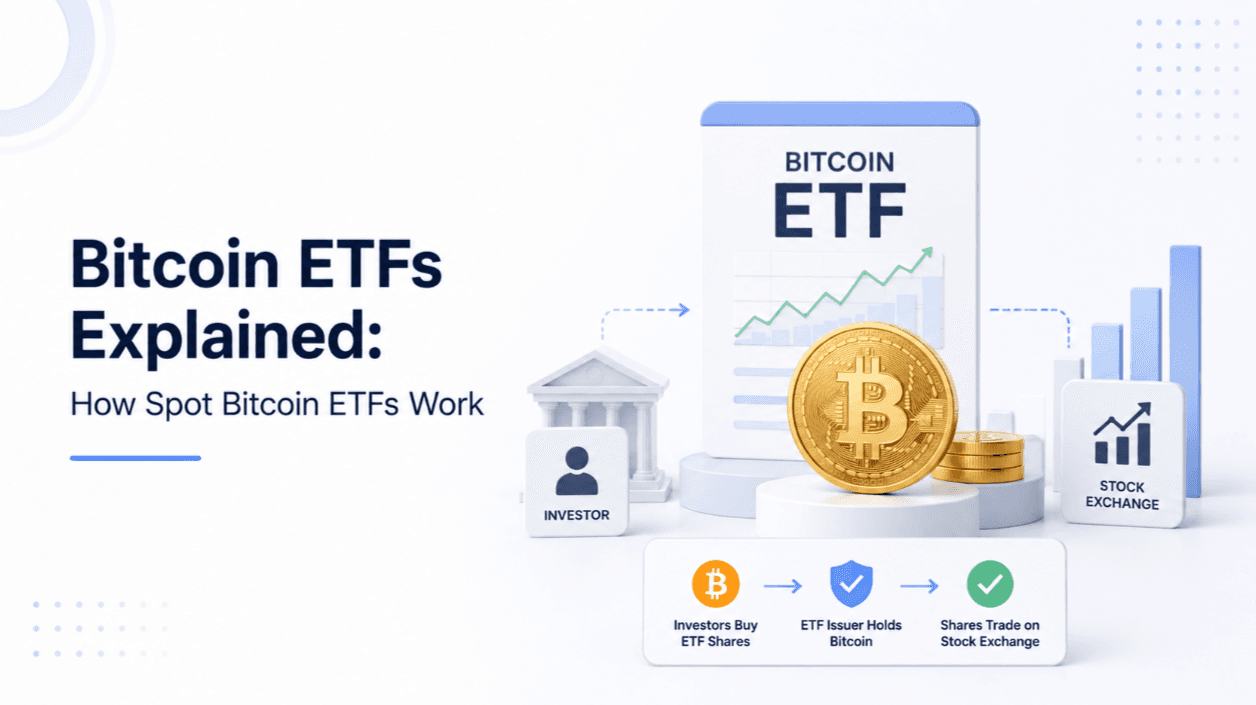
Bitcoin ETFs Explained: How Spot Bitcoin ETFs Work
Spot Bitcoin ETFs let investors hold bitcoin exposure in a brokerage account. Here is how they work and how they differ from owning coins.
Maria Fernandez · May 3, 2026→
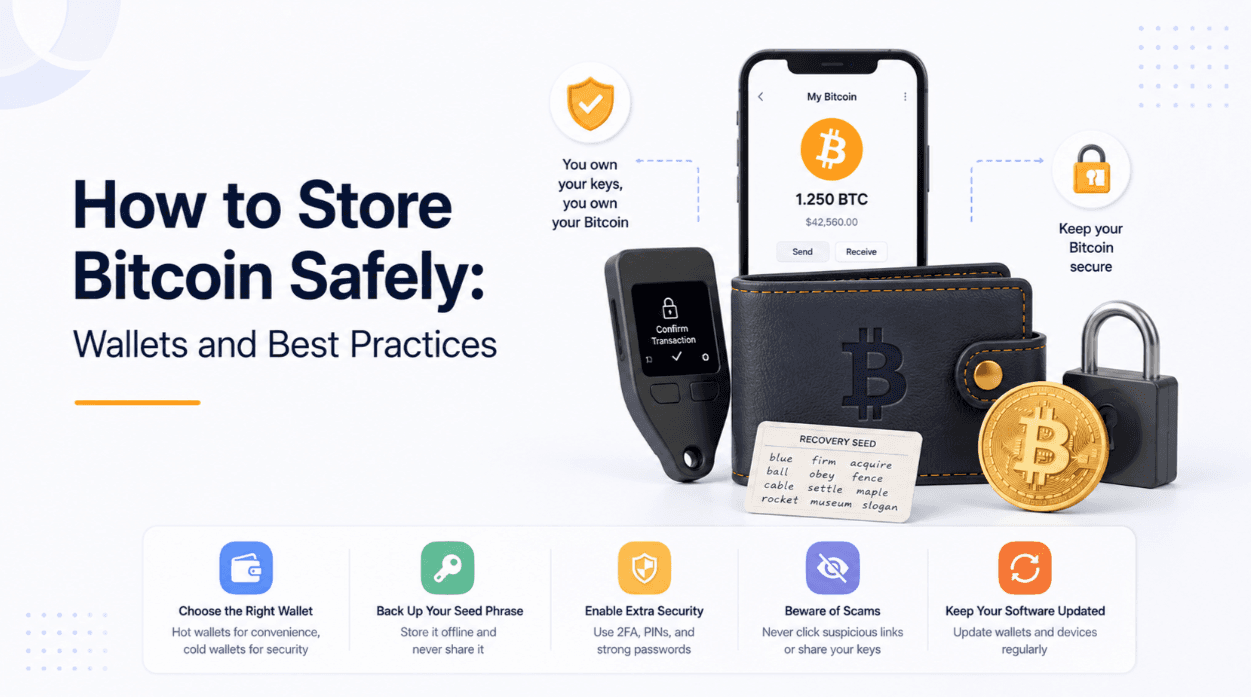
How to Store Bitcoin Safely: Wallets and Best Practices
Storing bitcoin safely comes down to protecting your private keys. Here is how wallet types compare and the habits that keep funds secure.
David Turner · May 17, 2026→
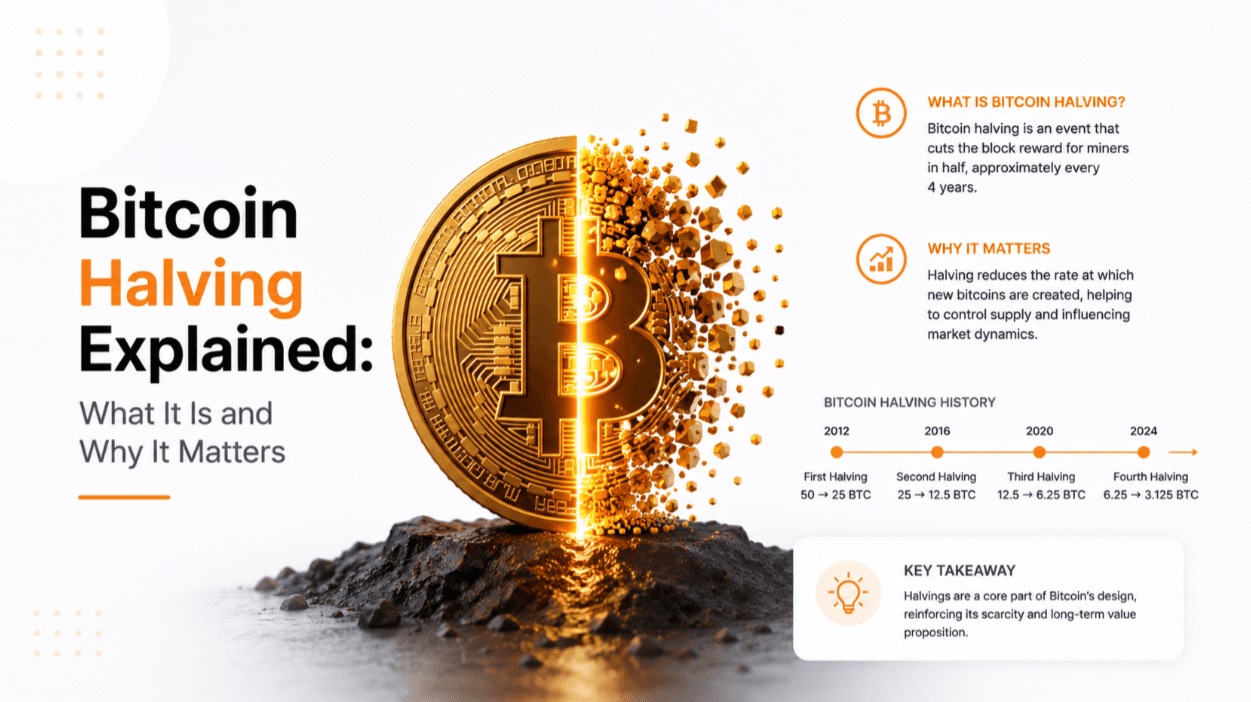
Bitcoin Halving Explained: What It Is and Why It Matters
Every four years Bitcoin cuts its issuance rate in half. Here is how the halving works, what history shows, and why it shapes supply.
Maria Fernandez · May 28, 2026→