What Is DeFi? Decentralized Finance Explained
By David Turner
Senior Crypto Markets Reporter at CryptoGrows. · June 16, 2026 · 9 min read
Published June 16, 2026 · Reviewed to our editorial standards. This article is informational and not financial advice.
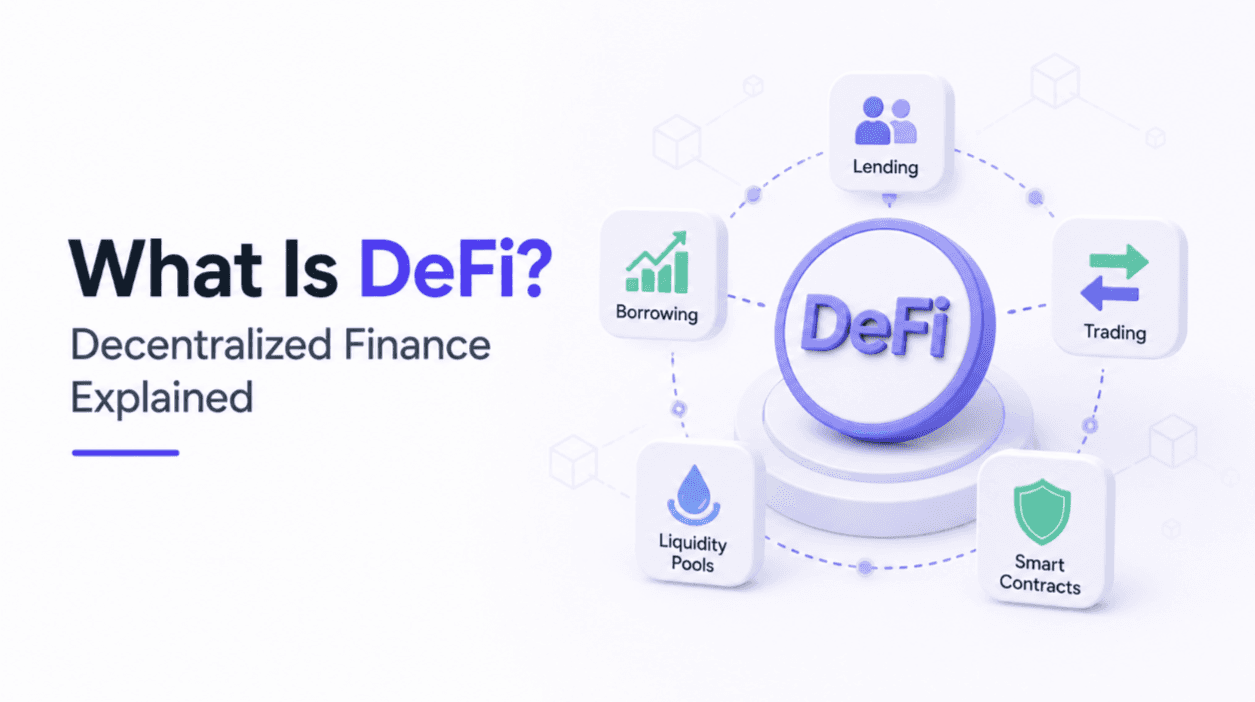
DeFi, short for decentralized finance, is a set of financial services built on public blockchains and run by smart contracts rather than banks or brokers. Instead of trusting a company to hold your money and process transactions, you interact directly with open-source programs that anyone can audit, anyone can use, and no single party controls.
Key takeaways
- DeFi replaces financial intermediaries with smart contracts on blockchains such as Ethereum and other compatible networks.
- Core services include trading on decentralized exchanges, lending and borrowing, stablecoins, and yield generation.
- You keep custody of your assets in your own wallet, which removes some risks and adds new ones.
- Smart-contract bugs, oracle failures, and scams are real and can cause total loss with no recourse.
- DeFi is permissionless and global, but it is also unregulated and squarely high-risk.
How DeFi differs from traditional finance
In traditional finance, a bank or exchange sits between you and your money. It holds your balance, verifies your identity, decides who can open an account, and can freeze or reverse transactions. DeFi removes that middle layer. The rules live in code deployed on a blockchain, and they execute automatically whenever the conditions are met.
The practical consequences are large. DeFi protocols are usually permissionless, meaning anyone with a wallet and an internet connection can use them without approval. They are composable, so one protocol can plug into another like building blocks. And they are transparent, because the code and most transaction data are public. The trade-off is that there is rarely a help desk, a chargeback, or an insurer of last resort.
The building blocks of DeFi
A handful of components show up across almost every DeFi application. Understanding them makes the whole space easier to read.
Smart contracts
A smart contract is a program stored on a blockchain that runs exactly as written. It might hold deposited funds, swap one token for another, or track who owes what. Because the contract enforces the rules itself, users do not need to trust a counterparty, only the code. That is also the catch: a flaw in the code becomes a flaw in your money.
Wallets and self-custody
To use DeFi you connect a self-custodial wallet such as a browser extension or hardware device. The wallet holds your private keys, and those keys control your assets. No one can move your funds without them, but if you lose the keys or sign a malicious transaction, there is no support line that can undo it.
Stablecoins and oracles
Stablecoins are tokens designed to track a stable value, usually the US dollar, and they act as the main unit of account across DeFi. Oracles are services that feed outside data, such as asset prices, into smart contracts. Lending and derivatives protocols depend on accurate oracle prices to decide when a loan is safe and when it must be liquidated.
What you can actually do with DeFi
The category covers a growing range of services, but most activity falls into a few familiar buckets.
- Trade tokens on decentralized exchanges (DEXs) that match swaps through automated liquidity pools rather than an order book operator.
- Lend assets to earn interest, or borrow against crypto you already hold by posting it as collateral.
- Hold stablecoins as a less volatile place to park value between trades.
- Provide liquidity to pools and earn a share of trading fees, often combined with extra token rewards.
- Access derivatives, insurance-like products, and asset management strategies, all governed by code.
DeFi gives ordinary users tools that once required a banking license. It also hands them risks that banks normally absorb on their behalf. — CryptoCoinBeat analysis
The risks you should weigh first
DeFi is one of the higher-risk corners of crypto, and the marketing rarely says so plainly. The most common ways people lose money are smart-contract exploits, where an attacker drains a protocol through a coding flaw, and oracle manipulation, where a fed price is gamed to trigger unfair liquidations or borrow more than collateral allows.
Beyond the code itself, there is governance risk, where token holders or insiders can change a protocol’s rules. There is scam risk, including fake tokens and drainer websites that ask you to sign approvals that empty your wallet. And there is plain volatility: collateral can fall in value fast enough to liquidate your position before you react. Because most DeFi is unregulated, there is usually no deposit insurance and no authority to appeal to.
How to get started carefully
If you decide to try DeFi, treat your first steps as research rather than investment. Start with a small amount you can afford to lose entirely. Use established protocols with a long track record and public audits, double-check website addresses to avoid phishing clones, and read what each transaction is actually approving before you sign it. A hardware wallet adds a meaningful layer of protection for anything beyond pocket change.
This article is for educational purposes only and is not financial advice. DeFi protocols carry a high risk of partial or total loss, the technology is experimental, and nothing here is a recommendation to buy, sell, or use any specific asset or platform. Do your own research and consider speaking with a qualified, independent professional before committing funds.
Frequently asked questions
Is DeFi safe for beginners?+
DeFi is high-risk and not designed with beginners in mind. There is no customer support, no chargebacks, and no deposit insurance. If you experiment, use a tiny amount, stick to well-known audited protocols, and learn how to read what each wallet transaction is approving before signing.
Do I need a lot of money to use DeFi?+
No. Most protocols have no minimum balance, so you can start with a small amount. The bigger limiting factor is network fees, which on busy chains can make tiny transactions uneconomical. Many users choose lower-fee networks to keep early experiments affordable.
How is DeFi different from a crypto exchange?+
A centralized exchange holds your funds and runs its own systems, much like a bank. DeFi keeps assets in your own wallet and runs on public smart contracts that anyone can inspect. That gives you more control but also more personal responsibility for security and mistakes.
Can I lose all my money in DeFi?+
Yes. Smart-contract exploits, oracle manipulation, scams, and sudden liquidations can each wipe out a position with no way to recover it. Because most DeFi is unregulated, there is rarely any insurer or authority to make you whole. Never deposit more than you can afford to lose.
Written by
David TurnerCryptocurrency Markets, Blockchain Technology, Tokenomics Analysis, Digital Asset Regulation, DeFi, Web3 Industry Cover
David Turner is a U.S.-based Markets Reporter at CRYPTO·COINBEAT, covering cryptocurrency markets, blockchain innovation, and the rapidly evolving digital asset ecosystem across North America. Raised in California and educated in economics and digital media, David combines strong analytical skills with years of experience reporting on financial markets and emerging technologies. He began his journalism career covering equity markets, Federal Reserve policy, and fintech developments for several financial news outlets before specializing in cryptocurrency. As blockchain technology gained mainstream adoption, David shifted his focus to Bitcoin, Ethereum, decentralized finance, and digital asset regulation. Prior to joining CRYPTO·COINBEAT, he reported extensively on crypto exchanges, institutional investment, stablecoins, and the expanding Web3 economy. At **CRYPTO·COINBEAT**, David delivers data-driven reporting designed to help readers understand the fast-moving digital asset industry. His coverage frequently explores U.S. crypto legislation, tokenomics, blockchain adoption, market sentiment, and the impact of macroeconomic events on cryptocurrency markets. He is particularly recognized for his in-depth analysis of token supply models, vesting schedules, liquidity trends, and the long-term sustainability of blockchain projects. David earned a B.A. in Economics from the University of California, Los Angeles (UCLA), and completed additional coursework in data journalism and financial analysis. He also authors the daily market briefing, **"Opening Bell Crypto,"** providing traders and investors with concise analysis of overnight market activity, key industry developments, and emerging investment trends.
Keep Reading
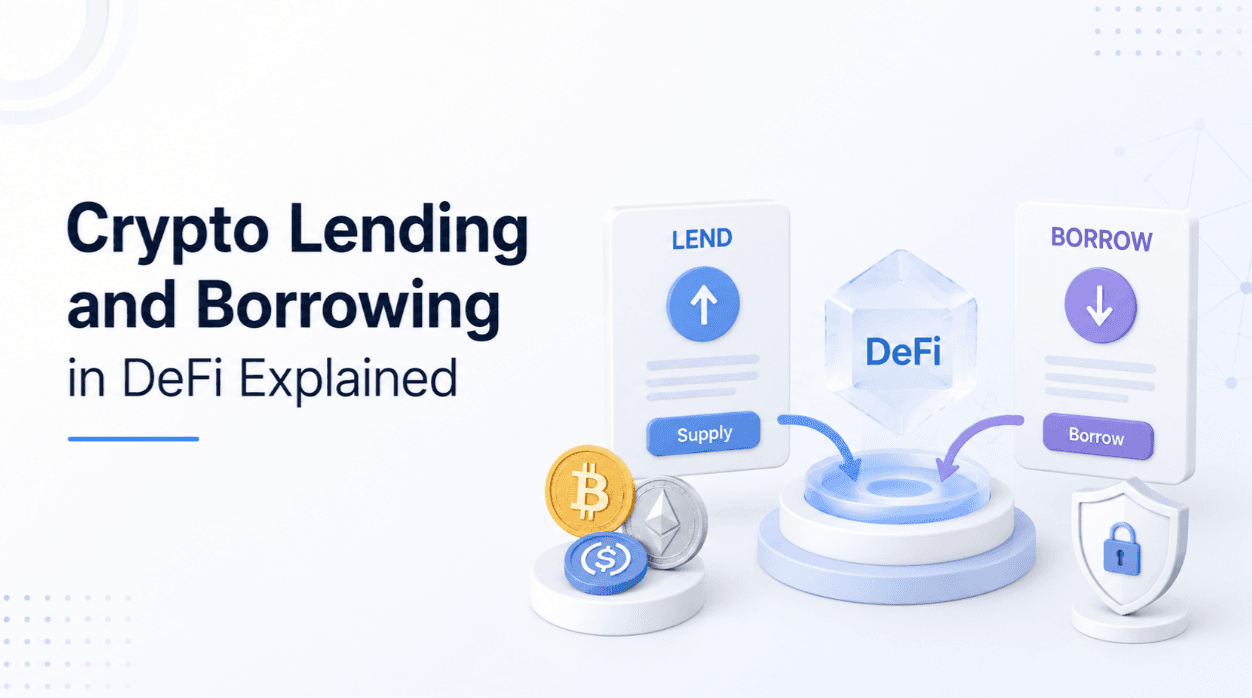
Crypto Lending and Borrowing in DeFi Explained
DeFi lending markets let anyone earn interest or borrow against crypto, governed entirely by code. Here is how collateral, rates, and liquidations actually work.
David Turner · May 2, 2026→
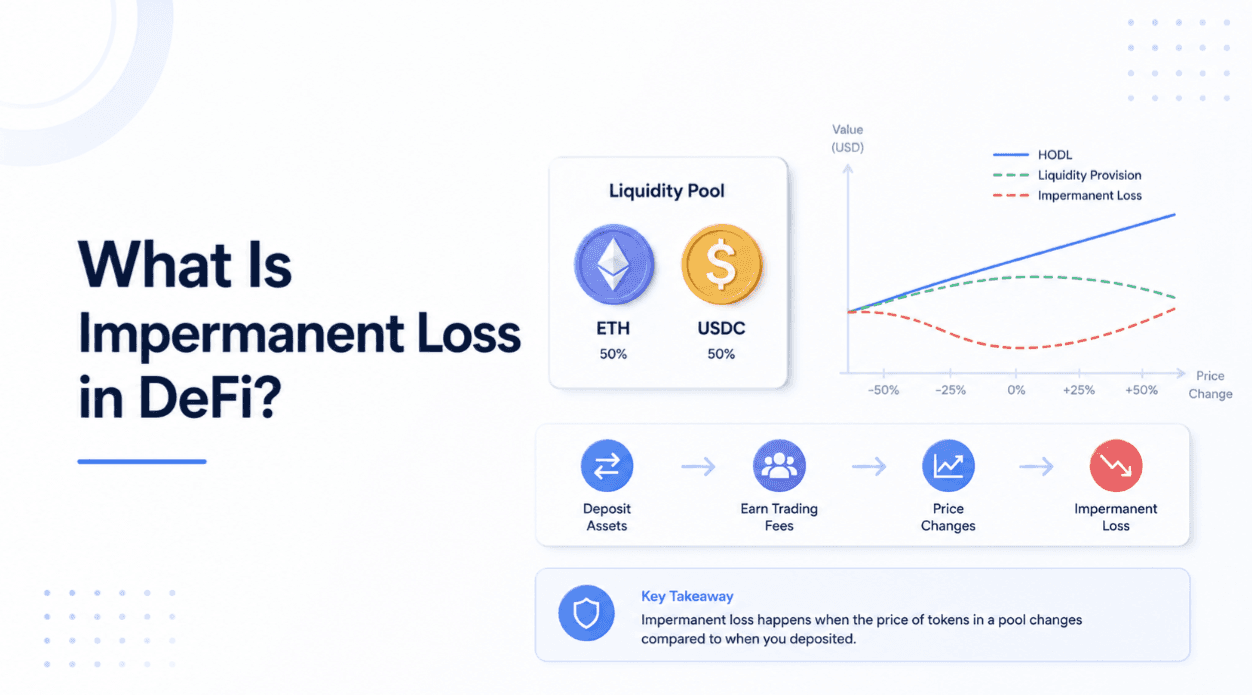
What Is Impermanent Loss in DeFi?
Impermanent loss quietly erodes the value of liquidity positions when token prices move. Here is why it happens, how big it gets, and when fees offset it.
Maria Fernandez · May 9, 2026→
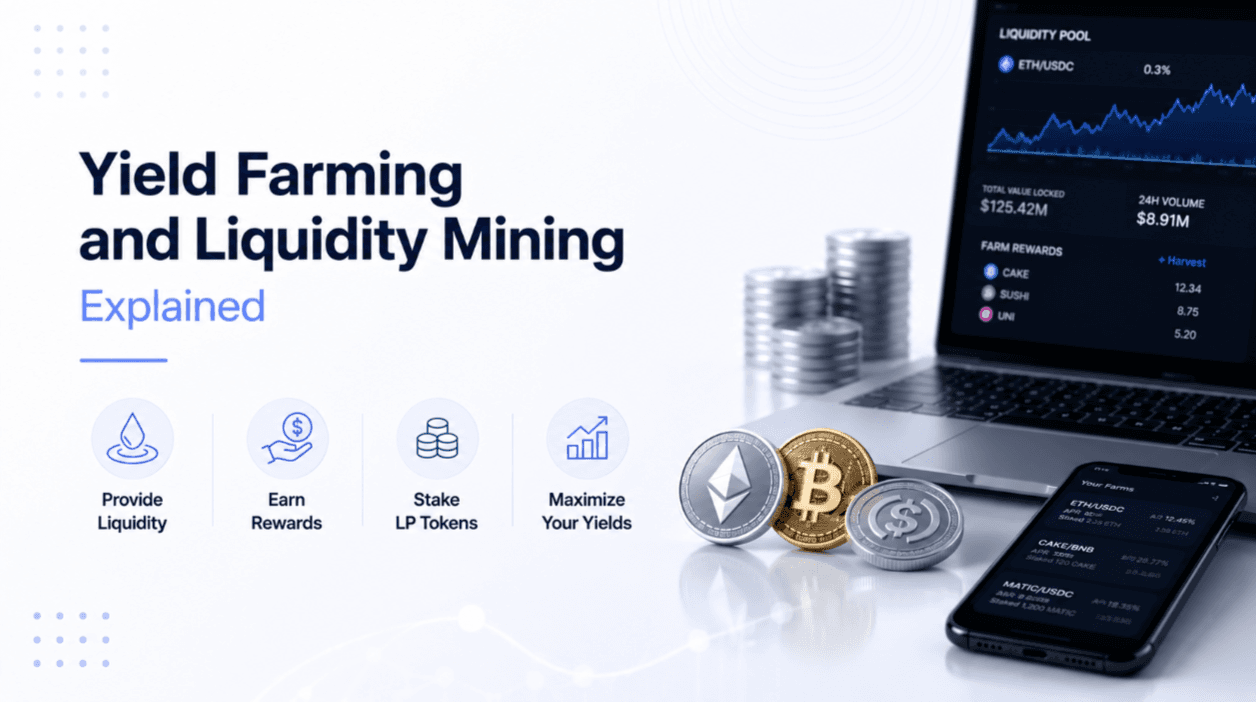
Yield Farming and Liquidity Mining Explained
Yield farming chases returns by moving crypto between DeFi protocols. We break down where the yield comes from, how APY can mislead, and the risks behind big numbers.
David Turner · May 23, 2026→