What Is Ethereum and How Does It Work?
By David Turner
Senior Crypto Markets Reporter at CryptoGrows. · June 19, 2026 · 9 min read
Published June 19, 2026 · Reviewed to our editorial standards. This article is informational and not financial advice.
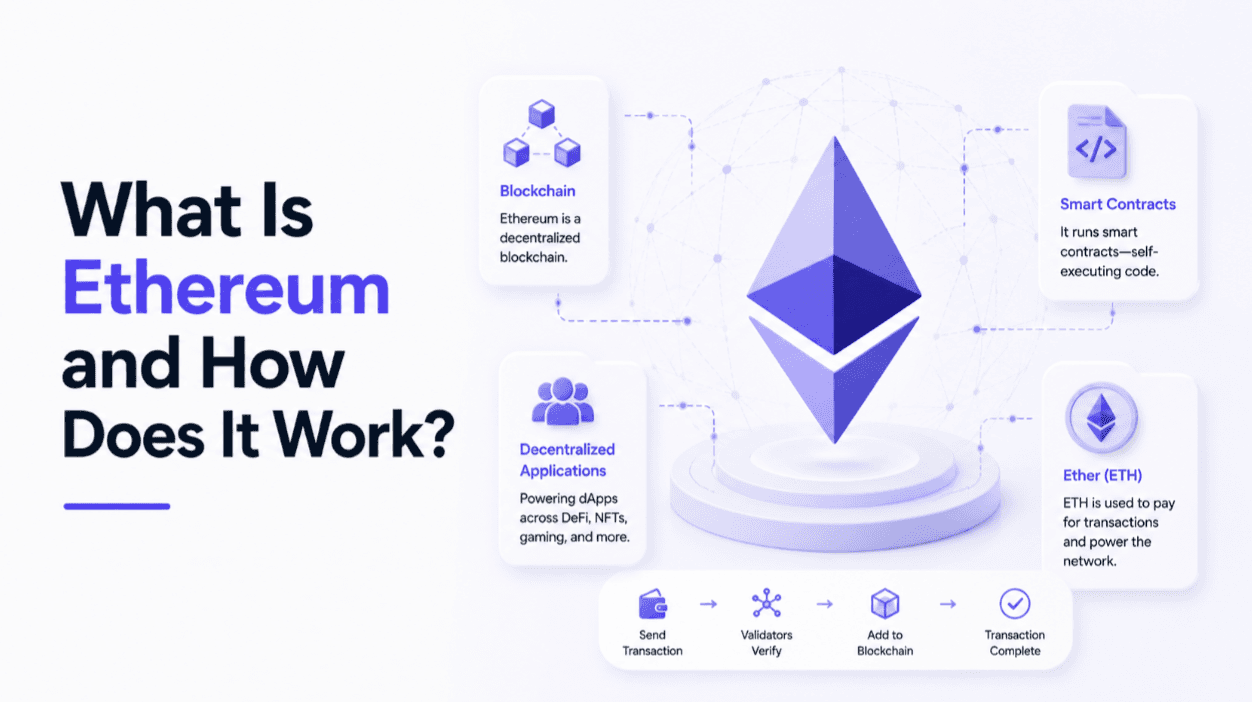
Ethereum is a decentralized, programmable blockchain that lets developers deploy applications, called smart contracts, which run exactly as written without a central operator. Its native asset, ether (ETH), pays for the computation and storage those programs use. Think of it as a shared, tamper-resistant computer that thousands of independent machines keep in sync.
Key takeaways
- Ethereum is a global, programmable blockchain; Bitcoin focuses on payments, Ethereum on running code.
- Smart contracts are self-executing programs stored on-chain that anyone can call.
- The Ethereum Virtual Machine (EVM) executes that code identically on every node.
- ETH pays transaction fees (gas) and secures the network through staking.
- Since 2022 Ethereum has used proof of stake, not energy-intensive mining.
The idea behind a “world computer”
Bitcoin proved that a network of strangers could agree on who owns what without a bank. Ethereum, launched in 2015, extended that idea: instead of tracking only balances, its ledger can store and run arbitrary programs. Developers describe it as a world computer because every participating node executes the same instructions and arrives at the same result, producing one shared state that no single company can edit or switch off.
That shared state is what makes Ethereum useful for finance, identity, gaming and ownership records. Once a contract is deployed, it keeps running as long as the network exists, and users interact with it directly rather than trusting an intermediary to behave.
How the network stays in agreement
Transactions are grouped into blocks roughly every 12 seconds. Validators, operators who lock up ETH as collateral, take turns proposing blocks and attesting to the validity of others. This is proof of stake: honest behavior earns rewards, while provably dishonest behavior can have a validator’s staked ETH slashed. Together these incentives keep the ledger consistent across the globe.
Finality
Ethereum confirms transactions in two stages. A block is first included, then becomes “finalized” after roughly two epochs, about 13 minutes, once a supermajority of validators has attested to it. Reversing a finalized block would require an attacker to burn an enormous amount of staked ETH, which is why finality matters for high-value settlement.
The EVM and smart contracts
The Ethereum Virtual Machine is the runtime that executes contract code. Developers usually write in Solidity, compile it to EVM bytecode, and deploy it to an address on the chain. From then on, anyone can send a transaction that calls the contract’s functions. Because every node runs the same bytecode against the same inputs, the outcome is deterministic and verifiable.
The breakthrough was not digital money. It was making a public ledger programmable, so that agreements could enforce themselves. — CryptoCoinBeat analysis
Gas: paying for computation
Every operation on Ethereum costs gas, a unit that measures computational effort. Users pay for gas in ETH. Fees rise when the network is busy and fall when it is quiet, because block space is limited and priced by demand. This mechanism both compensates validators and discourages spam, since wasting the network’s resources is never free.
What ETH actually does
- Pays gas fees for every transaction and contract call.
- Serves as collateral that validators stake to secure the chain.
- Acts as the base currency and collateral across decentralized finance.
- Is partly burned with each transaction, reducing supply when activity is high.
Where Ethereum is heading
Ethereum’s long-term plan pushes most user activity onto layer-2 rollups, which batch many transactions and post compressed proofs back to the main chain. The base layer increasingly behaves as a secure settlement and data-availability layer, while rollups handle cheap, fast execution. Upgrades since 2024 have steadily lowered rollup costs, making everyday transactions far cheaper than on the base layer alone.
This article is educational and not financial advice. Cryptoassets are volatile and you can lose money; do your own research and consult a licensed professional before investing.
Frequently asked questions
Is Ethereum the same as ether?+
No. Ethereum is the blockchain network and platform; ether, or ETH, is the native cryptocurrency used on it. People often say Ethereum loosely to mean the coin, but technically you hold ETH and use it on the Ethereum network to pay fees and interact with applications.
Does Ethereum still use mining?+
No. Ethereum switched from proof-of-work mining to proof of stake in September 2022, an event called the Merge. Validators now secure the network by staking ETH instead of running power-hungry mining hardware, cutting the network’s energy use by more than 99 percent.
What can you actually do with Ethereum?+
You can send ETH, trade tokens, lend and borrow through decentralized finance, mint and trade NFTs, and use applications for identity, gaming and governance. Because anyone can deploy a smart contract, the range of uses keeps expanding without needing permission from a central authority.
Is Ethereum secure?+
The base protocol is secured by hundreds of billions of dollars of staked ETH and a large validator set, making attacks extremely costly. Most real-world risk comes not from the chain itself but from buggy smart contracts, scams and user mistakes such as mishandled private keys.
Written by
David TurnerCryptocurrency Markets, Blockchain Technology, Tokenomics Analysis, Digital Asset Regulation, DeFi, Web3 Industry Cover
David Turner is a U.S.-based Markets Reporter at CRYPTO·COINBEAT, covering cryptocurrency markets, blockchain innovation, and the rapidly evolving digital asset ecosystem across North America. Raised in California and educated in economics and digital media, David combines strong analytical skills with years of experience reporting on financial markets and emerging technologies. He began his journalism career covering equity markets, Federal Reserve policy, and fintech developments for several financial news outlets before specializing in cryptocurrency. As blockchain technology gained mainstream adoption, David shifted his focus to Bitcoin, Ethereum, decentralized finance, and digital asset regulation. Prior to joining CRYPTO·COINBEAT, he reported extensively on crypto exchanges, institutional investment, stablecoins, and the expanding Web3 economy. At **CRYPTO·COINBEAT**, David delivers data-driven reporting designed to help readers understand the fast-moving digital asset industry. His coverage frequently explores U.S. crypto legislation, tokenomics, blockchain adoption, market sentiment, and the impact of macroeconomic events on cryptocurrency markets. He is particularly recognized for his in-depth analysis of token supply models, vesting schedules, liquidity trends, and the long-term sustainability of blockchain projects. David earned a B.A. in Economics from the University of California, Los Angeles (UCLA), and completed additional coursework in data journalism and financial analysis. He also authors the daily market briefing, **"Opening Bell Crypto,"** providing traders and investors with concise analysis of overnight market activity, key industry developments, and emerging investment trends.
Keep Reading
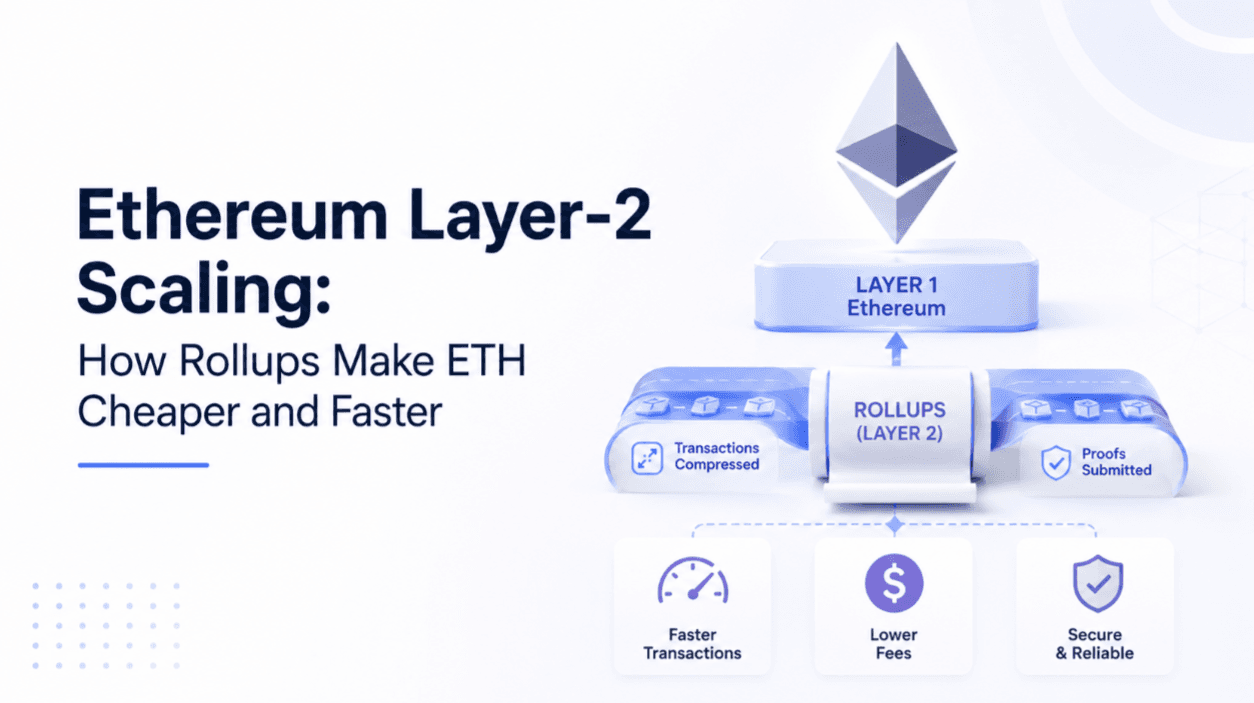
Ethereum Layer-2 Scaling: How Rollups Make ETH Cheaper and Faster
Rollups move execution off Ethereum’s base layer while keeping its security. Here is how optimistic and zk-rollups work and where they differ.
Maria Fernandez · May 3, 2026→
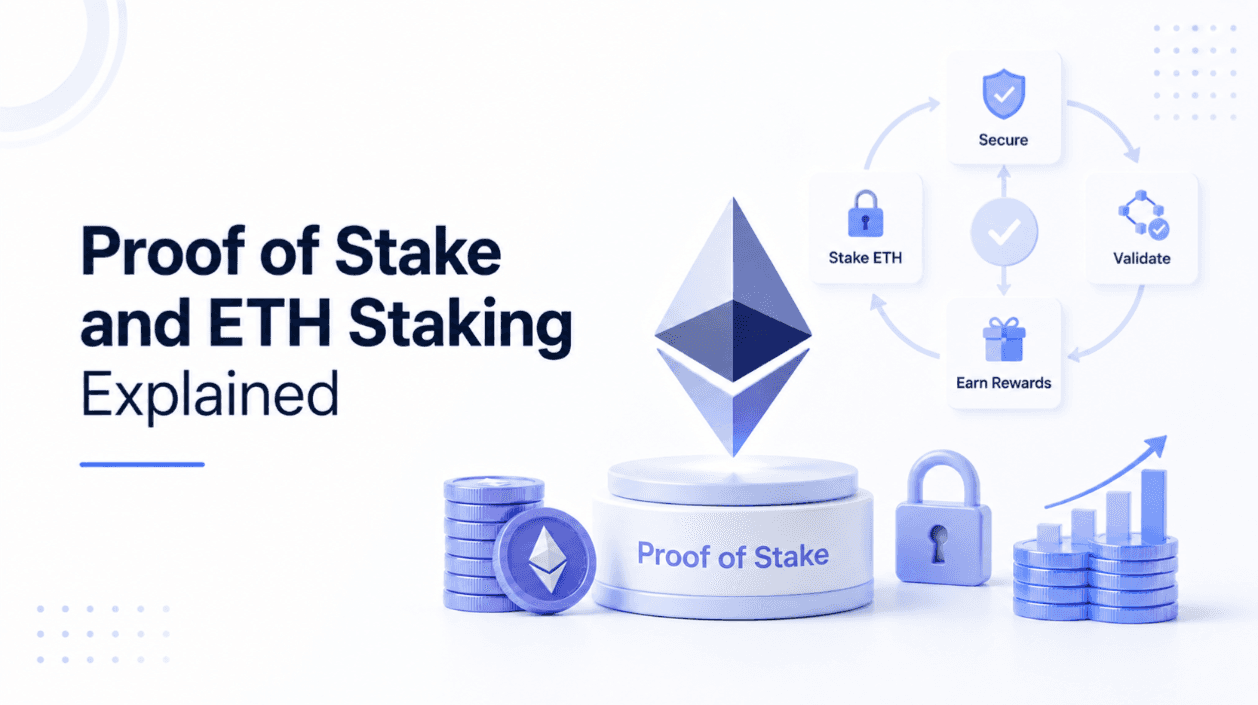
Proof of Stake and ETH Staking Explained
Ethereum secures itself with staked ETH instead of mining. Here is how validators, rewards and slashing work, and what staking really involves.
David Turner · May 16, 2026→
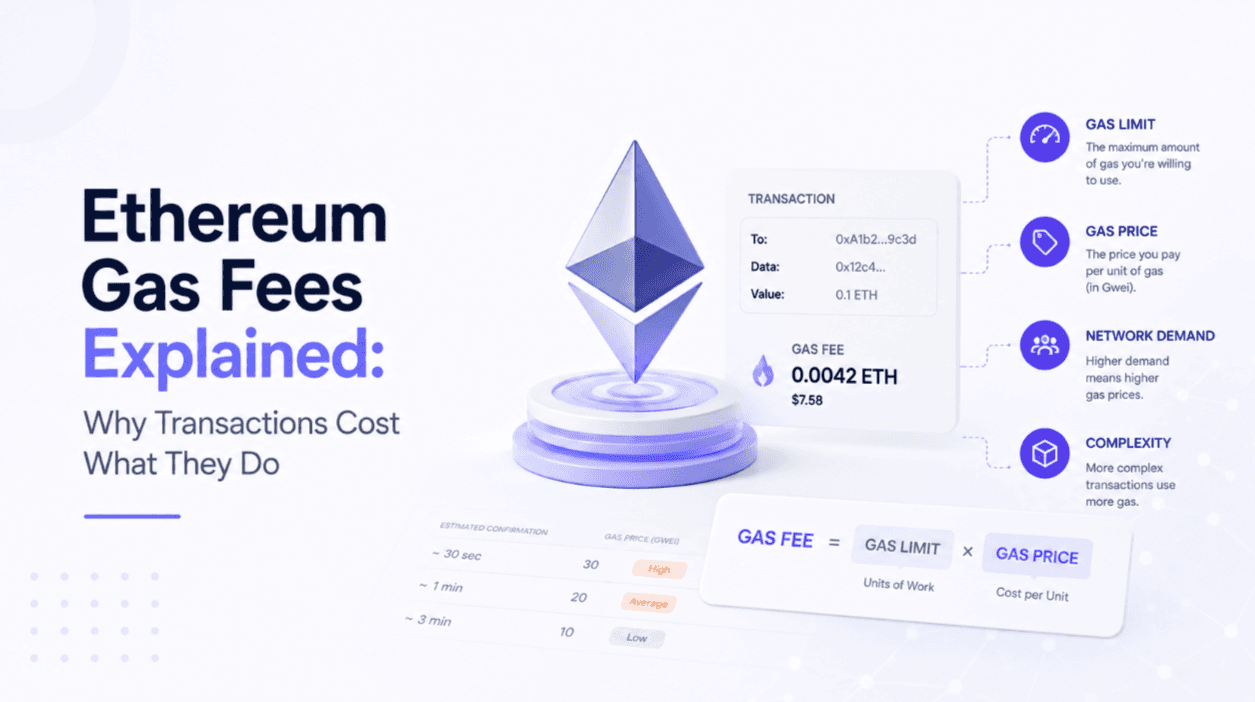
Ethereum Gas Fees Explained: Why Transactions Cost What They Do
Gas is how Ethereum prices computation. Here is what you are really paying for, why fees swing so hard, and how to keep them down.
David Turner · May 25, 2026→