Stablecoins for Saving or Trading: How to Choose
By David Turner
Senior Crypto Markets Reporter at CryptoCoinBeat. · October 1, 2026 · 8 min read
Published October 1, 2026 · Reviewed to our editorial standards. This article is informational and not financial advice.
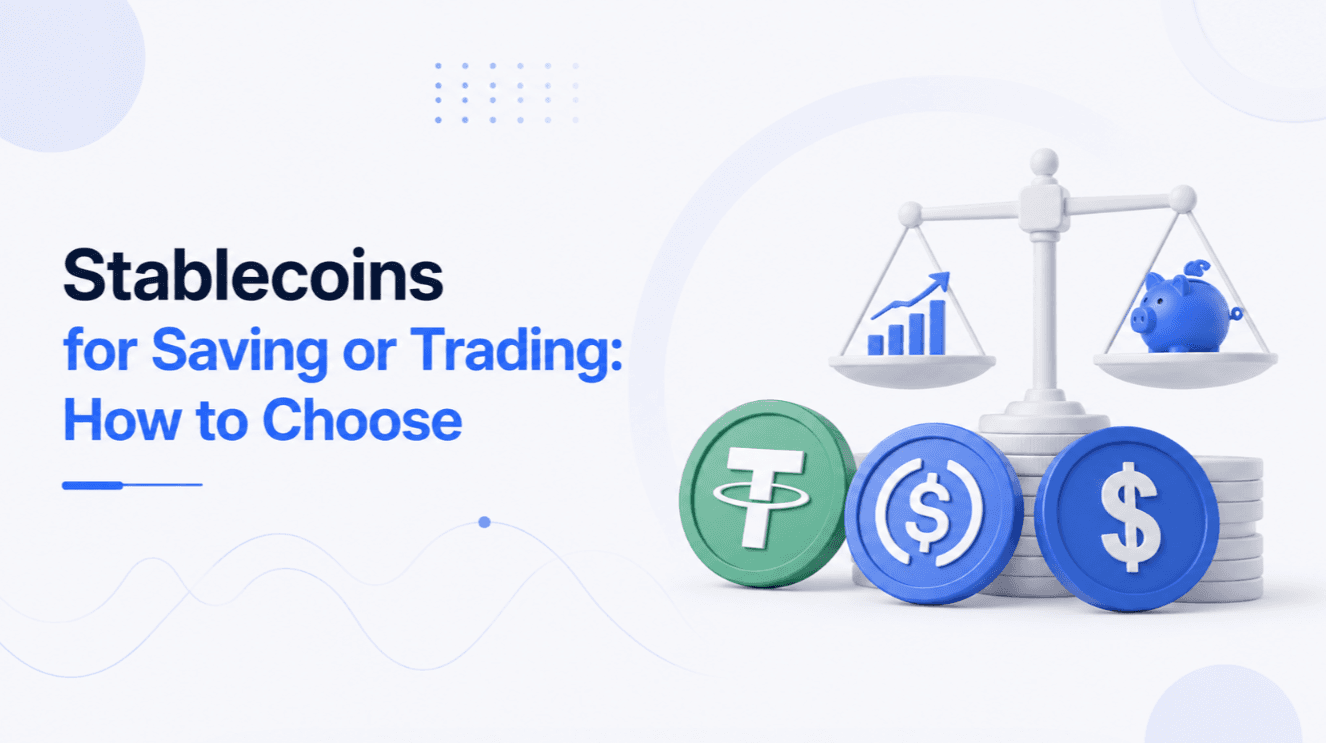
Ask which stablecoin is best and you will get an argument. Ask which one is best for a specific job and the answer is usually obvious, because the tokens differ on axes that matter for some purposes and are irrelevant for others.
Here are the four jobs people actually have, and what each one should optimise for.
Job one: holding a balance for weeks or months
Optimise for reserve quality and disclosure, because time is what turns a small probability into a real one. You want cash and short-dated government debt, published frequently, attested by a named accounting firm — and ideally an issuer whose own accounts are audited.
That points to USDC among the majors, and to trust-issued alternatives such as PYUSD and RLUSD, which publish monthly attestations under New York trust charters. Liquidity matters less here: you are not moving in and out, so a thinner market costs you nothing until the day you exit.
Split across two issuers with different reserve models if the balance is meaningful. They fail in different ways, and there is no cost to holding both.
Job two: trading and moving between venues
Optimise for liquidity and venue coverage, because your exposure lasts hours and your costs are spreads. USDT wins this outright: more pairs, more chains, deeper books, and in several markets it is the base asset local rails settle in.
The disclosure gap that matters for savings barely applies to a position you hold for an afternoon. This is why experienced traders hold USDT for operations and something else for balances — not inconsistency, just two different jobs.
Job three: on-chain collateral
Optimise for how the protocol prices it and how deep the local liquidity is, because those decide your liquidation risk. A token that holds par globally can still be quoted badly on the venue holding your position, and October 2025 showed what that costs when an exchange oracle read its own thin book.
Check which stablecoins the protocol accepts, what oracle it uses for each, and where the deepest pool for that token sits on that chain. Our best DeFi protocols table covers how the major venues source prices.
Job four: payments and spending
Optimise for acceptance and for the tax consequence. Spending a stablecoin produces gains near zero, which turns a bookkeeping nightmare into a rounding error compared with spending a volatile asset — the mechanics are in how crypto cards work.
For receiving payments, the constraint is what your counterparty can send and what your off-ramp will accept. USDT and USDC dominate for a reason: everything supports them.
What about yield-bearing stablecoins
Treat them as a separate asset class. A token paying yield is lending your money to someone, running a hedged trading position, or passing through Treasury income — three different risks wearing the same dollar sign.
None of that is disqualifying, and it is not cash. If you cannot name where the yield comes from and what stops it, you do not know what you are holding, which is a poor position to be in for the part of a portfolio meant to be the safe part.
The chain question nobody asks first
Whichever token you choose, check whether the version on your chain is issued natively or bridged. A bridged token is backed by whatever the bridge holds, and the issuer has no obligation to you if that bridge fails.
On major networks both leading issuers mint natively. On smaller chains a wrapper is common, and the risk you carry is the bridge's rather than the issuer's — a distinction that has cost people money without them ever knowing they took it.
Where you hold it matters as much as which one
A stablecoin balance sitting on an exchange carries two risks stacked on top of each other: the issuer's and the venue's. The token can be perfectly backed and still be unavailable because the platform holding it has halted withdrawals, which is precisely what happened to a great many people in 2022.
For anything you are not actively trading, hold the balance in a wallet you control. It costs a network fee and removes an entire counterparty from the arrangement, which is the best trade available in this whole article.
Diversification that actually helps
Holding three tokens from issuers with the same reserve model and the same banking partners is not diversification — it is one exposure written three ways. Useful diversification means different failure modes: a bank-reserve token, a collateralised on-chain token, and possibly a trust-issued one under a different supervisor.
The point is that a single event should not be able to affect all of your positions at once. March 2023 illustrated the opposite case neatly: DAI moved with USDC because it was substantially backed by USDC, so a holder of both had far less diversification than the two tickers suggested.
A simple allocation
- Savings: USDC, or split with a trust-issued alternative, held in self-custody rather than on an exchange.
- Trading float: USDT on the venue you trade at, sized to what you are actively using.
- Collateral: whatever the protocol prices best and has the deepest local pool, checked before you post it.
- Spending: a stablecoin balance on the card rather than a volatile asset, replenished as needed.
Our best stablecoins table scores each token on reserve quality, attestation depth, peg record and redemption access, which are the four inputs to every one of these decisions.
Frequently asked questions
Which stablecoin is best for long-term holding?+
One with high-quality reserves and frequent independent attestation — USDC among the majors, or trust-issued alternatives like PYUSD and RLUSD. For meaningful balances, split across two issuers with different reserve models.
Why do traders use USDT instead of USDC?+
Liquidity and venue coverage. USDT trades in more pairs on more chains, and in some markets local rails settle in it. For positions held for hours, depth saves more than disclosure protects.
Are yield-bearing stablecoins safe to hold?+
They are structured products, not cash. The yield comes from lending, a hedged trading position or Treasury income, and each has a scenario where it stops. Hold them only if you can name where the return comes from.
Does it matter which chain my stablecoin is on?+
Yes. A natively issued token is backed by the issuer's reserve; a bridged version is backed by the bridge, which the issuer has no responsibility for. Check before treating them as the same asset.
Written by
David TurnerCryptocurrency Markets, Blockchain Technology, Tokenomics Analysis, Digital Asset Regulation, DeFi, Web3 Industry Cover
David Turner is a U.S.-based Markets Reporter at CRYPTO·COINBEAT, covering cryptocurrency markets, blockchain innovation, and the rapidly evolving digital asset ecosystem across North America. Raised in California and educated in economics and digital media, David combines strong analytical skills with years of experience reporting on financial markets and emerging technologies. He began his journalism career covering equity markets, Federal Reserve policy, and fintech developments for several financial news outlets before specializing in cryptocurrency. As blockchain technology gained mainstream adoption, David shifted his focus to Bitcoin, Ethereum, decentralized finance, and digital asset regulation. Prior to joining CRYPTO·COINBEAT, he reported extensively on crypto exchanges, institutional investment, stablecoins, and the expanding Web3 economy. At **CRYPTO·COINBEAT**, David delivers data-driven reporting designed to help readers understand the fast-moving digital asset industry. His coverage frequently explores U.S. crypto legislation, tokenomics, blockchain adoption, market sentiment, and the impact of macroeconomic events on cryptocurrency markets. He is particularly recognized for his in-depth analysis of token supply models, vesting schedules, liquidity trends, and the long-term sustainability of blockchain projects. David earned a B.A. in Economics from the University of California, Los Angeles (UCLA), and completed additional coursework in data journalism and financial analysis. He also authors the daily market briefing, **"Opening Bell Crypto,"** providing traders and investors with concise analysis of overnight market activity, key industry developments, and emerging investment trends.
Keep Reading
Crypto Lending and Borrowing in DeFi Explained
DeFi lending markets let anyone earn interest or borrow against crypto, governed entirely by code. Here is how collateral, rates, and liquidations actually work.
David Turner · May 2, 2026→
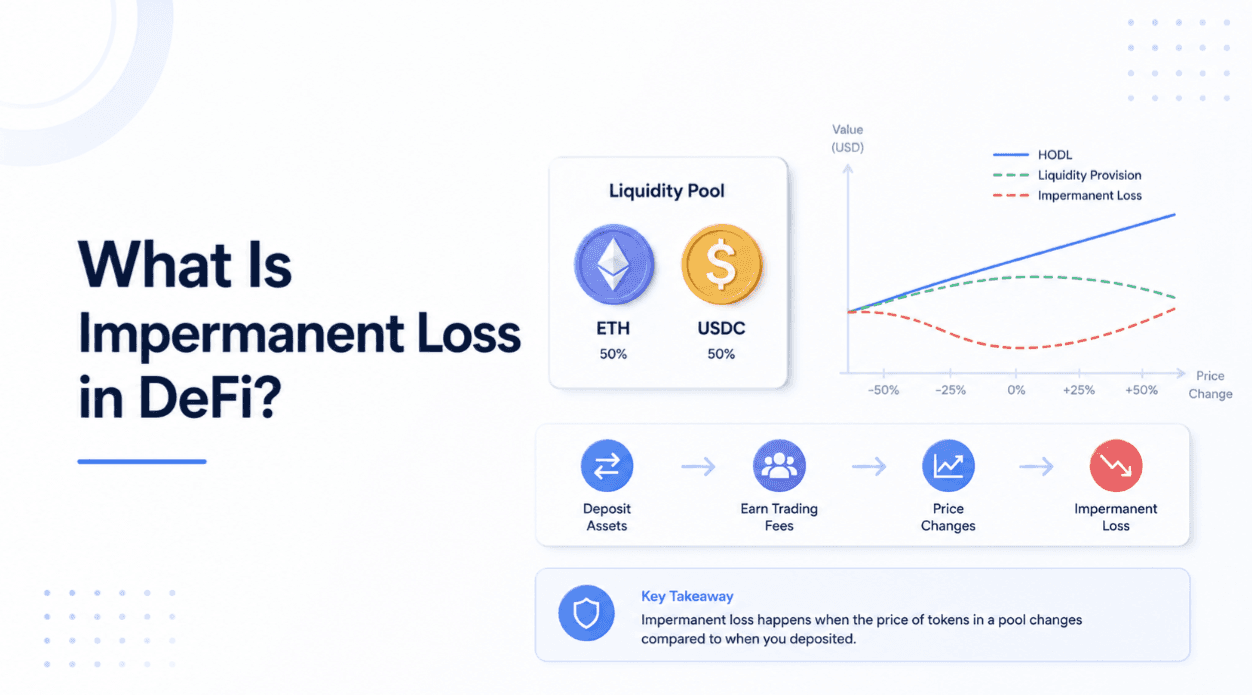
What Is Impermanent Loss in DeFi?
Impermanent loss quietly erodes the value of liquidity positions when token prices move. Here is why it happens, how big it gets, and when fees offset it.
Maria Fernandez · May 9, 2026→
Yield Farming and Liquidity Mining Explained
Yield farming chases returns by moving crypto between DeFi protocols. We break down where the yield comes from, how APY can mislead, and the risks behind big numbers.
David Turner · May 23, 2026→