Points Are Not Yield
DeFi Protocols & RWA On-Chain Analyst · November 4, 2026 · 9 min read
Published November 4, 2026 · Reviewed to our editorial standards. This article is informational and not financial advice.

For several years now, a large share of capital in DeFi has moved in response to points: non-transferable balances that accumulate as you use a protocol, with a strong implication that they will convert into a token allocation at some future date.
They are not yield, they are not a contract, and they are frequently worth a great deal. All three of those are true at once, which is what makes them hard to think about clearly.
What a point actually is
A number in a database controlled by the issuing protocol. Not a token, not transferable in most cases, not redeemable for anything, and not attached to any published conversion rate — because there is usually no conversion rate to publish yet.
The protocol may state an intention to reward early users. It rarely states the size of the allocation, the conversion formula, the eligibility criteria or the vesting schedule, and every one of those can be set after your capital is already committed.
That is not fraud. It is a marketing programme with genuine flexibility built in, and the flexibility belongs entirely to the issuer.
Why they work so well
Points solve a real problem. A protocol wants deposits before it has a token to pay with, and issuing a token too early caps its own upside and attracts capital that leaves the moment emissions stop. Points defer the cost, defer the price discovery, and buy time to see who is actually useful.
For users, several programmes have paid extraordinarily well — enough that a whole class of participants now allocates specifically to unlaunched protocols. The expected value has been positive often enough to make the behaviour rational.
The four ways it goes wrong
The allocation is smaller than assumed. Everyone modelling a programme assumes a generous share of supply; the actual figure is a governance decision made later, and it has come in well below expectations more than once.
The criteria change. Protocols have introduced multipliers, minimums, anti-farming filters and retroactive adjustments after the fact, and the users disqualified had no recourse because there was nothing to have recourse to.
The token launches into a falling market. The allocation arrives, vests over months, and the price at the end of the vesting bears no relation to the price at the announcement — which was the price everyone used in their spreadsheet.
Or the underlying position loses money. This is the one that actually hurts: capital chasing points is capital deposited somewhere for reasons other than the deposit being sound, which is how people ended up holding restaking tokens through the April 2026 bridge exploit.
How to value a points position honestly
Start from the position without the points. If you would not hold the underlying asset, in that protocol, at that risk, for its own sake, the points are compensation for a decision you would otherwise decline — and you should size it as speculation rather than as a yield strategy.
Then discount hard for the unknowns. An expected allocation value should be multiplied by the probability the token launches at all, the probability you remain eligible, and the fraction that clears vesting before you can sell. Each of those is comfortably below one.
- Would I hold this position at this risk if the points did not exist?
- Has the protocol published allocation size, criteria and vesting, or only an intention?
- What is the underlying position's own downside if the token never arrives?
- How many layers — staking, restaking, bridges — does the points-earning deposit sit behind?
- Am I sizing this as speculation, or have I quietly filed it under income?
The signal in how a programme is run
Well-run programmes publish rules early, keep them stable, and explain changes when they make them. Badly-run ones adjust multipliers weekly, keep eligibility deliberately vague, and encourage speculation about a figure they could simply state.
The second pattern tells you something about how the protocol will behave in a dispute later, when the stakes are higher than a points balance. It is a cheap character reference, available before you deposit anything.
The tax question nobody enjoys
Points themselves are generally not taxable while they remain non-transferable balances with no market value, though this is jurisdiction-specific and unsettled. The allocation is a different matter: receiving tokens is usually income at their value on the day they land, whether or not you can sell them yet.
That combination has caught people out badly in past cycles — an income charge crystallised at launch-day prices, on tokens locked in vesting, which are worth a fraction of that by the time they unlock. The obligation does not adjust downwards to match.
If you farm points seriously, plan for that outcome in advance rather than discovering it during filing season. It is one of the few risks here you can actually prepare for.
The structural point
Yield is compensation for risk taken, paid by an identifiable counterparty from an identifiable source. Points are a claim on a future decision, made by a party who has not yet decided, on terms not yet written, and who is not obliged to any particular outcome.
Both can be worth having. Only one of them can be modelled. Treating points as though they were the first kind is how portfolios end up concentrated in the newest protocols in the sector, which is the opposite of where a considered allocation would put its weight.
Our liquid restaking table scores protocols on disclosure and exit design rather than on incentive programmes, and crypto yield explained covers where the sector's returns genuinely come from.
Frequently asked questions
Are crypto points the same as yield?+
No. Yield is paid from an identifiable source by a counterparty who owes it. Points are a discretionary claim on a future allocation whose size, criteria and vesting are usually undecided.
Do points always convert into tokens?+
No. Conversion depends on the protocol launching a token and choosing to honour the programme on terms it sets afterwards. Criteria have been changed retroactively more than once.
Is farming points worth it?+
Sometimes, and several programmes have paid well. The discipline is to hold the underlying position only if you would hold it without the points, and to size the whole thing as speculation.
What is the biggest risk in points farming?+
Not the points — the position underneath. Capital chasing an allocation ends up in the newest, least-tested protocols, which is where the sector's largest losses have occurred.
Written by
Maria FernandezDeFi Protocols, Real-World Assets, On-Chain Analytics, Stablecoins, Spanish-Language Coverage
Maria Fernandez is an On-Chain Research Analyst at **CRYPTO·COINBEAT**, specializing in real-world asset (RWA) tokenization, decentralized finance, and stablecoin ecosystems. Originally from Mexico City and now based in Miami, Maria brings a unique Latin American perspective to blockchain research, combining deep technical analysis with insights into emerging digital asset markets across the Americas. Before joining **CRYPTO·COINBEAT**, Maria spent several years researching decentralized finance protocols, producing in-depth analysis on lending platforms, governance systems, and the growing adoption of tokenized real-world assets. Her early research into institutional RWA integration and decentralized collateral models helped explain one of the fastest-growing sectors within the blockchain industry. Maria's analytical approach combines on-chain transaction analysis, protocol revenue metrics, liquidity monitoring, and governance activity to evaluate the long-term health of DeFi ecosystems. She works extensively with blockchain analytics platforms, including Dune Analytics, Nansen, and Flipside Crypto, and has created numerous public dashboards that simplify complex blockchain data for investors and researchers alike. Her coverage of stablecoin market events and liquidity shifts has helped readers better understand risk during periods of heightened market volatility. She holds a B.Sc. in Industrial Engineering from ITAM (Instituto Tecnológico Autónomo de México) and a Graduate Certificate in FinTech from MIT Sloan. Passionate about blockchain education, Maria regularly contributes both English- and Spanish-language research, helping make advanced on-chain analysis more accessible to a global audience while supporting the continued growth of crypto adoption throughout Latin America.
Keep Reading
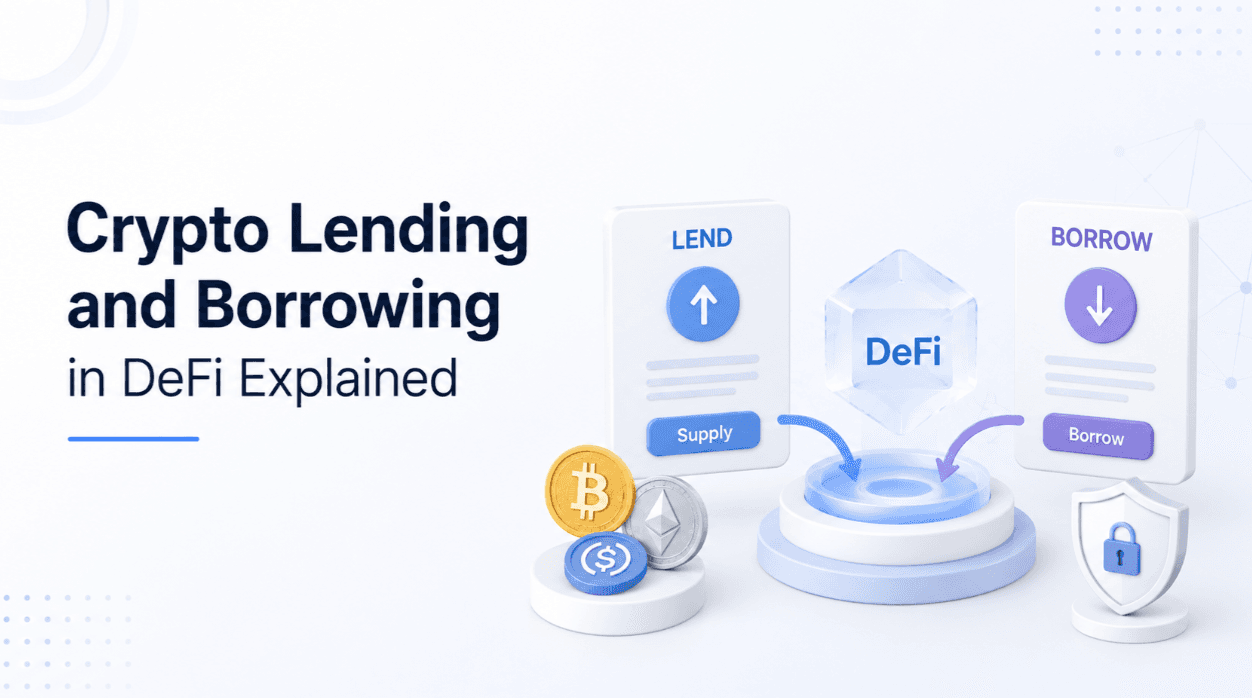
Crypto Lending and Borrowing in DeFi Explained
DeFi lending markets let anyone earn interest or borrow against crypto, governed entirely by code. Here is how collateral, rates, and liquidations actually work.
David Turner · May 2, 2026→
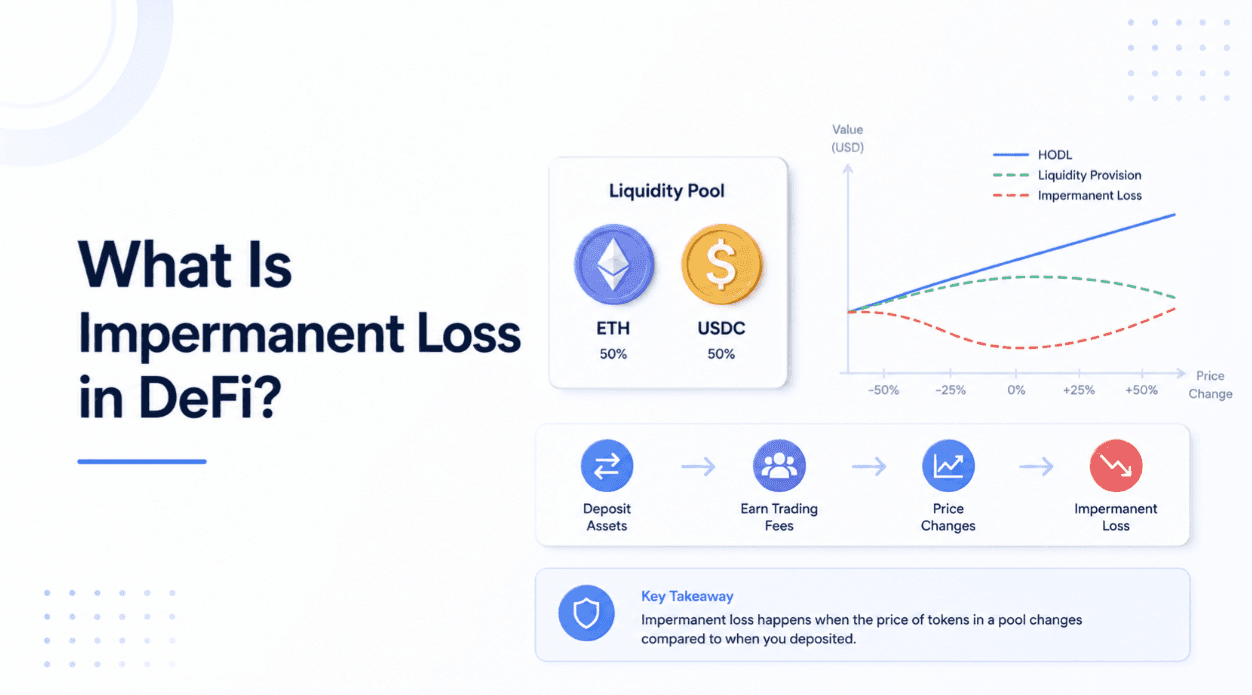
What Is Impermanent Loss in DeFi?
Impermanent loss quietly erodes the value of liquidity positions when token prices move. Here is why it happens, how big it gets, and when fees offset it.
Maria Fernandez · May 9, 2026→
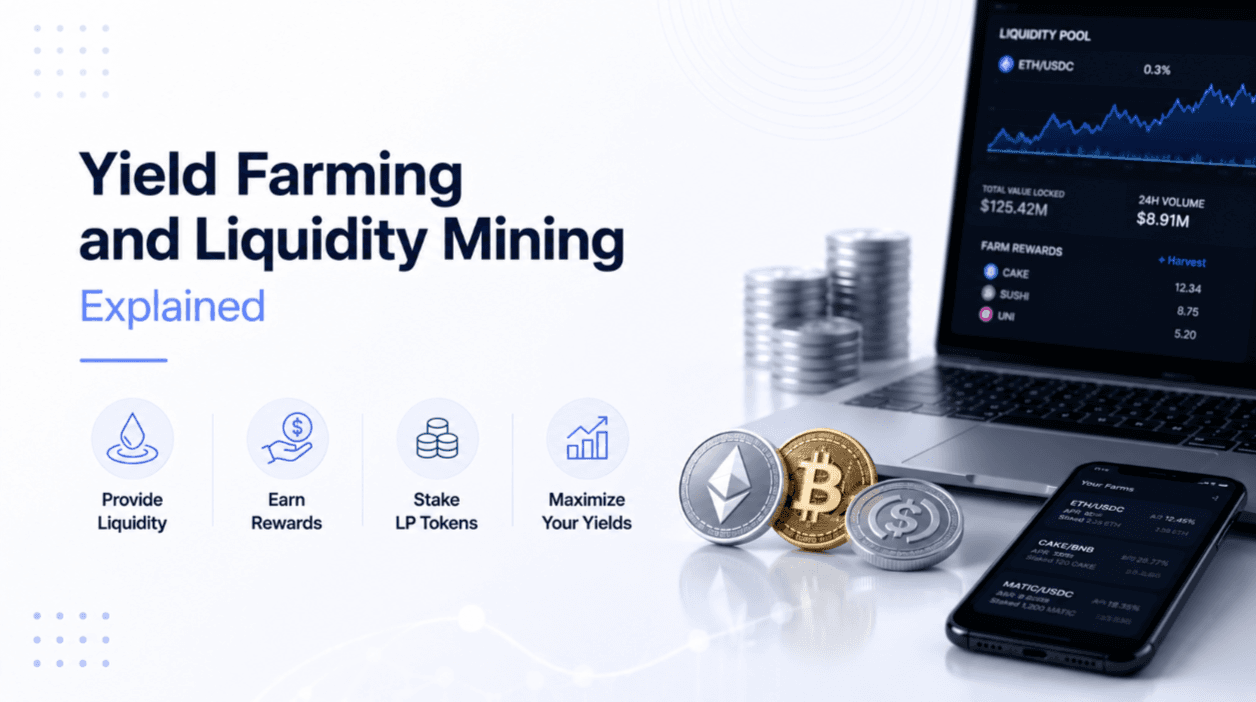
Yield Farming and Liquidity Mining Explained
Yield farming chases returns by moving crypto between DeFi protocols. We break down where the yield comes from, how APY can mislead, and the risks behind big numbers.
David Turner · May 23, 2026→