Crypto Regulation Explained: A Global Overview
By Emily Carter
Policy Correspondent · June 2, 2026 · 10 min read
Published June 2, 2026 · Reviewed to our editorial standards. This article is informational and not financial advice.
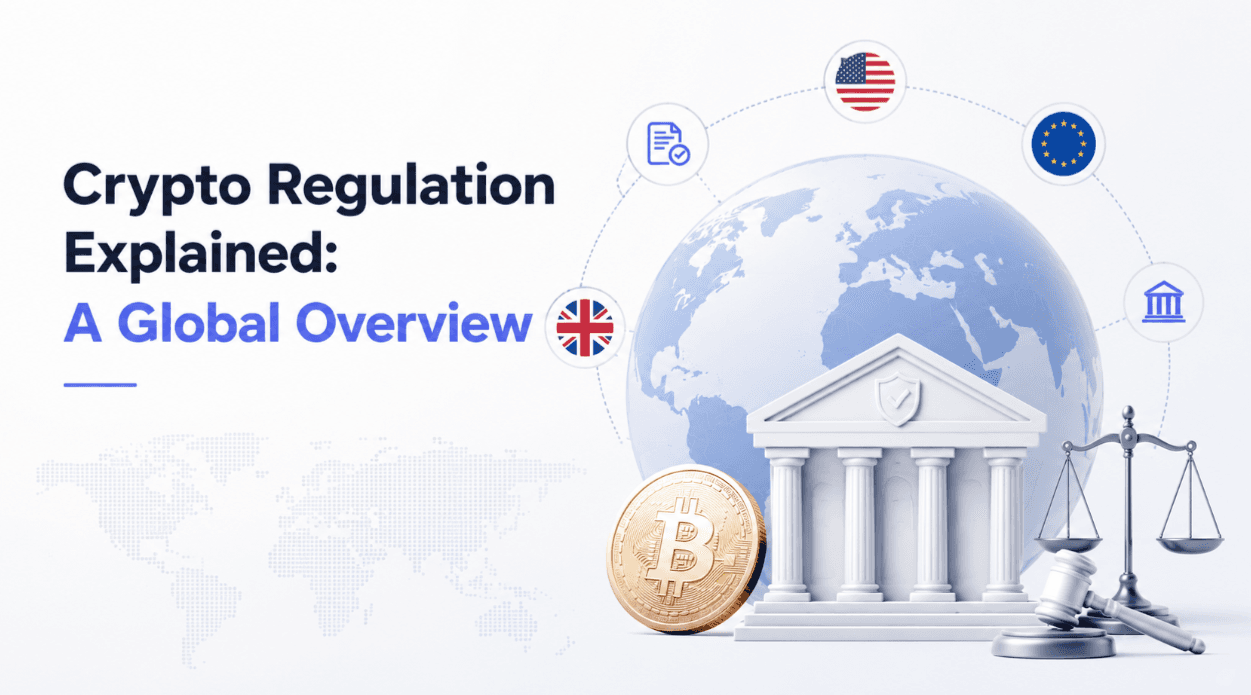
Crypto regulation is the set of rules that governments and financial authorities apply to digital assets and the businesses built around them. There is no single worldwide framework: instead, each jurisdiction stretches existing securities, payments, tax and anti-money-laundering law over crypto, and some add bespoke regimes. The result is a patchwork that differs sharply from one country to the next.
Key takeaways
- No global regulator exists; rules are set country by country and sometimes region by region.
- Most regimes combine securities, payments, tax and anti-money-laundering law.
- Watchdogs focus on investor protection, financial stability and illicit finance.
- How a token is classified often decides which rules apply to it.
- Approaches range from comprehensive licensing to outright bans.
Who actually regulates crypto
In most countries, several authorities share oversight rather than one agency owning it. Securities regulators police investment-like tokens and fundraising, while market or commodities regulators may cover derivatives and certain assets. Central banks and payments authorities supervise stablecoins and money transmission, and financial-intelligence units enforce anti-money-laundering rules. Tax authorities sit alongside all of them.
This division of labour explains why a single crypto business can answer to multiple regulators at once, and why firms sometimes face conflicting expectations. It also means the same activity can be legal under one authority while drawing scrutiny from another.
Where these mandates overlap, turf can be contested. Two agencies may each claim authority over a product, or each assume the other is handling it, leaving gaps. Some jurisdictions have responded by naming a lead regulator or passing laws that draw clearer lines, but the underlying tension between fitting a novel asset into old institutional boundaries is a recurring theme across the field.
The main regulatory approaches
Broadly, jurisdictions fall into a few camps, and many shift between them as policy matures.
Comprehensive frameworks
Some regions have built dedicated regimes that license crypto-asset service providers, set rules for stablecoins, and impose conduct and disclosure standards. The European Union's markets-in-crypto-assets regime is the most prominent example of this style, aiming to create a single set of rules across member states.
Adaptation of existing law
Other jurisdictions, including the United States for much of crypto's history, apply long-standing securities, commodities and money-transmission statutes through guidance, enforcement and the occasional new statute. This can offer flexibility but leaves firms guessing about edge cases.
Restrictive or prohibitive stances
A smaller group restricts or bans aspects of crypto, from trading to mining, often citing capital controls, consumer harm or energy use. Even within this camp, enforcement and scope vary widely.
What regulators are trying to achieve
Despite different methods, watchdogs tend to chase the same handful of goals. Understanding them makes new rules easier to anticipate.
- Investor and consumer protection against fraud, manipulation and misleading promotions.
- Financial stability, especially around stablecoins and large interconnected platforms.
- Anti-money-laundering and counter-terrorist-financing controls.
- Tax compliance and visibility into who is transacting.
- Market integrity, including custody safeguards and fair trading.
Token classification is the hinge on which most crypto regulation turns: call something a security and an entire body of law switches on. — CryptoCoinBeat analysis
Why token classification matters so much
Whether a token is treated as a security, a commodity, a payment instrument or something else determines which rules and which regulator apply. A token deemed a security typically triggers registration, disclosure and licensing obligations, while one viewed as a commodity or pure payment token may face lighter or different requirements. Because borderline cases are common, classification is among the most contested questions in the field.
The same token can even be classified differently depending on how it is sold and to whom. An asset distributed through a promotional fundraising round might attract securities rules, while the identical token traded later on an open market could be viewed another way. This context-dependence is why blanket statements about a coin's legal nature should be treated with caution.
Common building blocks of a crypto regime
Although the labels differ, most maturing frameworks assemble themselves from a recognisable set of components. Spotting these makes an unfamiliar jurisdiction easier to read.
- Licensing or registration for exchanges, custodians and other intermediaries.
- Disclosure duties for those issuing or promoting tokens to the public.
- Custody and client-asset rules to protect funds held on a user's behalf.
- Stablecoin-specific requirements around reserves and redemption.
- Anti-money-laundering obligations, including identity checks and reporting.
- Marketing and advertising restrictions aimed at retail investors.
Enforcement, not just rules
Written rules tell only half the story. How aggressively an authority investigates, fines or prosecutes shapes the real risk a firm faces, and enforcement intensity can shift with political cycles and high-profile failures. A jurisdiction with light statutes but active enforcement can feel stricter in practice than one with detailed laws that are rarely tested.
Major platform collapses and fraud cases have repeatedly accelerated rule-making, pushing topics such as custody, proof of reserves and conflicts of interest up the agenda. For users, this means the regulatory mood can change quickly in response to events, not only through slow legislative reform.
How the global picture is converging
International standard-setters have pushed members toward common expectations, particularly on anti-money-laundering and stablecoin oversight. Rules requiring service providers to collect and share originator and beneficiary information on transfers have spread across many jurisdictions. While implementation differs, the direction of travel is toward more reporting, more licensing and less anonymity.
For anyone using or building on crypto, the practical takeaway is to identify which authorities govern your specific activity and location, since the same product can be regulated very differently across borders.
What regulation means for everyday users
It is easy to read regulation as something that only concerns exchanges and lawyers, but it shapes the experience of ordinary holders too. Identity checks at sign-up, limits on which tokens a platform will list, the protections you can fall back on if a service fails, and how your gains are taxed all flow from the rules described above. A regulated venue may feel more bureaucratic yet offer clearer recourse when something goes wrong.
- Licensed platforms usually require identity verification before full access.
- Some tokens are unavailable in certain regions because of classification rules.
- Consumer protections and complaint channels depend on local regulation.
- Tax reporting obligations follow from how your jurisdiction treats crypto.
How to read regulatory news without panicking
Headlines about crackdowns and crackbacks can be alarming, but most regulatory developments are narrower than they sound. A useful habit is to ask which jurisdiction is acting, which specific activity or entity is affected, and whether the news is a proposal, a final rule or an enforcement action. Those distinctions usually separate a genuine change from noise.
Because the field moves quickly, it pays to rely on primary sources such as regulators' own statements rather than second-hand summaries. A measure aimed at one type of business in one country rarely carries the sweeping consequences an initial headline might imply.
This overview is educational only and is not legal advice. Crypto rules vary by jurisdiction and change frequently. For decisions that carry legal or compliance consequences, consult a qualified professional licensed in the relevant country.
Frequently asked questions
Is there a single global crypto regulator?+
No. Crypto is regulated country by country, and sometimes region by region, with several domestic authorities sharing oversight. International standard-setters publish recommendations that influence national rules, but they cannot directly enforce them, so the global picture remains a patchwork of differing regimes.
Which authorities typically oversee crypto?+
Oversight is usually shared among securities regulators, market or commodities regulators, central banks and payments authorities, financial-intelligence units for anti-money-laundering, and tax authorities. A single crypto business can therefore answer to multiple regulators at once, each focused on a different aspect of its activity.
Why does token classification matter?+
Classification decides which rules apply. A token treated as a security generally triggers registration, disclosure and licensing duties, while one seen as a commodity or payment token may face different requirements. Because many tokens sit near the boundary, classification is one of the most disputed questions in crypto law.
Are the world's crypto rules becoming more similar?+
In some areas, yes. Anti-money-laundering and stablecoin oversight have converged as jurisdictions adopt shared standards, including rules requiring service providers to share transfer information. Implementation still differs widely, but the broad trend points toward more licensing, more reporting and reduced anonymity over time.
Written by
Emily CarterFormer regulatory analyst · J.D.
Emily Carter is a legal and regulatory writer specializing in cryptocurrency, blockchain policy, and digital asset compliance. Before joining CRYPTO·COINBEAT, she worked as a regulatory analyst in the United States, tracking developments in federal financial legislation, anti-money laundering (AML) requirements, and emerging policies shaping the digital asset industry. She earned her Juris Doctor (J.D.) degree and combines legal expertise with a talent for translating complex regulatory topics into clear, accessible language. Her work focuses on cryptocurrency taxation, DeFi regulation, exchange compliance, stablecoins, and the evolving role of U.S. agencies in overseeing digital assets. At CRYPTO·COINBEAT, Emily writes educational guides and policy explainers designed for both newcomers and experienced crypto users. She is committed to helping readers understand how regulatory changes affect investors, businesses, and the broader blockchain ecosystem.
Keep Reading
KYC and AML in Crypto Explained
KYC verifies who you are; AML is the broader effort to stop illicit money moving through crypto. Together they shape how regulated platforms operate.
Emily Carter · April 27, 2026→
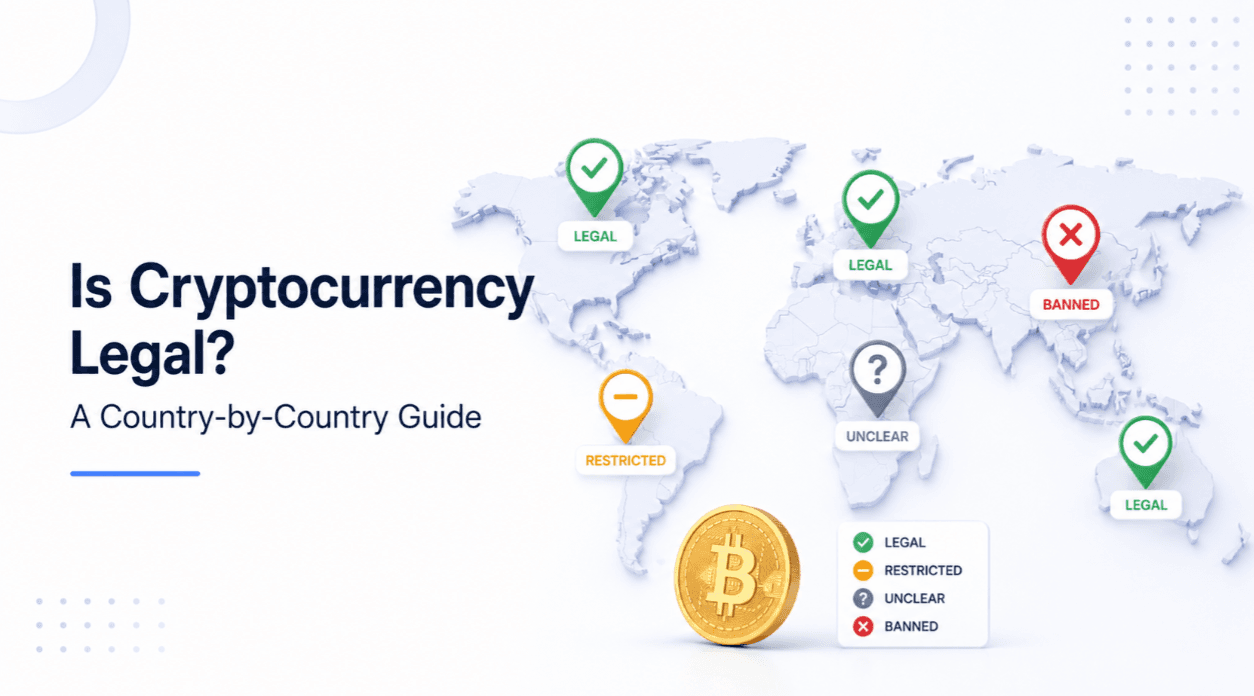
Is Cryptocurrency Legal? A Country-by-Country Guide
Cryptocurrency is legal to own and trade in most countries, restricted in some, and banned in a few. Status depends on local law and changes over time.
Maria Fernandez · May 9, 2026→
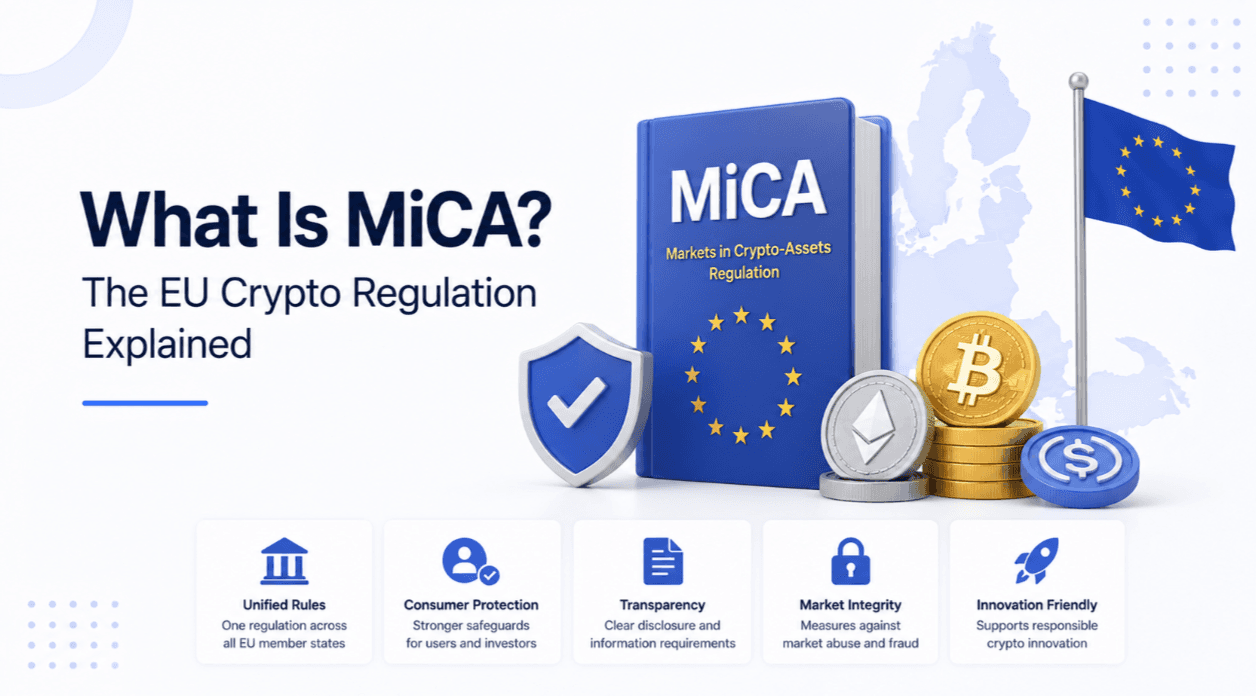
What Is MiCA? The EU Crypto Regulation Explained
MiCA is the European Union's dedicated framework for crypto-assets, creating one set of rules across member states for issuers, stablecoins and service providers.
Emily Carter · May 23, 2026→