How to Stake Ethereum: Solo, Pooled or Liquid
DeFi Protocols & RWA On-Chain Analyst · October 23, 2026 · 11 min read
Published October 23, 2026 · Reviewed to our editorial standards. This article is informational and not financial advice.
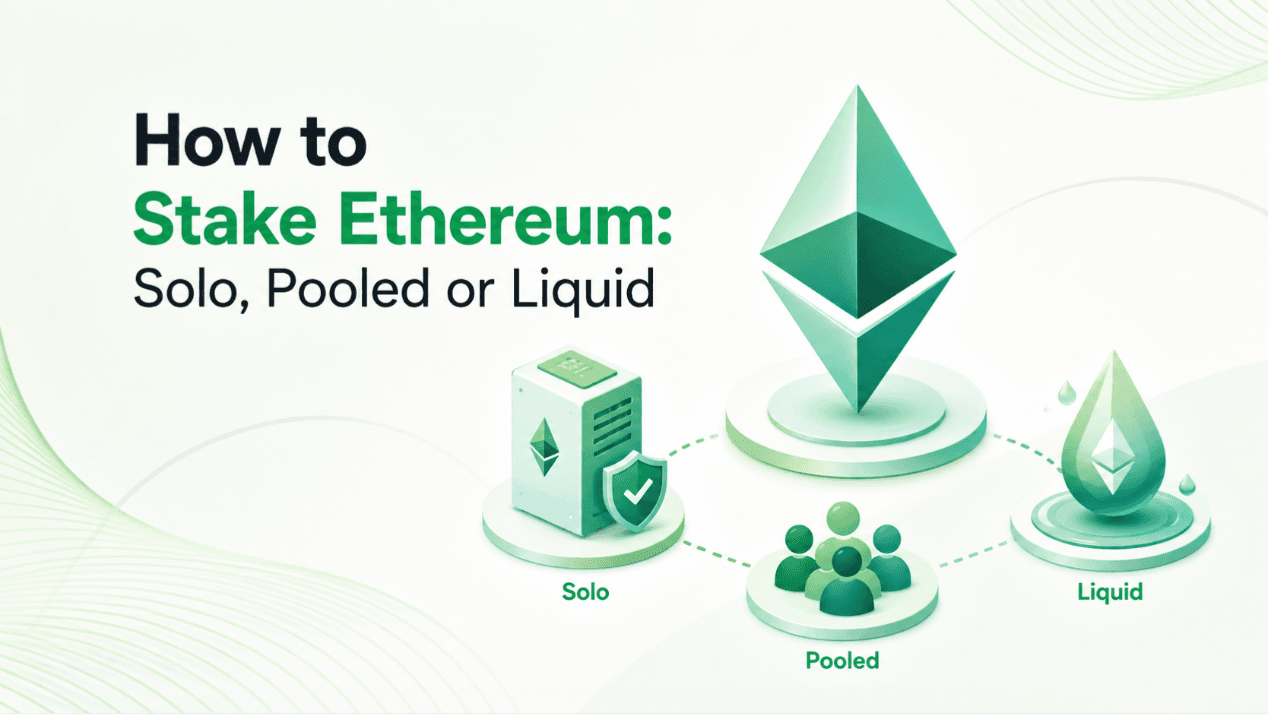
Staking ether means committing capital to help secure the network and being paid for it. The reward is roughly the same whichever route you take; what differs is who holds the keys, who carries the operational risk, and how quickly you can get out.
Three routes, in order of control surrendered.
Route one: solo staking
You run a validator yourself: 32 ETH deposited, an execution client and a consensus client running on hardware you control, online essentially all the time. You keep both keys, you take the full reward with no fee to anyone, and nobody else can move your capital.
It is the only route with no counterparty at all, and it is a real commitment. Downtime costs you small penalties continuously; a misconfiguration that causes double signing costs you a slashing penalty and a forced exit. Client upgrades happen on the network's schedule rather than yours.
A 2025 protocol upgrade raised the maximum effective balance a single validator can hold, which lets larger stakers consolidate many validators into fewer and compound rewards automatically. For someone running one validator it changes little; for anyone running twenty it is a significant simplification.
Choose it if you have 32 ETH, enjoy running infrastructure, and would rather spend an evening a month on maintenance than pay a fee. Distributed validator setups let several people share one validator's duties, which reduces the single-machine risk at the cost of more setup.
Route two: a staking service
A professional operator runs the validator and you delegate to it. The arrangement to insist on is non-custodial: you keep the withdrawal credentials, the operator holds signing keys only, so they can attest on your behalf but cannot move your principal.
That single distinction separates a service from a custodian. With withdrawal keys under your control, the worst an operator can do is perform badly; without them, their solvency becomes your problem. Our best staking providers table records which providers offer the non-custodial arrangement and on which networks.
Fees run as a percentage of rewards rather than of principal. Look for a published slashing record on the chain's own validator explorer, an outside examination of the infrastructure such as a SOC 2 report, and clear terms on what happens if a slashing event occurs.
Exchange staking sits at the custodial end of this route: convenient, fully custodial, and subject to the platform's own solvency and to whatever happens to its business. It is the easiest option and the one with the most counterparties.
Route three: liquid staking
Deposit any amount, receive a token representing your staked position, and keep using that token while the stake earns. No minimum, no hardware, and the capital remains deployable — which is why this route holds the largest share of staked ether.
The trade is layered exposure: the protocol's contracts, its operator set, its governance, and the token's market price. That last one matters more than people expect. When exits are slower than demand, the token trades below what it represents, as stETH did through mid-2022 before withdrawals existed.
Withdrawals have been live since the 2023 upgrade that enabled them, so the discount mechanism is much weaker than it was. It has not disappeared: the queue is still a queue, and selling into the market remains the fast exit.
The decision, by amount
- Under 1 ETH: liquid staking is effectively the only practical route.
- 1 to 32 ETH: liquid staking, or a non-custodial pooled service if you prefer no token layer.
- 32 ETH or more, comfortable with infrastructure: solo staking, keeping both keys.
- 32 ETH or more, not comfortable with infrastructure: a non-custodial delegation service.
- Institutional size: a delegation provider with an infrastructure audit and named slashing terms.
What everyone should model before depositing
The exit. Leaving a validator means joining an exit queue whose length varies with how many others are leaving, then waiting for the withdrawal to be swept. In quiet conditions this is days; in stressed conditions it has been considerably longer, and stressed conditions are exactly when people want out.
If you might need the capital inside a month, that queue is the whole story and the liquid route's market exit is worth its discount. If you are staking for years, the queue is a footnote.
Model the tax treatment too. Many jurisdictions treat staking rewards as income at the value on the day received, which creates a running obligation on rewards you have not sold. That is a bookkeeping burden the liquid routes handle differently from the direct ones, depending on whether the token rebases or accrues value.
A note on where the rewards come from
Two streams, and they behave differently. Consensus rewards are issued by the protocol and are broadly predictable, falling gradually as more of the supply is staked. Execution-layer rewards — priority fees and any block-ordering income — arrive irregularly and depend on how busy the network is.
That second stream is why advertised rates differ between providers running identical hardware, and why a quiet month pays less than a busy one. Compare rates over a year rather than over a week, and treat any provider quoting a fixed forward rate with mild suspicion, since the underlying income is not fixed.
The mistakes that cost people money
Running a validator on unreliable hardware or a home connection that drops, then discovering that downtime penalties accrue quietly for months. Restoring a validator key backup onto a second machine while the first is still running, which causes double signing and a slashing event — the one mistake the protocol punishes hard.
And chasing the top advertised rate. The spread between a competent operator and the best-paying one is small; the spread between a competent operator and a slashed one is not. What is slashing covers exactly how bad that gets.
Frequently asked questions
How much ETH do I need to stake?+
32 ETH to run your own validator. Liquid staking protocols and pooled services accept any amount, which is why most stakers use them.
Can I unstake Ethereum at any time?+
Withdrawals have been enabled since 2023, but exiting means joining a queue whose length depends on how many others are leaving. Liquid staking tokens can be sold immediately, sometimes at a discount.
Is solo staking worth it?+
If you have 32 ETH and are comfortable running infrastructure, yes — no fees and no counterparty. It requires near-continuous uptime and careful key handling, since double signing causes slashing.
Is liquid staking safe?+
It adds contract, operator, governance and market-price risk to base staking. For most holders the convenience justifies it, but it is not the same risk as staking directly.
Written by
Maria FernandezDeFi Protocols, Real-World Assets, On-Chain Analytics, Stablecoins, Spanish-Language Coverage
Maria Fernandez is an On-Chain Research Analyst at **CRYPTO·COINBEAT**, specializing in real-world asset (RWA) tokenization, decentralized finance, and stablecoin ecosystems. Originally from Mexico City and now based in Miami, Maria brings a unique Latin American perspective to blockchain research, combining deep technical analysis with insights into emerging digital asset markets across the Americas. Before joining **CRYPTO·COINBEAT**, Maria spent several years researching decentralized finance protocols, producing in-depth analysis on lending platforms, governance systems, and the growing adoption of tokenized real-world assets. Her early research into institutional RWA integration and decentralized collateral models helped explain one of the fastest-growing sectors within the blockchain industry. Maria's analytical approach combines on-chain transaction analysis, protocol revenue metrics, liquidity monitoring, and governance activity to evaluate the long-term health of DeFi ecosystems. She works extensively with blockchain analytics platforms, including Dune Analytics, Nansen, and Flipside Crypto, and has created numerous public dashboards that simplify complex blockchain data for investors and researchers alike. Her coverage of stablecoin market events and liquidity shifts has helped readers better understand risk during periods of heightened market volatility. She holds a B.Sc. in Industrial Engineering from ITAM (Instituto Tecnológico Autónomo de México) and a Graduate Certificate in FinTech from MIT Sloan. Passionate about blockchain education, Maria regularly contributes both English- and Spanish-language research, helping make advanced on-chain analysis more accessible to a global audience while supporting the continued growth of crypto adoption throughout Latin America.
Keep Reading
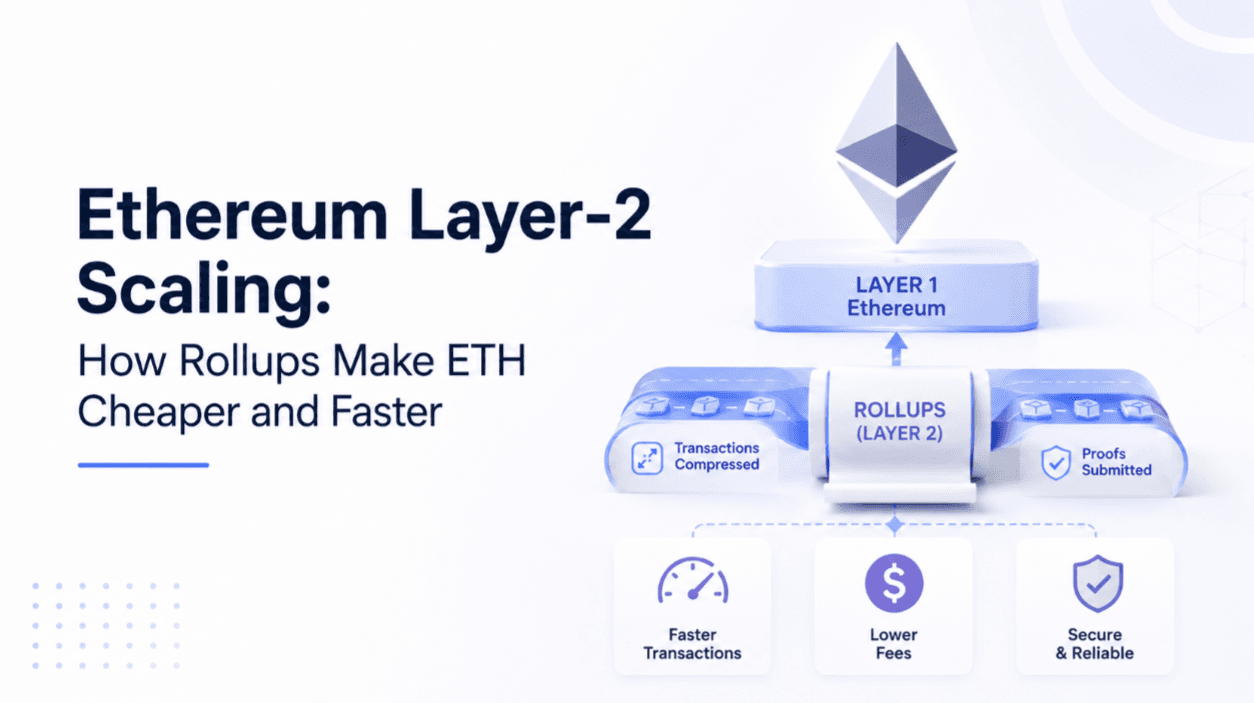
Ethereum Layer-2 Scaling: How Rollups Make ETH Cheaper and Faster
Rollups move execution off Ethereum’s base layer while keeping its security. Here is how optimistic and zk-rollups work and where they differ.
Maria Fernandez · May 3, 2026→
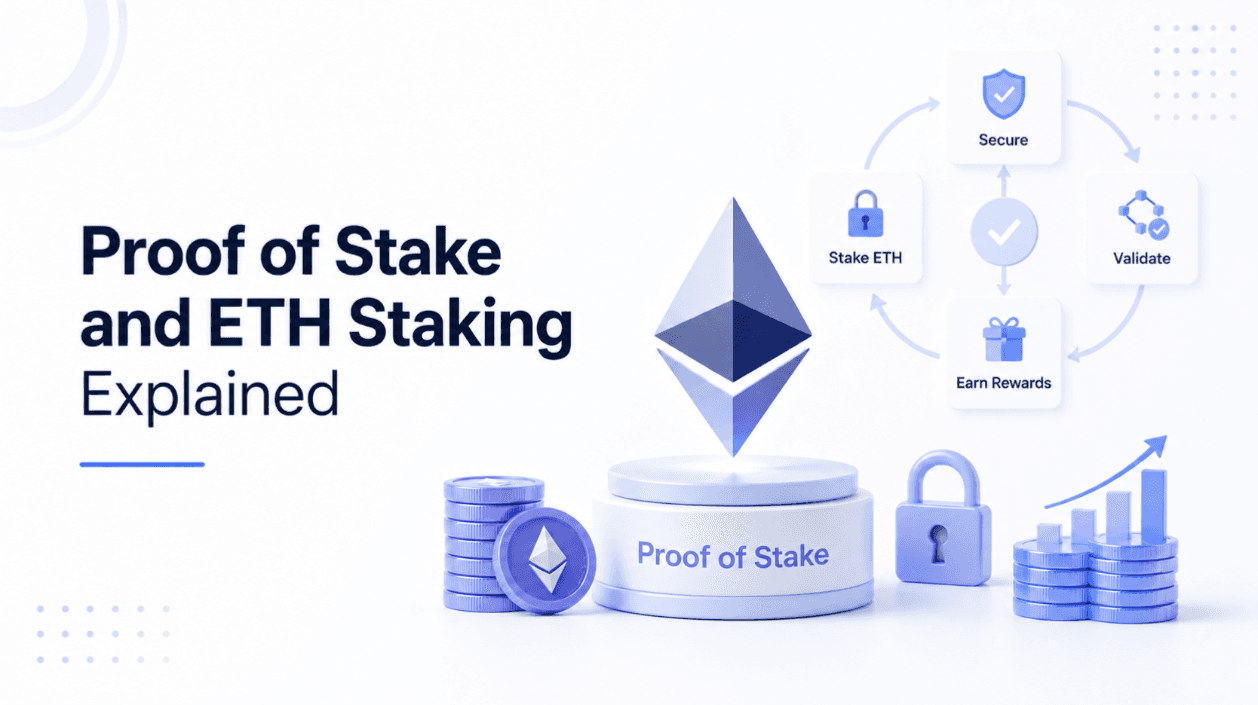
Proof of Stake and ETH Staking Explained
Ethereum secures itself with staked ETH instead of mining. Here is how validators, rewards and slashing work, and what staking really involves.
David Turner · May 16, 2026→
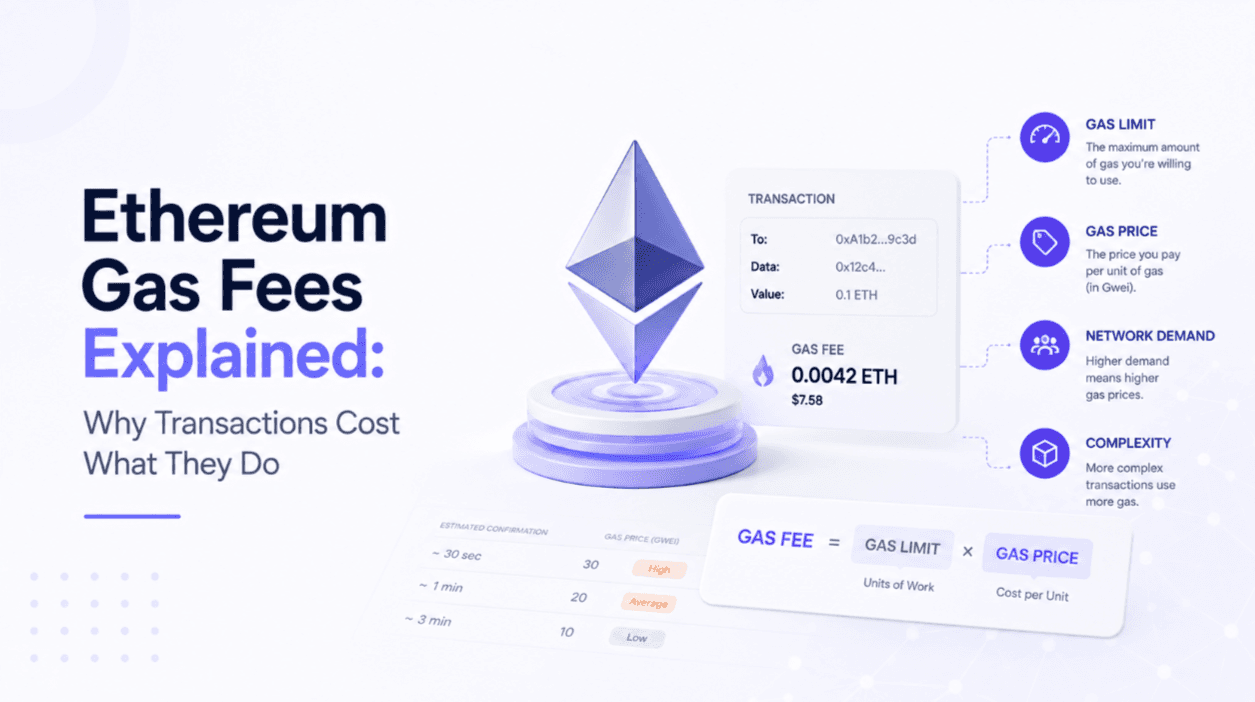
Ethereum Gas Fees Explained: Why Transactions Cost What They Do
Gas is how Ethereum prices computation. Here is what you are really paying for, why fees swing so hard, and how to keep them down.
David Turner · May 25, 2026→