What Happens If a Stablecoin Issuer Fails
By Emily Carter
Policy Correspondent · October 15, 2026 · 10 min read
Published October 15, 2026 · Reviewed to our editorial standards. This article is informational and not financial advice.
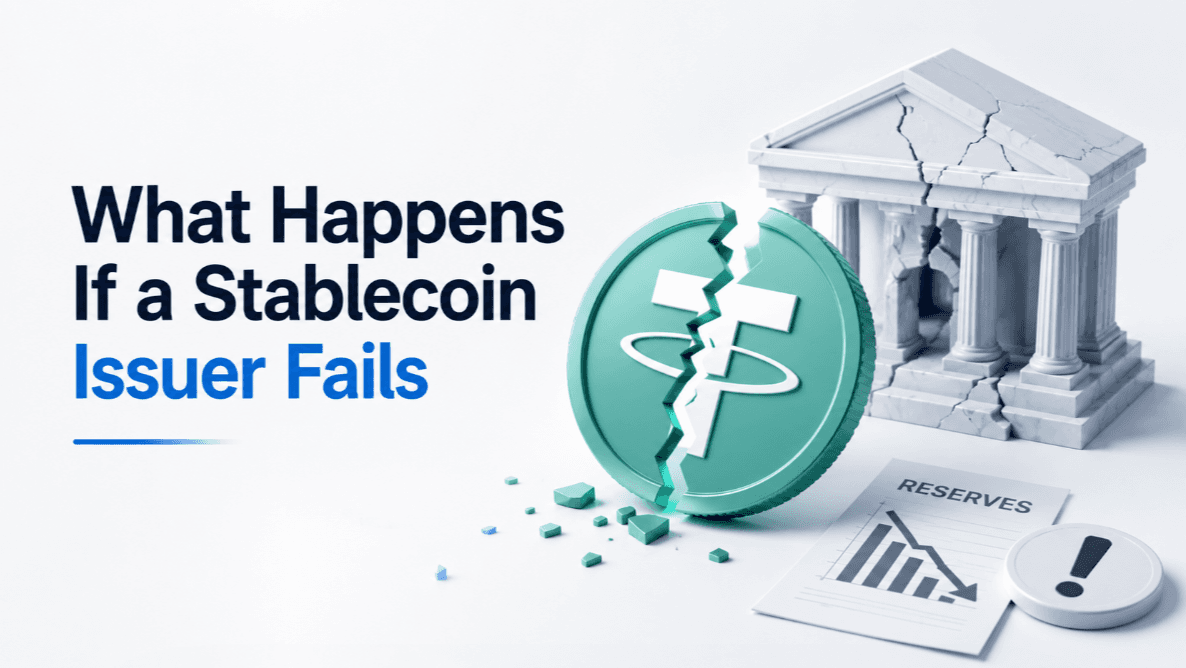
Most discussion of stablecoin risk stops at whether the reserves are real. That is the easy half. The harder question is what your token entitles you to if the company behind it stops operating, and the answer depends on legal structure rather than on the quality of the assets.
Two issuers can hold identical Treasury bills and give holders completely different outcomes, because one holds them in a bankruptcy-remote structure and the other holds them on its own balance sheet. Here is how to tell which you are holding.
A token is a claim, and claims have rankings
When a company fails, its assets are distributed according to a priority order: secured creditors, then various classes of unsecured creditors, then equity. Where stablecoin holders sit in that queue is decided by documents most holders have never read.
In the best case, the reserves are legally segregated — held in trust or in a separate entity for the benefit of holders — so they never enter the failed company's estate at all. In the worst case, holders are general unsecured creditors of an operating company, standing behind anyone with security and alongside every other supplier.
That distinction is the single most consequential fact about any stablecoin, and it is not visible from the price chart.
What bankruptcy remoteness actually means
The phrase gets used loosely. Genuine remoteness means the reserve assets are held by a separate legal entity or in a trust, for the benefit of token holders, in a way a court would respect if the parent failed. It usually requires a specific corporate structure and, in practice, a regulator supervising it.
Trust charters issued by state regulators in the United States create something close to this, which is why several issuers have gone that route. Under Europe's MiCA regime, e-money token issuers must safeguard reserves separately from their own funds and hold a substantial portion as deposits at credit institutions.
What it never means is that the money is instantly available. Even a well-structured arrangement takes time to unwind, and 'you will be paid in full eventually' is a genuinely different proposition from 'you can spend it on Tuesday'.
Redemption rights are narrower than people assume
Direct redemption with the issuer — sending tokens back and receiving dollars — is typically available only to verified customers, often institutions, frequently above a minimum in the hundreds of thousands. For everyone else, the exit is the market: sell on an exchange to someone who does have that right.
This is why the peg holds in normal conditions and why it can wobble in stressed ones. Arbitrageurs keep the price at par because they can redeem, and when redemption is paused or slowed for any reason, the mechanism holding the price together weakens exactly when it is needed.
Read the terms of your issuer once. Note who may redeem, at what minimum, on what timeline, and what circumstances permit suspension. Every one of those clauses exists because someone anticipated the scenario in which you would want to use it.
The orderly case: what the BUSD wind-down showed
In February 2023, New York's financial regulator ordered Paxos to stop minting BUSD. The token was not accused of being unbacked; the order concerned the issuer's arrangement with the brand it carried. What followed is the most useful case study available.
Minting stopped, redemption continued, and the supply shrank over roughly two years as holders exited at par. The token traded near a dollar throughout, because the redemption channel stayed open and the reserves were held under a trust charter with a regulator supervising the process.
The lesson is not that everything is fine. It is that a supervised structure plus an open redemption window produces an orderly wind-down, while an unsupervised structure produces a queue in a bankruptcy court. Both end with holders being paid something; only one ends with them being paid promptly.
The disorderly case: what the reserves are sitting in
March 2023 showed the other failure path. Circle disclosed $3.3bn of USDC reserves at Silicon Valley Bank as the bank collapsed, and USDC traded down toward $0.87 before US authorities guaranteed the deposits and the peg recovered within days.
Nothing was wrong with the token's design. The reserves were where they were supposed to be, in a bank, which turned out to be the risk. Deposits above insurance limits are unsecured claims on the bank, and a stablecoin holding cash at a failing bank has a hole in its reserve until someone fills it.
This is why reserve composition matters as much as reserve size: short-dated government debt held through a custodian behaves differently in a crisis from an uninsured bank deposit, even though both look like 'cash and equivalents' in a summary table.
What to check before holding a balance
- Which entity holds the reserves, and is it separate from the operating company?
- Which regulator supervises that entity, and under what licence?
- What proportion of reserves is bank deposits versus government debt held in custody?
- Who may redeem directly, at what minimum, and on what timeline?
- Under what circumstances can redemption be suspended?
Five answers, findable in an afternoon, and they determine your outcome in the scenario nobody expects. Our best stablecoins table records the licence and reserve structure behind each major token, and why stablecoins depeg covers the mechanics of the events themselves.
The practical response
Do not try to predict which issuer fails. Split meaningful balances across two issuers with genuinely different structures — different regulators, different reserve models, different banking partners — so that no single event reaches all of it.
And keep the balance you would need in a hurry somewhere it cannot be trapped: a plain, well-supervised token, held in a wallet you control rather than in a platform account, which adds a second failure point on top of the first.
Frequently asked questions
Would I get my money back if a stablecoin issuer went bankrupt?+
It depends entirely on structure. If reserves are held in a segregated trust for holders, they may never enter the estate. If the issuer holds them on its own balance sheet, you are an unsecured creditor waiting on a court.
What does bankruptcy remote mean for stablecoins?+
That the reserve assets sit in a separate legal entity or trust for the benefit of holders, so a failure of the parent company does not put them in the estate. It requires a specific structure, usually with a regulator supervising it.
Can I redeem a stablecoin directly with the issuer?+
Usually only if you are a verified customer, often institutional, above a minimum that can run into six figures. Most holders exit through the market instead, which is why open redemption for arbitrageurs matters to everyone.
Has a major stablecoin ever been wound down?+
Yes. Paxos stopped minting BUSD in February 2023 under a regulator's order and redeemed the supply at par over the following period, with the token trading near a dollar throughout the process.
Written by
Emily CarterFormer regulatory analyst · J.D.
Emily Carter is a legal and regulatory writer specializing in cryptocurrency, blockchain policy, and digital asset compliance. Before joining CRYPTO·COINBEAT, she worked as a regulatory analyst in the United States, tracking developments in federal financial legislation, anti-money laundering (AML) requirements, and emerging policies shaping the digital asset industry. She earned her Juris Doctor (J.D.) degree and combines legal expertise with a talent for translating complex regulatory topics into clear, accessible language. Her work focuses on cryptocurrency taxation, DeFi regulation, exchange compliance, stablecoins, and the evolving role of U.S. agencies in overseeing digital assets. At CRYPTO·COINBEAT, Emily writes educational guides and policy explainers designed for both newcomers and experienced crypto users. She is committed to helping readers understand how regulatory changes affect investors, businesses, and the broader blockchain ecosystem.
Keep Reading
KYC and AML in Crypto Explained
KYC verifies who you are; AML is the broader effort to stop illicit money moving through crypto. Together they shape how regulated platforms operate.
Emily Carter · April 27, 2026→
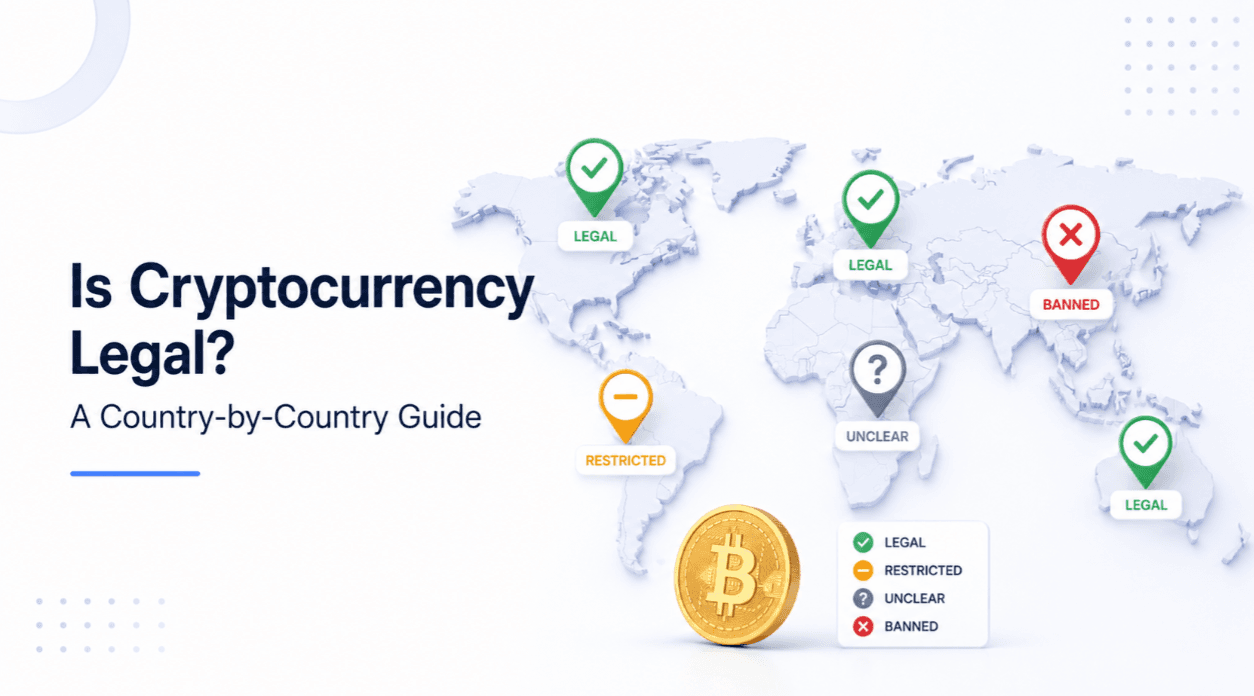
Is Cryptocurrency Legal? A Country-by-Country Guide
Cryptocurrency is legal to own and trade in most countries, restricted in some, and banned in a few. Status depends on local law and changes over time.
Maria Fernandez · May 9, 2026→
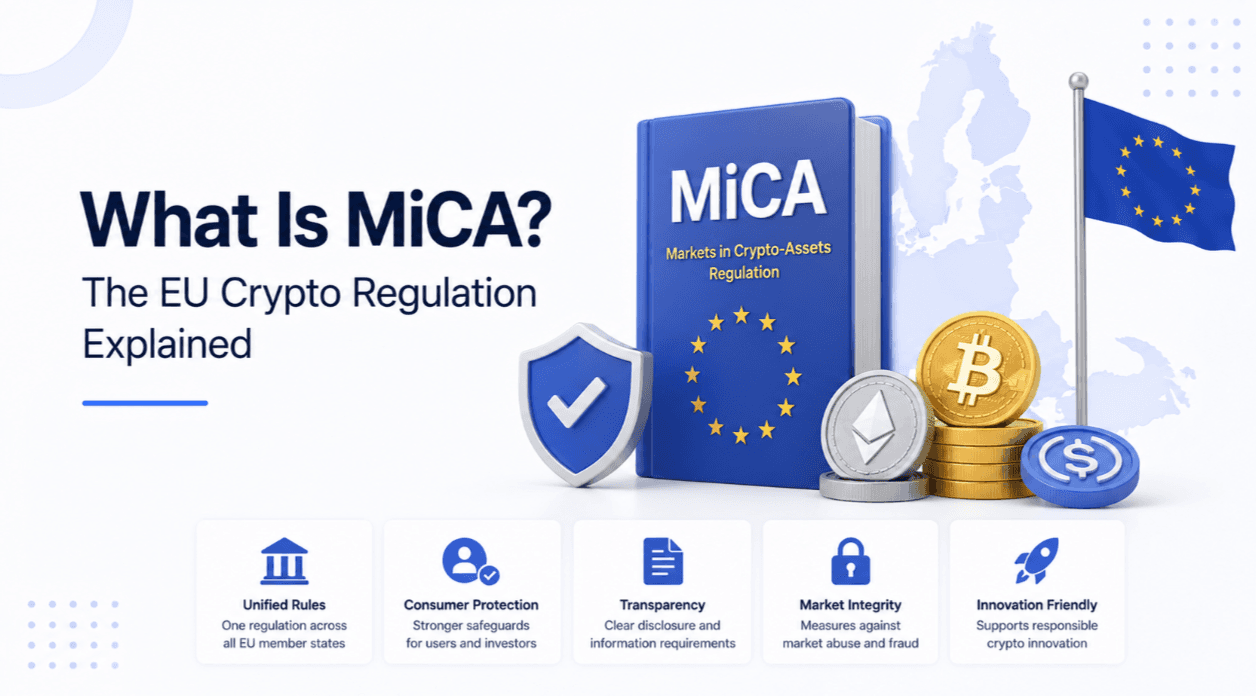
What Is MiCA? The EU Crypto Regulation Explained
MiCA is the European Union's dedicated framework for crypto-assets, creating one set of rules across member states for issuers, stablecoins and service providers.
Emily Carter · May 23, 2026→